NASA’s COFFIES Uses AI to Predict Storm-Causing Active Regions on Sun
As humanity looks to the Moon and stars for future exploration, predicting space weather — conditions in space primarily driven by the Sun — is more important than ever. Now, a team of astrophysicists and data scientists with NASA’s COFFIES (Consequence Of Fields and Flows in the Interior and Exterior of the Sun) has developed a […] The post NASA’s COFFIES Uses AI to Predict Storm-Causing Active…
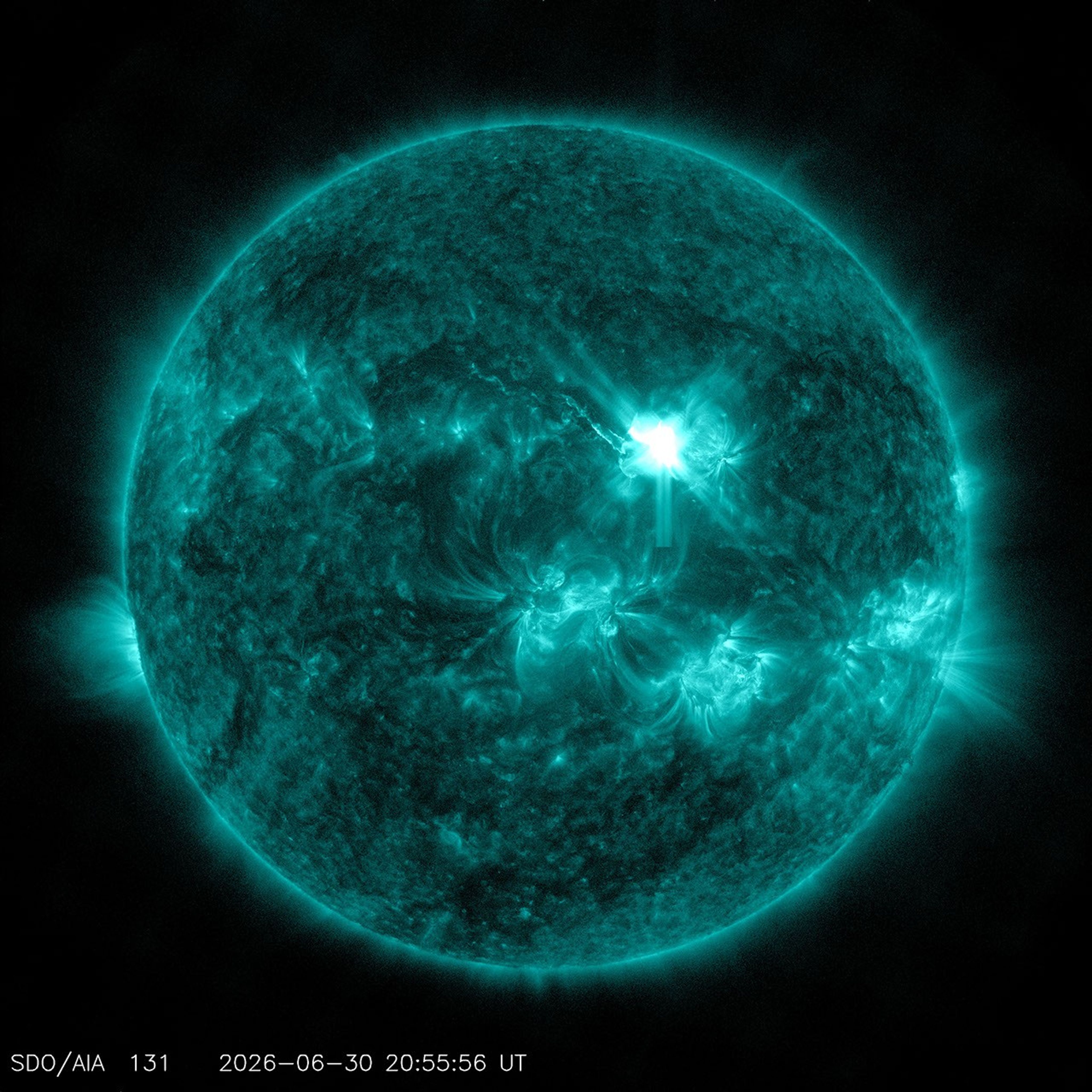
NASA's COFFIES project employs artificial intelligence to predict storm-causing active regions on the Sun up to 12 hours in advance. The team, comprising researchers from NJIT, Princeton University, and NASA's Ames Research Center, created a machine-learning model that identifies subtle, time-based pattern changes in the solar surface before active regions form.
By analyzing data from the Solar Dynamics Observatory and utilizing NASA Ames' supercomputing resources, the AI model detects slight changes in the Sun's acoustic power, akin to a minor alteration in rhythm within a noisy orchestra. These changes, when viewed as drops in acoustic waves and rises in magnetic fields, serve as early indicators of emerging sunspots.
While the current model is not operational for real-time forecasting, the team aims to refine it using additional solar event data. This innovative approach demonstrates the potential of deep machine learning in heliophysics, the study of the Sun's nature and its influence on space and planets.
Written by urgent.news from NASA Science's reporting — not their text. Machine-written — may contain errors; check the original before relying on it.
This story
This is one outlet's version. Read the fullest account.