Monsoon-driven wildfires may have shaped human evolution
A reconstruction of East Africa's environment 1.75 million years ago suggests wildfires spiked during wetter times, which may have influenced human evolution
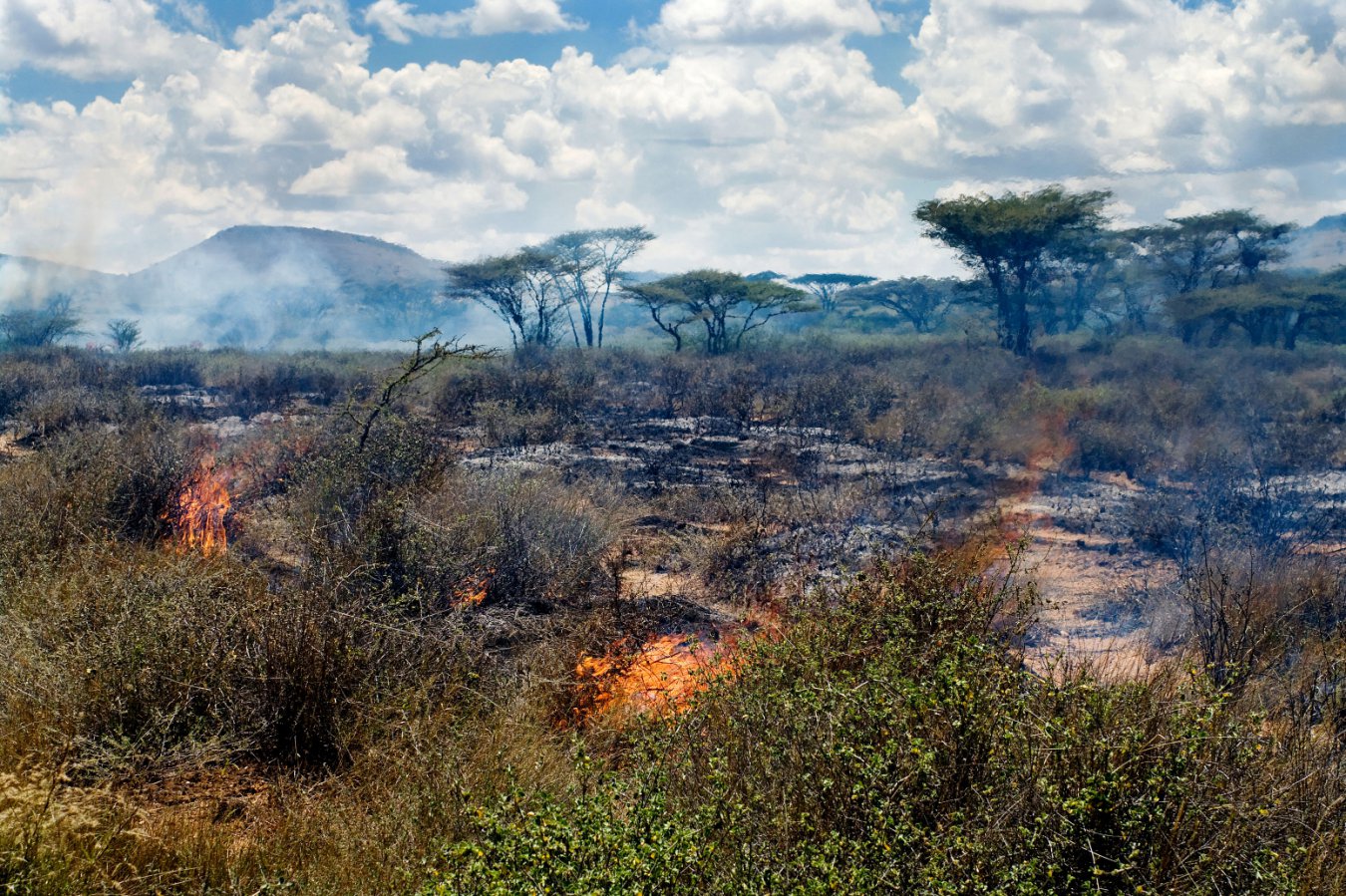
Recent chemical analyses of ancient plant remains in East Africa's Turkana basin indicate that monsoon-driven wildfires may have played a crucial role in shaping human evolution. Contrary to previous beliefs, these frequent fires during the era of the first Acheulean tools, around 1.75 million years ago, were not quenched by wet climatic spells but instead fueled by the increased vegetation growth.
This pattern, revealed by traces of ancient leaf waxes and plant combustion, could have driven the development of greater cognitive flexibility required for using fire and creating tools. The Turkana basin, often referred to as the "Cradle of Humankind," boasts an abundance of hominin fossils and archaeological findings. This includes Homo erectus, one of our earliest recognizably human ancestors, and the earliest complex stone tools.
The study, conducted by Rachel Lupien and her team at Aarhus University, Denmark, analyzed chemical signatures in sediment samples spanning a 21,000-year period. They discovered that after a period of forested conditions with limited wildfires, the landscape became more variable, transitioning to wetter forested conditions with fewer fires and then to monsoon conditions with an increase in wildfires.
The feedback loop between more vegetation growth from increased rainfall and more fires limiting further vegetation expansion suggests that ancient hominins might have taken advantage of these monsoon-driven wildfires. This could have provided them with opportunities for "fire foraging," where they could gather animals or plants killed in the flames, or use burning branches to maintain fires for cooking food.
This discovery could bolster the idea that environmental changes played a significant role in the evolution of cognitive abilities and tool-making skills among our ancestors.
Written by urgent.news from New Scientist's reporting — not their text. Machine-written — may contain errors; check the original before relying on it.