Memory chips vs. optical: why institutions favor memory’s scale and growth
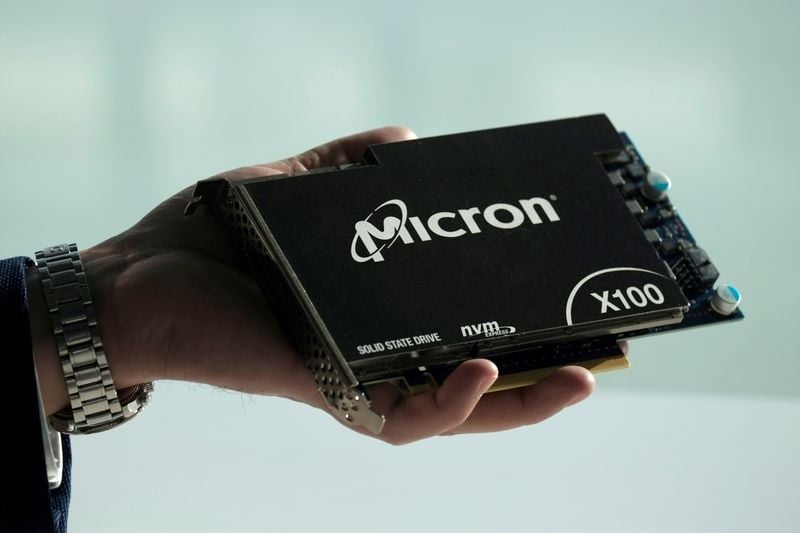
Memory chips are currently enjoying significant favoritism from institutional investors, as evidenced by Micron Technology Inc's impressive $1.07 trillion market capitalization and 43 analysts following the company. In contrast, SK Hynix Inc, despite its impressive 145% revenue growth, trades at a comparatively low P/E ratio of 7.4.
Optical names, such as Lumentum Holdings Inc, have indeed delivered remarkable 1-year returns of 668%, but institutions are increasingly shifting their focus towards memory's scale and sustainability.
Institutional investors tend to favor liquidity and market depth, both of which memory chips provide in abundance. This is particularly true when considering memory's trillion-dollar scale, which enables institutions to hold positions that optical investments simply cannot accommodate. The stark growth story of memory is further emphasized by its AI-driven HBM demand.
According to Micron's estimates, the global HBM market is projected to surge from $35 billion in 2025 to a staggering $100 billion by 2028, representing a remarkable 40% compound annual growth rate. This growth trajectory justifies the premium valuations assigned to memory chips.
Recent three-month performance data highlights the institutional positioning in memory chips. Despite strong growth, memory stocks have relatively reasonable multiples, which appeals to institutions seeking value rather than solely chasing momentum. Optical stocks, while showing impressive growth, have been offloaded by institutions that have realized substantial profits in 2025-2026.
As a result, memory chips are positioned for a multi-year cycle, offering better risk-reward ratios at current valuations compared to optical stocks, which have already had their moment in the spotlight.
Written by urgent.news from Investing.com's reporting — not their text. Machine-written — may contain errors; check the original before relying on it.