Makkah defence pact should be viewed in the right context
LETTERS: Many analyses of the Makkah Joint Defence Agreement between Saudi Arabia, Turkiye and Pakistan begin by asking whether the Muslim world is creating an “Islamic Nato’'?
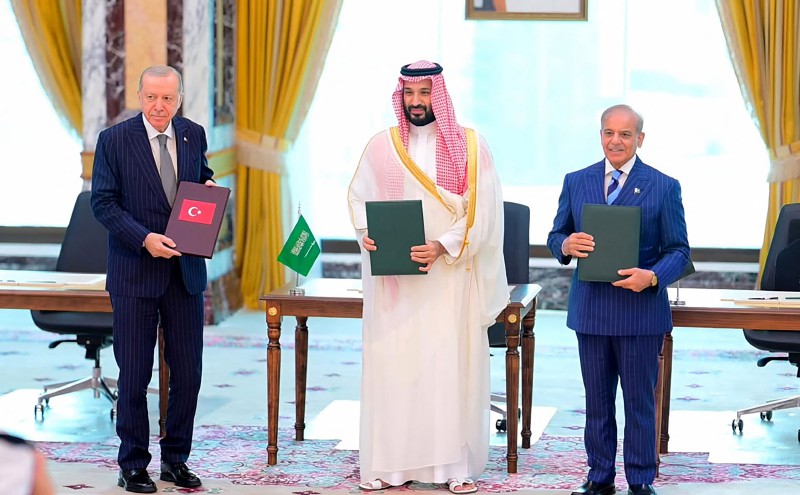
The Makkah Joint Defence Agreement between Saudi Arabia, Turkiye, and Pakistan has sparked debates about whether it heralds the creation of an Islamic NATO or if it can foster greater strategic autonomy for the Muslim world. Rather than focusing on whether the Muslim world is forming another military bloc, it's crucial to examine if the agreement marks a shift towards a strategic ummah capable of developing its own security capabilities, technologies, and diplomatic influence.
A symbolic ummah, while strong in language, lacks the mechanisms to translate solidarity into tangible capacity, technology, and leverage. The Palestinian issue serves as a critical test of this distinction. The agreement doesn't necessitate military conflict with Israel; strategic power can manifest through diplomatic and economic pressure, humanitarian assistance, reconstruction, and stronger bargaining for Palestinians.
However, security should encompass broader aspects like human security, food, energy, technology, maritime routes, cybersecurity, and refugee protection. The Makkah Agreement might also alleviate some of the US's security responsibilities in the region, potentially aligning with American strategic interests. The true measure of autonomy will arise when the interests of the Makkah Agreement members diverge from those of Washington.
Collective security is simple to declare, but maintaining it when it demands diplomatic, economic, or military sacrifices tests the depth of a strategic ummah. The Makkah Agreement should not be judged solely on its potential to replace NATO, as such an Islamic NATO is unnecessary. Instead, it should evolve into an architecture that defines its own security parameters, identifies protected entities, and determines the ultimate use of its power.
Written by urgent.news from New Straits Times's reporting — not their text. Machine-written — may contain errors; check the original before relying on it.