Urgent.News

What's breaking now, across thousands of outlets.

AI

LG to unveil Nvidia-powered humanoid robot in Q1 next year

LG Group will unveil a humanoid robot based on Nvidia’s Isaac GR00T robot foundation model in the first quarter of next year, and extend its partnership with the U.S. tech giant in artificial intelligence (AI) data center and mobility businesses. LG Group Chairman Koo Kwang-mo and Nvidia CEO Jensen Huang signed “a strategic business collaboration" memorandum of understanding (MOU) detailing the…
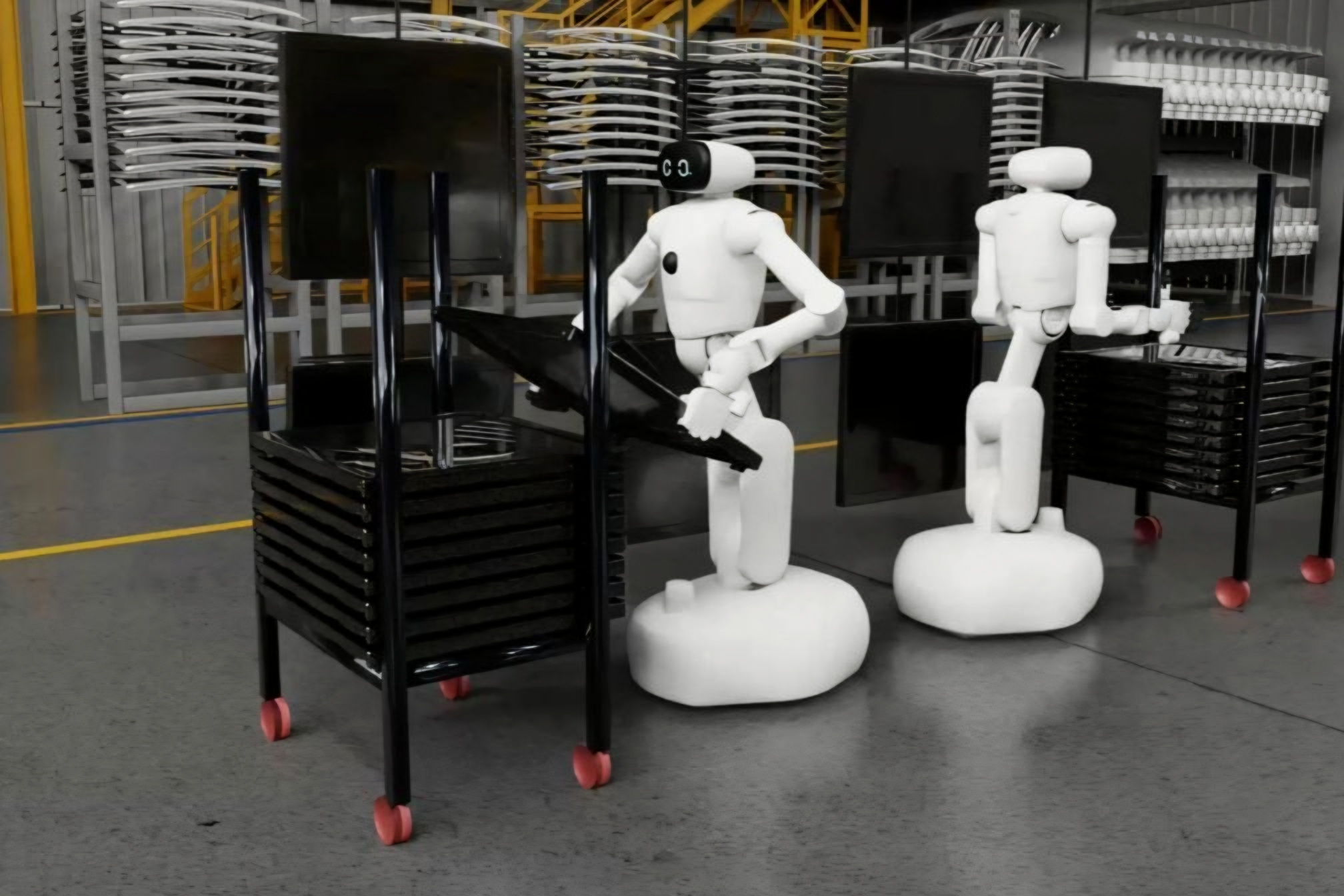
LG to unveil Nvidia-powered humanoid robot in Q1 next year

LG Group will showcase a humanoid robot powered by Nvidia's Isaac GR00T robot foundation model in the first quarter of the coming year. This partnership marks an expansion of LG's collaboration with the U.S. technology giant, focusing on artificial intelligence (AI) data center and mobility ventures. During a recent meeting between LG Group Chairman Koo Kwang-mo and Nvidia CEO Jensen Huang, the two signed a strategic business collaboration memorandum of understanding (MOU).

The event also saw the participation of several other LG Group executives, including Vice Chairman Kwon Bong-seok, CEO Lyu Jae-cheol, CEO Hong Bum-shik of LG Uplus, CEO Hyun Shin-gyoon of LG CNS, and others.

The MOU was signed just two months after top executives from both companies expressed their intention to cooperate in the AI industry. The agreement outlines specific areas of cooperation and details their plans in each domain. According to Koo, as their collaboration progresses, the tasks where the two companies can work together in the fields of AI factories, physical AI, and mobility will become clearer. The ultimate goal, as stated by Koo, is to accelerate the adoption of AI technologies across various industries.

Written by urgent.news from The Korea Times's reporting — not their text. Machine-written — may contain errors; check the original before relying on it.

Also reported by 1 other outlet

Read the original at koreatimes.co.kr →

More in AI

A recent controversy surrounding an artificial intelligence (AI) system's grading for an English essay test has sparked concerns over fairness and accuracy in automated evaluations. The issue came to light when a student took the College Scholastic Ability Test (CSAT) mock exam, specifically the English section, and received an unexpectedly high score for an essay response that was later found to contain several instances of specific phrases or "buzzwords" that are often favored in evaluations. The student expressed frustration upon learning that despite their teacher grading the same essay as a C, the AI system awarded it an A. This discrepancy has raised questions about the reliability of AI in assessing student performance, particularly when it appears to prioritize certain keywords over the logical coherence or overall quality of the response. Further investigation revealed that the AI system seemed to give more weight to the presence of certain "buzzwords" rather than the content or logical structure of the essay. This approach has been criticized for potentially rewarding students who are adept at identifying and incorporating favored phrases into their work, rather than those who demonstrate a deeper understanding or more nuanced expression of the subject matter. The Korea Institute of Curriculum and Evaluation (KICE), the organization responsible for developing and grading the CSAT, has acknowledged the issue and is taking steps to address concerns over the AI grading system. KICE officials have stated that they are working to refine the AI evaluation algorithm to ensure that it assesses responses based on a more balanced and comprehensive set of criteria, rather than relying heavily on specific keywords. The incident highlights the challenges and limitations of using AI in educational assessments, particularly in evaluating subjective or creative tasks such as essay writing. As educators and policymakers continue to integrate AI into various aspects of education, ensuring the fairness, accuracy, and reliability of AI systems in grading and evaluation will be crucial. The goal is to create a system that supports and fairly assesses student learning, without inadvertently encouraging superficial strategies or disadvantaging students who approach problems differently.

More from Friday 14 August →