Korean Companies Build Cash as Households Shift Funds Into Stocks
South Korea’s money supply continued to expand for an eighth consecutive month in June, driven by a sharp increase in liquidity held by companies, while household funds shifted from monetary financial products into stocks and exchange-traded funds (ETFs).According to the Bank of Korea’s “June 2026 M
South Korea's money supply grew for the eighth straight month in June, fueled by a surge in corporate liquidity, as households redirected funds into stocks and exchange-traded funds. According to the Bank of Korea's report published on August 14, M2, the broader money measure, averaged 4,213 trillion won in June, a 0.7% rise from May.
M2 has risen every month since November 2025. The growth was driven by non-financial corporations, whose M2 holdings jumped 45.7 trillion won in June, the largest monthly increase since records began in October 2003. This increase was mainly due to export proceeds from semiconductor firms, spurred by the artificial intelligence boom, and higher deposit funds.
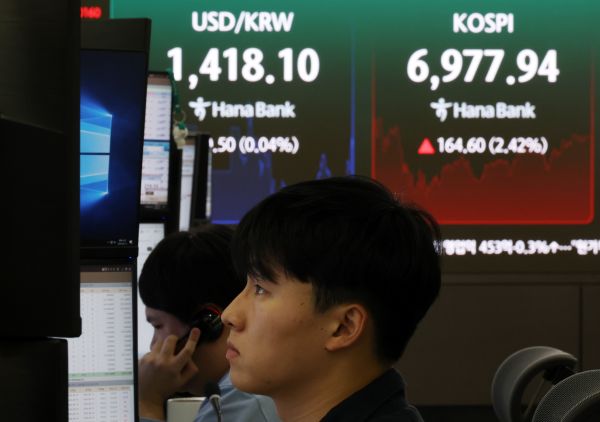
Other financial institutions' M2 holdings also rose by 5.4 trillion won. However, households saw a 19.8 trillion won decline in M2 holdings, the biggest drop since records began. This was due to households moving funds from monetary products like deposits and savings to investment products like stocks and ETFs. Individual purchases of domestic stocks rose to 52 trillion won in June from 42.6 trillion won in May.
Money market funds recorded the largest increase, growing by 7.3 trillion won, mainly as non-financial corporations invested their short-term surplus in these funds. Time deposits and savings products with maturities under two years also rose by 7.1 trillion won, reversing a previous decline. Money trusts with maturities under two years increased by 6.3 trillion won, reflecting inflows from semiconductor firms.
While M2 growth has been accelerating, it remains below its long-term average of 7.5%. Narrow money, or M1, averaged 1,402.9 trillion won in June, a 0.4% rise from May. Financial institution liquidity and broad liquidity also increased by 1.0% and 0.8%, respectively, from the previous month.
Written by urgent.news from BusinessKorea's reporting — not their text. Machine-written — may contain errors; check the original before relying on it.