Economy: Dax companies do record business - and cut jobs
Germany's largest stock exchange companies achieve top values in terms of sales and profits in total. But behind this lies a divided picture. Who benefits - and where the slump costs jobs.
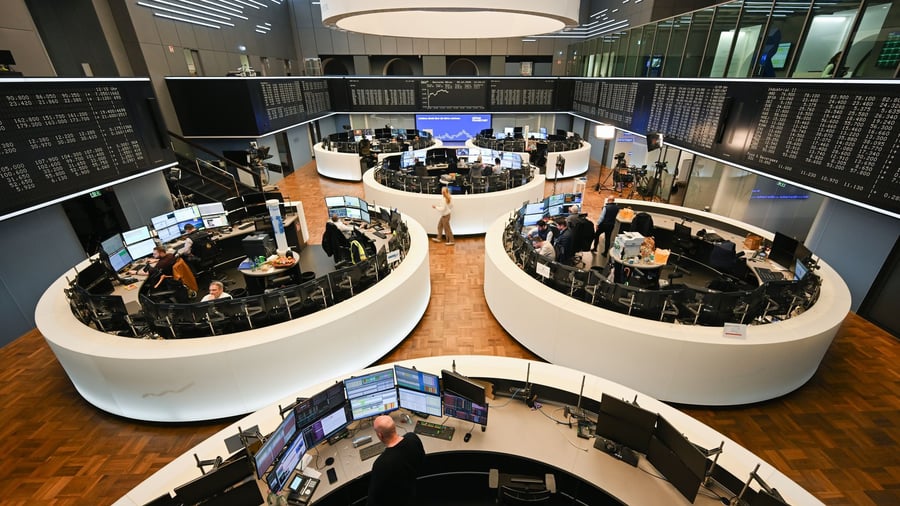
Deutsche Dax-Konzerne reported record-breaking profits in the second quarter, simultaneously cutting thousands of jobs. The 40 Dax companies increased their operating profit before interest and taxes (EBIT) by nearly 16% or €7 billion to a total of €52.6 billion, according to a study by the advisory firm EY. This marks the highest such figure in any second quarter and 10% more than the previous 2024 high.
Deutsche Telekom led the pack with a profit of €6.9 billion, followed by Allianz (€4.9 billion), VW (€3.5 billion), and Siemens (€3.4 billion). Bayer and the real estate group Vonovia saw the strongest growth in profits. Total Dax company revenue hit an all-time high of €463 billion, up 4.6% or €20.5 billion. Deutsche Bank predicts a double-digit increase in Dax profits for the year, far outpacing the last two years.
Growth was driven by a few industries enjoying a special boom - from the arms industry to AI companies, and chemical firms who raised prices due to the Iran war and supply shortages in Asia. However, traditional industries like automobiles showed no signs of a turning point. BMW suffered an unprecedented 39% drop in operating profit, while VW and Daimler Truck declined by 9% each.
EY's Henrik Ahlers warns that despite record profits, the domestic German market remains weak, and profit and revenue growth is mainly happening abroad. Job losses are most pronounced in the automobile sector, with 21 of 37 companies analyzing reporting job cuts, while only 16 increased employment. The unemployment numbers reflect the slowdown, with Dax companies employing around 3.49 million people as of June 30th, 41,000 fewer than a year prior.
Automotive giant Rheinmetall led the layoffs, shedding a significant number of workers. EY's Jan Brorhilker says the automobile crisis is far from over and more job cuts are expected.
Written by urgent.news from Handelsblatt's reporting — not their text. Machine-written — may contain errors; check the original before relying on it.