India's big chip ambition: Can it become world's next semiconductor hub?
Semiconductors sit underneath almost everything today: electronics, EVs, telecom, AI, data centres, defence, manufacturing. So having a self-reliant semiconductor ecosystem is an absolute necessity in the current globally uncertain economic and geopolitical environment.
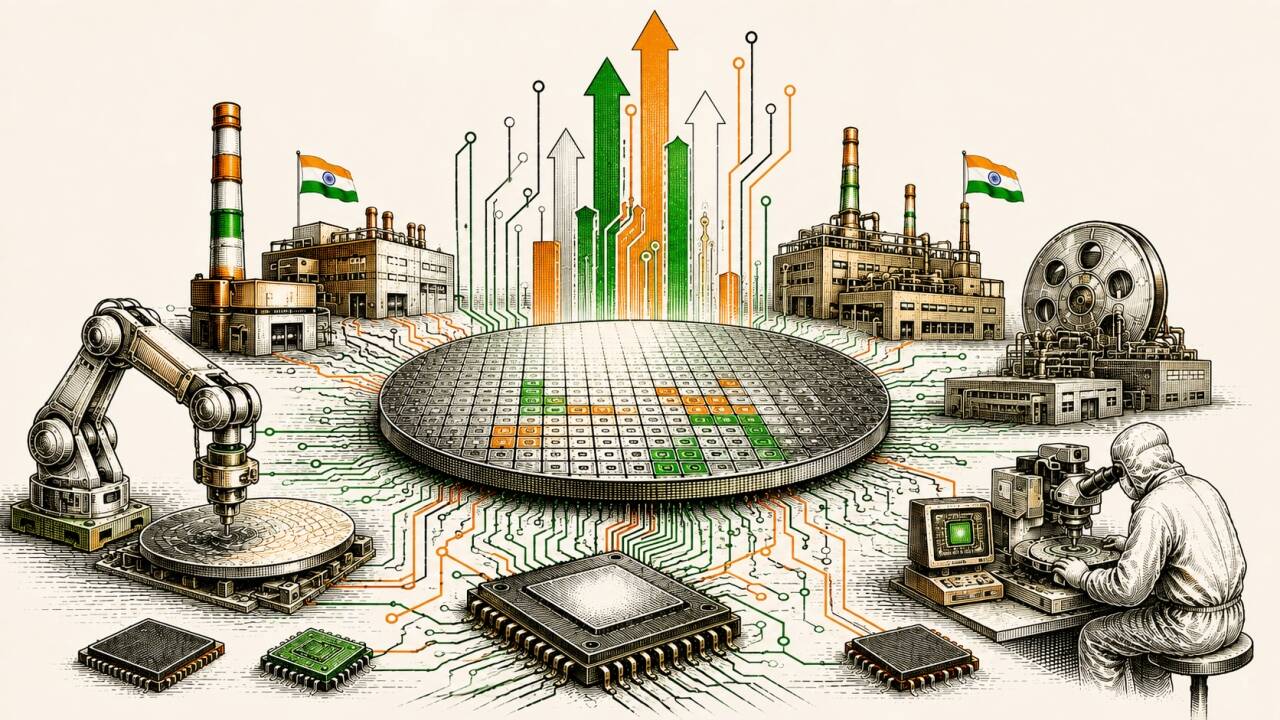
With an investment of over Rs 1.27 lakh crore, India has embarked on its second phase of an ambitious semiconductor programme. The global semiconductor industry is experiencing a supercycle, fueled by the surge in artificial intelligence applications. KPMG predicts that the semiconductor supercycle may be underway, given the high demand for AI.
McKinsey estimates that the semiconductor industry could be worth $1.6 trillion by 2030. The US and South Korean stock markets have recently set new records driven by AI-led semiconductor demand, highlighting the importance of the industry in today's economy.
Semiconductors are integral to various sectors, including electronics, EVs, telecom, AI, data centers, defense, and manufacturing. A self-reliant semiconductor ecosystem is crucial in the current economically and geopolitically uncertain world.
India's semiconductor plan involves building an integrated semiconductor and AI ecosystem, encompassing chip design, fabrication, advanced packaging, research, talent, and computer infrastructure. The country's semiconductor push can be divided into two phases: Semicon 1, with an outlay of Rs 76,000 crore, and the recently approved Semicon 2.0, which has Cabinet approval for Rs 1,27,500 crore.
India has already approved 12 semiconductor projects with investments of over Rs 1.64 lakh crore, with three facilities already in commercial production. Semicon 1.0 provided fiscal support for silicon fabrication plants, compound semiconductor units, semiconductor assembly and testing facilities, and chip design, up to 50%. Semicon 2.0 focuses on domestic production of semiconductor equipment and materials, developing an end-to-end Indian semiconductor intellectual property stack.
India's semiconductor market is projected to grow from $38 billion in 2023 to around $45-50 billion during 2024-25 and reach $100-110 billion by 2030. The government aims to develop the capability to design and manufacture chips catering to nearly 70-75% of domestic demand by 2029.
Experts believe that Semicon 2.0 presents a significant opportunity for India. It can lift domestic value addition in electronics, attract large investments, create manufacturing jobs, strengthen India's position in global supply chains, and advance homegrown IP. The mission could also serve as an engine of growth and self-reliance, similar to the impact of software over the past three decades.
However, the success of this initiative will depend on the number of projects attracted and the extent to which India can build technology, intellectual property, jobs, and value within the country.
Written by urgent.news from Times of India's reporting — not their text. Machine-written — may contain errors; check the original before relying on it.