How women farmers are helping elephants and forests in a Sumatran national park
LUBUK KEMBANG BUNGA, Indonesia — Tesso Nilo National Park, located on the Indonesian island of Sumatra, often makes headlines due to human-wildlife conflict — a byproduct of illegal encroachment and deforestation by oil palm plantations. However, there is a ray of hope, thanks to female farmers who live in a buffer zone of the national […]
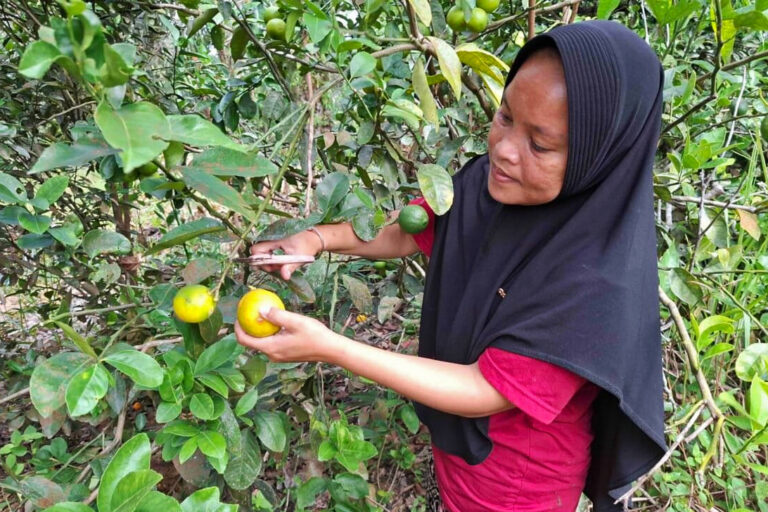
LUBUK KEMBANG BUNGA, Indonesia — Tesso Nilo National Park, situated on the Indonesian island of Sumatra, frequently makes headlines due to human-wildlife conflict caused by illegal encroachment and deforestation by oil palm plantations. However, a glimmer of hope exists, thanks to female farmers who reside in a buffer zone surrounding the national park.
In the village of Lubuk Kembang Bunga, bordering the park, women are spearheading an initiative to plant fruit trees that serve both conservation and income purposes. To deter elephants from damaging their fruit plantations, villagers cultivate citrus trees, which repel these massive animals. Elsewhere, they plant fruits that attract elephants, such as jackfruit, cempedak, and stink beans (petai in Indonesian).
Ernita, a 33-year-old farmer, expressed relief after planting citrus trees around her oil palm farm. "Before we had the citrus trees, elephants always ate our oil palm fruits," she told Mongabay Indonesia. "We had to replant the trees four or five times... Thank goodness we planted the citrus trees, and the elephants haven't touched our oil palm fruits."
Ernita's farm lies just outside Tesso Nilo, allowing her to cultivate various crops, including oil palm. However, other sections of Lubuk Kembang Bunga village fall within park borders, where, technically speaking, oil palm cultivation is prohibited. Ernita, a farmer and member of Perbani, grows citrus trees on the perimeter of her farm.
Written by urgent.news from Mongabay's reporting — not their text. Machine-written — may contain errors; check the original before relying on it.