How to Scale Engineering Teams Without Scaling Their Problems
Learn how knowledge silos and expert bottlenecks slow growing engineering teams, and how shared context, observability, and AI can restore speed.
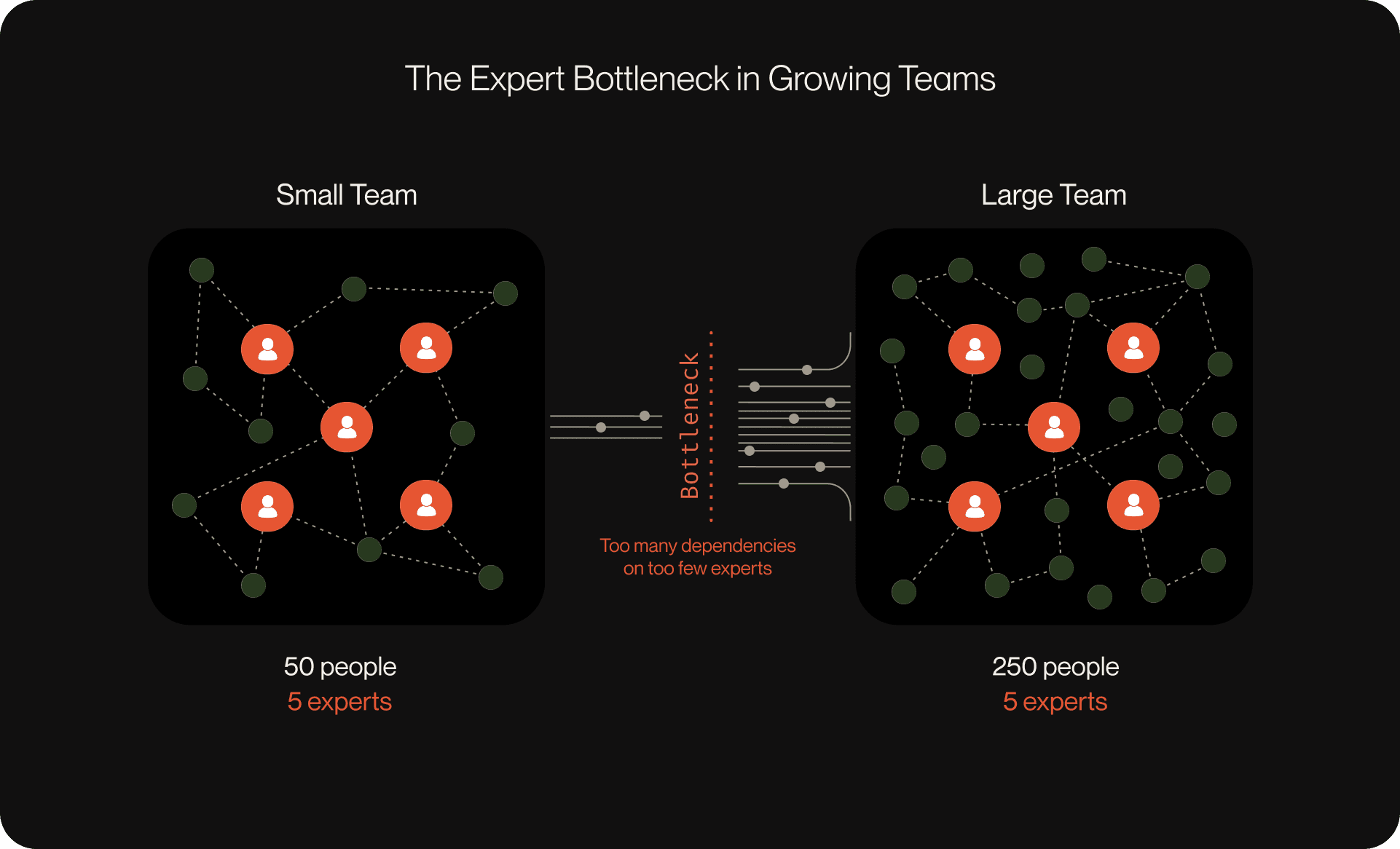
As engineering teams expand, challenges multiply. Scaling teams brings rapid innovation potential but also raises concerns about knowledge erosion and operational bottlenecks. Engineering leaders face the dilemma of accelerated code delivery without compromising understanding, agility, or team morale. The issue begins with knowledge silos that develop as teams mature and specialize.
Communication breaks down, documentation falls behind, and engineers lose sight of dependencies. This leads to bottlenecks, repeated escalations, and workarounds that compound technical debt. The immediate consequences include reduced code quality, slower onboarding, and duplicated efforts. Over time, silos erode customer satisfaction, hinder innovation, and heighten the risk of knowledge loss when key personnel depart.
Persistent silos ultimately increase technical debt and ongoing productivity losses, emphasizing the need for transparency, collaboration, and shared responsibility. The consequences of silos are most pronounced during debugging and maintenance. As systems evolve, problems often span multiple services. Engineers must navigate a complex web of dependencies with limited visibility, often relying on the memory of a few senior team members.
Sparse documentation and insufficient context can transform minor issues into major roadblocks, halting progress. In a 50-member team, a handful of experts may manage the bulk of the knowledge, creating a 1:9 expert-to-employee ratio. At 250 members, this ratio worsens to 1:49, making experts severe bottlenecks. The departure or absence of a key expert drastically widens the knowledge gap.
This reactive cycle diminishes morale, increases risk, and makes consistent delivery nearly impossible. Addressing these challenges requires more than sporadic training or ad hoc teams like SREs or DevOps. While these initiatives may offer temporary relief, they often fail to scale. Lunch-and-learns, while common, struggle with attendance.
Over-reliance on specialized teams can be equally ineffective, as they typically bear the burden of resolving issues. The core problem lies in the absence of shared context. The true test of knowledge sharing emerges during crises—major outages, critical bugs, or incidents impacting customers. The underlying issue is typically a lack of shared understanding, but conventional remedies seldom tackle the root cause.
To dismantle silos, organizations must embed contextual knowledge into daily engineering operations, ensuring teams have the necessary insights at the right time and place. Five strategies can help build shared knowledge at scale, treating knowledge management as a technical challenge rather than a cultural issue. Firstly, engineers should gain a comprehensive understanding of the technical context by connecting engineering work with business impact and user experience.
This involves linking code to relevant documentation, product specifications, and customer-facing materials. Tools can help associate code changes with the original intent behind features or fixes. Regular reviews of these connections during sprint planning and retrospectives encourage deeper decision-making and facilitate quicker debugging.
Secondly, aggregate contextual data to create a unified, real-time view of the system. Combine code repositories, documentation, ticketing systems (like Jira), and customer support platforms. Automate data collection from real-time telemetry and monitoring tools, centralizing this information in a searchable, AI-driven platform.
Encourage teams to use this centralized view for debugging, incident response, and planning. This holistic approach breaks down assumptions, accelerates root-cause analysis, and ensures teams operate based on the current state of the system, not outdated or fragmented information. Thirdly, facilitate cross-functional knowledge sharing.
Encourage collaboration between engineering, product, and support teams to ensure everyone is aligned on project goals and user needs. Regular cross-team meetings, workshops, and shared documentation platforms can help bridge knowledge gaps. Fourthly, implement mentorship programs that pair junior engineers with experienced peers.
This not only fosters knowledge transfer but also strengthens team cohesion and reduces the impact of knowledge loss when key personnel leave. Lastly, leverage technology to automate knowledge dissemination. Develop tools that provide instant access to relevant information, such as automated alerts for code changes, contextual documentation links, and updated specifications.
By treating knowledge management as a technical imperative, organizations can create a resilient, scalable engineering environment that maintains clarity and speed even as teams grow.
Written by urgent.news from HackerNoon's reporting — not their text. Machine-written — may contain errors; check the original before relying on it.