Government is investing GH¢3b to expand secondary education – Mahama
The government of Ghana, under the Strategic Secondary Education Transformation and Reform for Jobs (STAR-J) project, is investing GH¢3 billion in secondary education to expand and improve access and quality of education for all Ghanaian children. The post Government is investing GH¢3b to expand secondary education – Mahama appeared first on Ghana Business News .
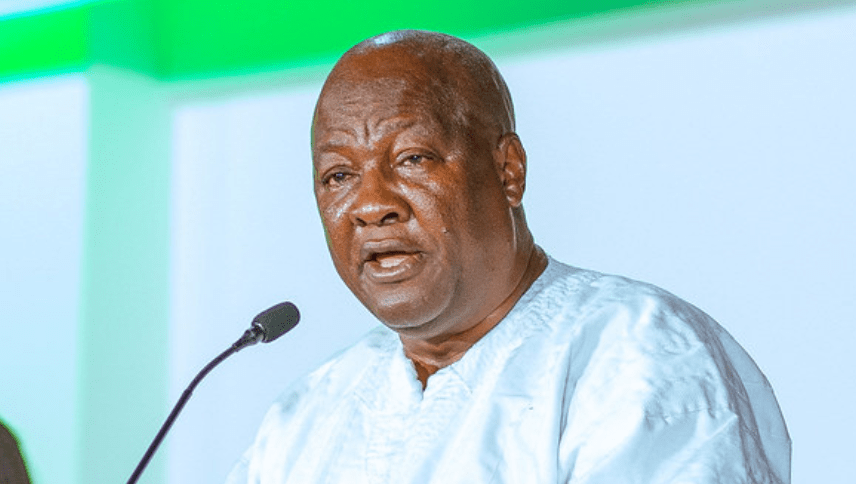
The government of Ghana, led by President John Dramani Mahama, has committed GH¢3 billion to the Strategic Secondary Education Transformation and Reform for Jobs (STAR-J) project. The initiative aims to enhance and broaden access to, and the quality of, education for all Ghanaian children, specifically targeting secondary schools. Mahama unveiled this investment at Paga Senior High School in the Upper East Region's Kassena-Nankana West District, where he inaugurated an E-Block facility.
The primary objective of the government's expenditure is to resolve infrastructure shortcomings, alleviate congestion, and eradicate the double-track system in senior high schools nationwide. Mahama set a target to abolish the double-track system by 2027, paving the way for uniform teacher-student contact hours and an elevation in learning outcomes.
He cited the reduction in contact hours as a reason behind the diminished quality of education under the Free Senior High School program. In his view, ending the double-track system would increase the students' contact hours with teachers, thereby enhancing their performance in the West African Senior School Certificate Examination (WASSCE).
In addition to addressing infrastructure issues, the STAR-J project also includes plans to construct 30 new E-Block senior high schools across Ghana. These schools, primarily in densely populated areas, will serve as community-based educational institutions. The government has allocated funds in the 2026 budget for the completion of 30 previously abandoned E-Block projects initiated under Mahama's predecessor.
Notably, Paga Senior High School is among the abandoned projects that the government intends to complete, with students previously enduring substandard conditions within its premises.
Mahama directed the Ghana Education Trust Fund (GETFund) to expedite the provision of furniture and other equipment for the school to ensure its smooth operation. Furthermore, the President announced that Paga Senior High School would transition into a boarding school starting from the 2027 academic year. This transition will involve the construction of boys’ and girls’ dormitories and a dining hall.
Mahama also promised a new 60-seater bus for the school, which would be provided prior to the completion of the boarding facilities.
The President called upon the school's management to establish Paga Senior High School as a center of excellence, emphasizing the transformation of the infrastructure investment into superior academic performance. He expressed his aspiration to witness all students achieve 100% in their WASSCE examinations.
Written by urgent.news from Ghana Business News's reporting — not their text. Machine-written — may contain errors; check the original before relying on it.