Finding the human edge as AI reshapes work
The NUS Postgraduate Fair offers prospective students a closer look at how further study can deepen expertise, strengthen critical thinking and prepare them for a changing workplace.
The NUS Postgraduate Fair provides prospective students a chance to explore how further education can enhance expertise, critical thinking, and prepare them for an evolving work environment. With the rise of artificial intelligence (AI) tools in various fields such as finance, marketing, engineering, and healthcare, professionals are questioning what skills will be crucial in the future and what will differentiate them from others amid technological advancements.
A survey by ADP found that only 18% of workers in the Asia Pacific region feel confident about their job security amidst AI-driven changes. Upskilling has been identified as a crucial step for workers to remain relevant and foster confidence in their careers. For those considering postgraduate study, the focus is not just on obtaining qualifications but also on how additional learning can help them leverage new tools while cultivating creativity, ethics, and domain expertise in a changing workplace.
PhD candidate Mikhyle Mat Nooh explains how he uses AI to explore research ideas, clarify concepts, and draw connections across academic papers without relying on AI for the thinking process. He highlights that NUS integrates AI into learning, supplementing understanding rather than replacing it. Associate Professor Chai Kah Hin, the dean of the School of Continuing and Lifelong Education, states that employers now seek graduates who can collaborate with AI and devise solutions to address challenges within their organizations or sectors. NUS programs provide hands-on experience applying AI in relevant contexts.
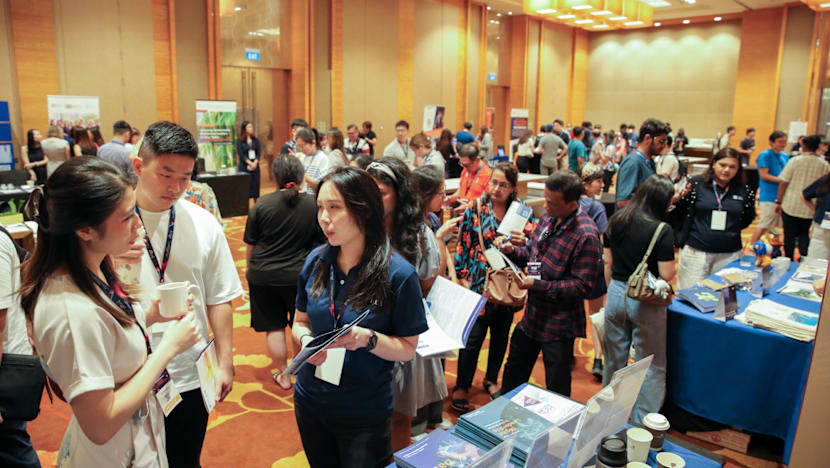
The NUS Postgraduate Fair on September 26 will offer prospective students a platform to examine these programs and how they can bolster their career objectives. The event will launch the NUS Lifelong Learning Festival, themed "Human in the Age of AI," and gather over 200 programs and courses, including master’s and PhD degrees from 12 schools and faculties.
Visitors can interact with representatives from various departments, compare educational options, and attend masterclasses and information sessions to gain insights into teaching methods and subject areas.
Students like Loke Jia Jin, a part-time Master of Technology in Enterprise Business Analytics student, utilize generative AI to simplify complex content and troubleshoot coding errors. At the same time, he learns to verify AI-generated outputs and comprehend their limitations. Niladri Saha Saccha, a PhD student in Chemical and Biomolecular Engineering, uses AI to manage data-intensive coursework, such as organizing large datasets, automating calculations, and flagging inconsistencies.
In his research, AI assists in screening extensive scientific literature for recurring keywords, key publications, and common research themes, allowing him to dedicate more time to in-depth evaluation of relevant papers.
Associate Professor Chai emphasizes that NUS' structured learning and academic rigor enable students to develop AI fluency along with the necessary capabilities, ethics, and critical thinking needed to successfully apply AI in multifaceted problems. He asserts that the combination of technical proficiency and human judgment will define effective professionals in the future. The NUS Postgraduate Fair will be held on September 26, with both in-person and virtual attendance options available.
Written by urgent.news from Channel News Asia's reporting — not their text. Machine-written — may contain errors; check the original before relying on it.