Enterprise SSDs now consume 48% of global NAND flash supply
A recent study by Counterpoint Research highlights the seismic shift the NAND flash industry is undergoing because of generative AI and chatbot services. While AI training workloads are increasingly being replaced by inference tasks, enterprise SSDs are consuming around half of the world's entire NAND supply. Read Entire Article
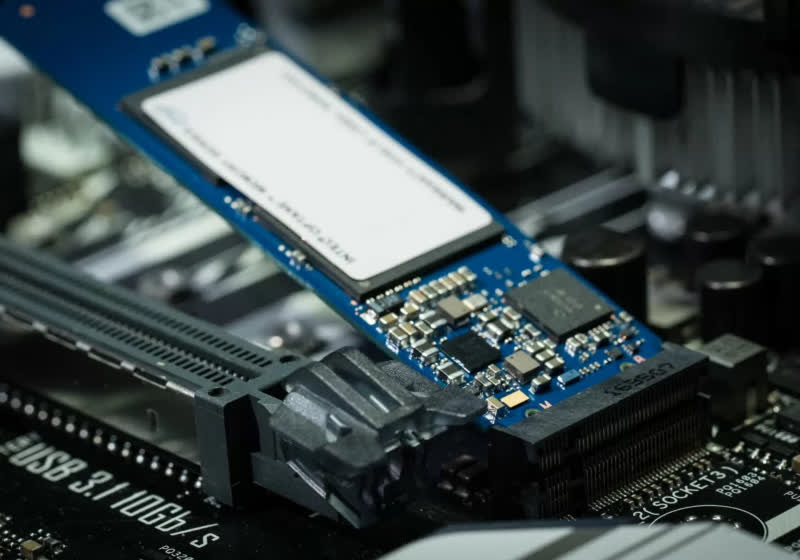
In the rapidly evolving landscape of technology, enterprise solid-state drives (SSDs) are dominating the global NAND flash supply market, accounting for a substantial 48% of all shipments. This shift is primarily driven by the burgeoning demand for high-performance storage solutions in AI data centers and hyperscale operations. According to a recent study by Counterpoint Research, enterprise SSDs have nearly doubled in market share from 26% in 2025 to their current 48% share.
During the second quarter, these SSDs were the leading consumer of the entire global NAND flash supply.
The demand for enterprise SSDs is fueled by their crucial role in supporting AI inference workloads, which require massive datasets to be cached for efficient processing. As businesses increasingly rely on AI-driven services, the need for high-capacity, high-performance storage solutions has become paramount. This trend has far-reaching implications for the manufacturers of NAND flash chips and the resulting enterprise SSDs.
Currently, Samsung leads the NAND flash market with a 25% market share, followed by SK Hynix with 22%. SK Hynix's position has been bolstered by a 40% year-over-year increase in shipments from its subsidiary, Solidigm. Meanwhile, Chinese manufacturers are also making strides, with Yangtze Memory Technologies experiencing a 22% increase in shipments and capturing 14% of the NAND flash market.
They are expanding their domestic operations, utilizing in-house manufacturing capabilities to produce advanced 267-layer 3D NAND chips using proprietary Xtacking technology.
Other notable players include Kioxia, ranking third with 14% of NAND shipments, and Micron and SanDisk holding 13% and 11% of the market, respectively. However, it is essential to note that shipment volumes do not always directly correlate with revenue. YMTC, despite ranking third in terms of chip shipments, only secured the fifth position in terms of revenue, behind Micron and Kioxia.
This discrepancy highlights the importance of considering factors beyond mere shipment volumes when evaluating a company's financial performance.
The shift towards enterprise SSDs is expected to persist, as companies continue to capitalize on the AI-driven spending boom. Manufacturers must adapt to this changing landscape, focusing their production efforts on high-performance storage solutions to stay competitive in the evolving market.
Written by urgent.news from TechSpot's reporting — not their text. Machine-written — may contain errors; check the original before relying on it.