Down the rabbit hole: Social media is exploiting youthful angst for profit or politics
Teenage insecurities are nothing new, but social media has made it easier for commercial, political and ideological actors to identify what young people worry about, keep feeding those anxieties and offer products, communities or beliefs as answers.
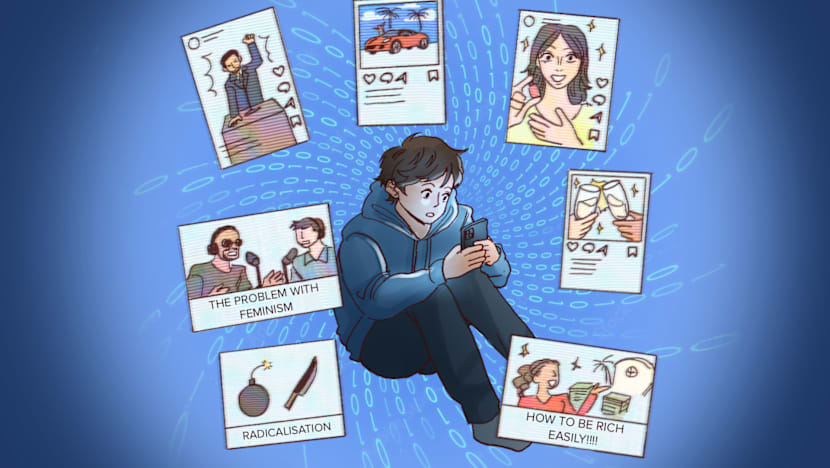
Teenage angst and insecurities have long been a part of growing up, but social media has provided a platform for commercial, political, and ideological entities to capitalize on these emotions. For instance, Renee, a 15-year-old, found herself comparing her appearance to the flawless faces and bodies showcased in endless beauty and skincare videos.
As these posts continued to appear, regardless of her search intent, Renee began to feel increasingly insecure and her questioning shifted from "How do I make myself look better?" to "Why do I need retinol at my age?"
Similarly, Aldrin, a 17-year-old, encountered the influence of online content during his lower secondary school years when friends began echoing the views of Andrew Tate, a controversial social media influencer. Initially, Aldrin found amusement in these clips, but he later distanced himself from them, hoping the algorithm would stop recommending them. Nevertheless, the content was already prevalent on his feed, and his friends' ages made them more susceptible to the ideas presented.
Experts agree that the online environment can magnify youthful insecurities and make adolescents more susceptible to manipulation. Dr. Chew Han Ei, an online safety researcher at Singapore Management University, cautioned that banning platforms like Roblox might only shift the risk. Instead, understanding the factors that draw young people to such content and why they are particularly vulnerable is crucial.
Dr. Ong Say How from the Institute of Mental Health explained that adolescence is a time when questions of identity, belonging, and self-worth are still being addressed. Online spaces can provide acceptance and connection, which may be lacking offline due to factors like family conflict, anxiety, or social rejection. Dr. Natalie Games, a senior clinical psychologist, emphasized that this receptiveness does not reflect weakness, but rather ordinary developmental needs for belonging, significance, competence, and identity.
Written by urgent.news from Channel News Asia's reporting — not their text. Machine-written — may contain errors; check the original before relying on it.