The situation at a glance: Attack on ships: Situation in the Gulf remains tense
Within the framework agreement between the USA and Iran, an agreement had originally been targeted within 60 days. Yet a solution to the conflict seems hardly any closer. Is there any progress?
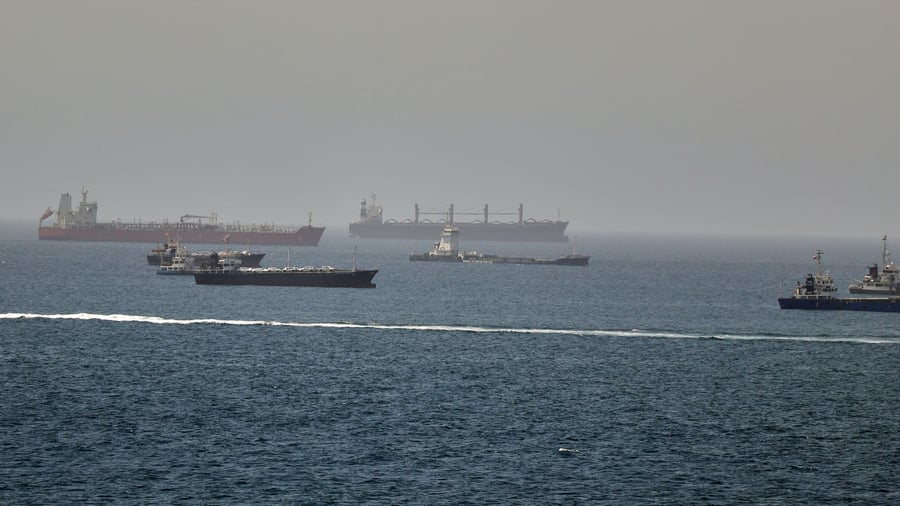
Just before a 60-day truce between the US and Iran expires, the situation in the virtually blocked Strait of Hormuz remains tense. Two ships of the state-owned Emirati oil company Adnoc were attacked in the waterway during the night.
The incident in the strait did not result in any injuries, the state-run Emirati news agency WAM reported. There were no initial reports of possible damage to the ships. The truce is set to expire on Saturday.
The United Arab Emirates (UAE) condemned the attack, which it blamed on Iran, in the strongest possible terms. The Abu Dhabi Foreign Ministry emphasized that the attack was a blatant violation of UN Security Council Resolution 2817, which reaffirms the freedom of navigation.
Such attacks on commercial shipping in the Strait of Hormuz are "acts of piracy" by the Iranian Revolutionary Guard and pose a direct threat to regional stability, its population and global energy security, the ministry said. Iran must "stop these unprovoked attacks" and ensure the complete reopening of the strait.
The strait has been virtually blocked
The US and Israel's war against Iran, which has been ongoing since late February, has brought shipping traffic in the Strait of Hormuz, which is crucial for global trade, to a near standstill. This has led to higher prices for oil, gas and fertilizers worldwide.
The warring parties have long been struggling to fully reopen the virtually blocked strait - so far without success. Iran recently demanded that, in exchange for reopening the strait, all US threats against the country cease, a blockade of Iranian ports be lifted, US troops be withdrawn from the region and full compensation be paid for war damages.
Truce to be extended
The US and Iran agreed on a framework deal in mid-June that was supposed to pave the way for a lasting peace. Further details, including a solution for reopening the Strait of Hormuz, were to be worked out within a 60-day deadline. In the meantime, the guns were supposed to fall silent.
However, in recent weeks, there have been repeated mutual attacks in the region. Pakistani security circles have recently reported that the truce is to be extended - by another 60 or even 90 days. Pakistan is acting as a mediator in the conflict.
So far, however, it has not been decided whether this new truce will be publicly communicated. At the same time, an agreement between Iran and Oman on shipping through the Strait of Hormuz is imminent, it said. According to Pakistani security circles, this could be concluded before Saturday.
Strait as leverage
Iran has recently suggested a kind of round course for the strait: together with neighboring Oman, cargo ships could enter the Strait of Hormuz via a northern route through Iranian territorial waters.
After the ships have called at ports in Iran or Arab Gulf states, they could use a southern route through Omani territorial waters for the return journey. For Iran, the de facto blockade of the strait is an effective means of exerting pressure on US President Donald Trump.
In the US, important midterm elections to the US Congress are due in just under three months, in which Trump's Republicans are fighting to maintain their majority. And the war is unpopular in the US, not least because of rising gasoline prices.
The opening of the Strait of Hormuz is now one of the key issues in the conflict. The Iranian power apparatus emphasizes that, in consultation with Oman, the other neighboring state, it wants to collect a fee from ships passing through the strait. The US vehemently rejects a toll.
Environmental damage as an argument
When explaining its plan to collect a fee for passage through the Strait of Hormuz in the future, Iran also points to the environmental damage caused by passing ships. The parties that benefit from shipping traffic through the Strait of Hormuz have a legal and moral obligation to contribute to remedying these damages, Iranian Foreign Ministry spokesman Ismail Baghai said on X.
As an example, Baghai pointed to recent oil pollution along the coast of the Iranian island of Gheschm, which lies in the strait. According to preliminary findings, a foreign freighter was responsible for this. He did not provide more detailed information.
Iranian Deputy Foreign Minister Kasem Gharibabadi wrote on platform X that the oil pollution off Gheschm was "a consequence of foreign military aggression in the region." Such environmental damage underlined once again the urgent need for Iran to establish and implement an administrative mechanism for the Strait of Hormuz.
Environmentalists regularly point out that the Iran war poses a high risk of ships being damaged or hit.
US military counters complaints about conditions on aircraft carrier
The US military, meanwhile, has rejected reports of poor conditions on the aircraft carrier "USS Abraham Lincoln," which is deployed in the Middle East. The sailors and Marines remained resilient and determined after spending more than 260 days at sea, the responsible regional command Centcom said.
Contrary to reports, no crew member on board the aircraft carrier had died. Iranian media had reported that seven people had been killed in violent clashes on board the aircraft carrier and that the mood on board was tense.
According to media reports, the aircraft carrier is to be withdrawn from the Middle East and replaced by the "USS George Washington". This was reported by the Wall Street Journal and US broadcaster CNN.
Translated by urgent.news. Machine-written — may contain errors; check the original before relying on it.