Dead fish found on beaches? Here’s what you should and shouldn't do
This is what to do if you encounter dead fish on Western Cape beaches, as the DFFE warns against collecting them.
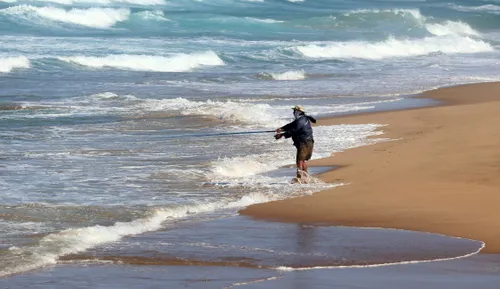
The recent mass die-off of fish along the Western Cape coast has officially concluded, but the issue of what to do when encountering dead fish remains. Unfortunately, you cannot take them home to cook. The Department of Forestry, Fisheries and the Environment (DFFE) has cautioned the public. Until test results are verified, do not collect or eat any dead fish spotted on beaches.
Report the sighting as soon as possible, providing the precise location, date, and an estimate of how many fish were involved. Contact local authorities, environmental management offices, or the DFFE directly. It's crucial to leave the fish undisturbed so that expert observers and inspectors can gather uncontaminated samples for laboratory testing.
At this point, the cause of the die-off remains undetermined. A broad investigation, encompassing the DFFE, research institutions, lab analyses, the fishing industry, and other scientists, is ongoing. Dead sardines have been collected from various locations such as Saldanha Bay, Hout Bay, Betty's Bay, Gansbaai, and Cape Canyon, while healthy sardines from Elands Bay and Lambert's Bay have been gathered for comparison.
The SAIAB and Rhodes University are conducting disease tests, while SAIAB and a private laboratory are checking for marine biotoxins. Scientists are also analyzing water samples, gut contents, and gill tissues for signs of harmful algae. They're also performing standard biological examinations like measuring size, weight, condition, and maturity, as well as macroscopic gill inspections.
Harmful algal blooms caused by Alexandrium catenella were present in Saldanha Bay when the mortality first occurred. This particular algae has been linked to sardine fatalities in the past and is still being investigated as a potential cause. However, it hasn't been found in the sampled water or fish stomach content, and preliminary tests haven't identified a harmful-algal cause yet.
Oceanographic data from SAEON and the CSIR indicates that there was enhanced upwelling, unusually cold nearshore water, and low oxygen levels in St Helena Bay prior to the event. It's believed that a southward-moving coastal current may have carried affected fish from the West Coast towards Cape Point and beyond towards the east.
Yet, these observations provide valuable context but do not confirm the cause. The DFFE reiterates that no broader impacts on the marine ecosystem have been observed so far.
Written by urgent.news from IOL's reporting — not their text. Machine-written — may contain errors; check the original before relying on it.