Crypto for Good: Why PUMPCHANGE Believes Meme Coins Can Give Back
Crypto charity has a familiar shape. A project announces a giving initiative, usually timed to a launch or a token event. There’s a press release, a percentage, sometimes a photo. The post Crypto for Good: Why PUMPCHANGE Believes Meme Coins Can Give Back appeared first on Ventureburn .
Crypto charity often follows a predictable pattern: a project announces a charitable initiative, usually coinciding with a launch or token event. A press release, a percentage, and sometimes a photo accompany the announcement, but months later, it becomes unclear what happened to the donated funds, and those who cared have moved on.
This isn't just about a single project; it's a recurring pattern, old enough that a skeptical reader would question the validity of "crypto for good." The failures in crypto charity stem from structural issues rather than moral ones. The giving is tied to the project, not the token itself, leading to vague claims that are hard to verify.
Donations are usually tied to a campaign rather than being a property of the token, making it easy for projects to end the giving quietly once the initial goodwill fades. These issues reveal that the mechanism is the weak link, not the sincerity of the project. When giving is built into the token from the start, the donation becomes a permanent part of the token, fixed before the token even exists.
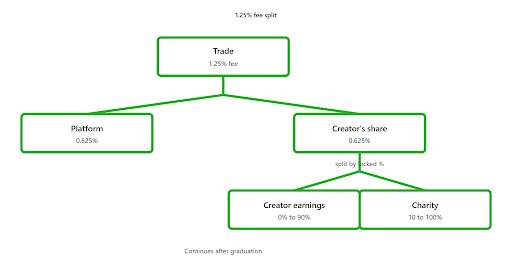
PUMPCHANGE, a Solana meme coin launchpad, has adopted this approach. Every token launched on PUMPCHANGE has a predetermined charitable donation built into its trading fees, from the moment the token is created. Creators choose a charity and lock in a donation percentage during the token creation process, ensuring that the donation percentage remains unchanged throughout the token's lifecycle.
This mechanism differs significantly from traditional charity announcements, which rely on ongoing human intervention. With protocol-level giving, no one needs to remember to donate, and no one can quietly stop. This structural change in how crypto charity is implemented raises an important question: instead of asking whether a project will keep its promise, the focus shifts to whether the mechanism that pays out requires anyone to maintain the promise at all.
Written by urgent.news from Ventureburn's reporting — not their text. Machine-written — may contain errors; check the original before relying on it.