Could China’s new transport-tanker capability boost PLA power beyond first island chain?
China has confirmed that its new Y-20B heavy transport aircraft can be converted into an aerial refuelling tanker, potentially boosting PLA Air Force capacities deeper into the western Pacific. A documentary aired by state broadcaster CCTV on August 5 said the Y-20B, an improved variant of China’s Y-20 strategic transport powered by domestically developed WS-20 turbofan engines, could switch…
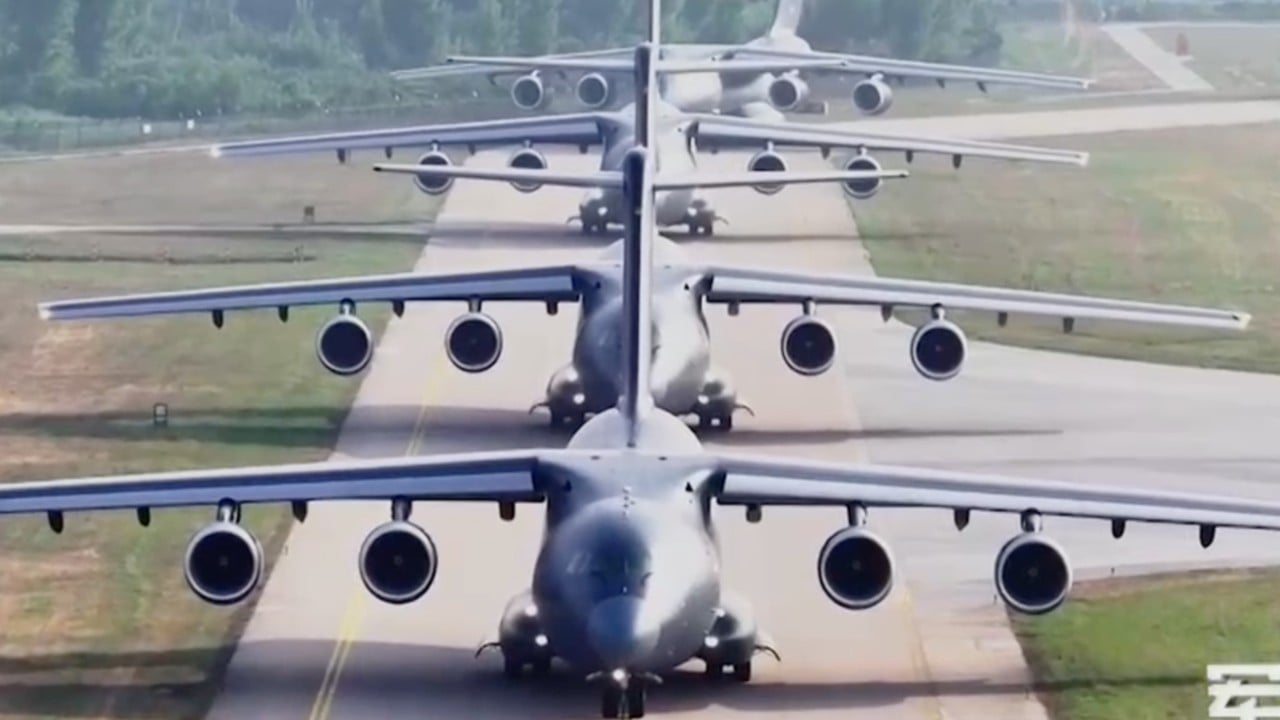
China's Y-20B heavy transport aircraft has been confirmed to possess the ability to convert into an aerial refuelling tanker, potentially augmenting the capabilities of the People's Liberation Army Air Force (PLAAF) in the western Pacific. The Y-20B, an enhanced version of China's Y-20 strategic transport, is powered by domestically designed WS-20 turbofan engines.
This versatility allows for seamless transitions between transport and aerial refuelling missions using pallet-ready fuel tanks and removable refuelling equipment. This capability aligns with earlier reports from state broadcaster CCTV, which highlighted the Y-20B's potential to enhance the PLAAF's capacity to conduct operations beyond the first island chain and deeper into the western Pacific.
Aviation analyst Andreas Rupprecht has been tracking this capability since January 2022, when the third Y-20B prototype was spotted with in-flight refuelling pods. The significance of this development lies in the operational impact it could have on the PLAAF's tanker and fighter fleets. The convertible Y-20B offers a significant boost in capacity and flexibility, as individual aircraft can be assigned to either transport or refuelling missions.
This simplifies maintenance compared to separate Y-20A transports and YY-20A tankers, which are dedicated aerial-refuelling variants.
While this capability is not entirely unique to China, it does offer operational advantages due to the scale of China's expanding heavy-transport fleet. By allowing commanders to draw on part of this fleet during contingencies, the Y-20B could help sustain fighter sorties and other air operations beyond the first island chain and cover the vast area controlled by the PLAAF Western Theatre Command and over the South China Sea.
The Y-20B's WS-20 high-bypass turbofan engines provide greater thrust and fuel efficiency, potentially reducing fuel consumption and allowing for longer-range operations. This contrasts with China's previous reliance on a smaller fleet of H-6-based tankers and imported Il-78 tankers, which limited the scale of long-range operations.
The expansion of China's Y-20 tanker fleet has been substantial since the 2024 China Military Power Report, which estimated the PLA Air Force operated 16 Y-20U tankers at that time. Recent assessments indicate that at least 35 individual YY-20A tankers and over 24 Y-20Bs capable of serving as multi-role tanker transports are in service.
This expansion reflects the PLA Air Force's growing emphasis on aerial refuelling to support longer and more persistent operations, particularly for its fleet of J-10, J-16, and J-20 fighters, which can receive fuel in flight. Greater tanker availability would allow for more frequent and intensive refuelling practices, supporting extended combat air patrols and longer-range missions.
The implications of this capability extend to China's long-range strike forces, with recent footage showing H-6N strategic bombers carrying air-launched nuclear-capable ballistic missiles and refueling from Y-20-family tankers. This development suggests that aerial refuelling is becoming increasingly integrated into routine training, with the PLA Air Force incorporating it into flight-academy transition and combat-training programmes.
China's Y-20 airframe is also being developed for various missions, including airborne early-warning and control aircraft, although individual Y-20Bs may not be able to switch between all these roles. This versatility underscores China's strategic focus on developing a more capable and adaptable air force capable of projecting power over long distances.
Written by urgent.news from South China Morning Post's reporting — not their text. Machine-written — may contain errors; check the original before relying on it.
This story
This is one outlet's version. Read the fullest account.