Claude AI watermarking is not definitive evidence, say SA experts
Local AI experts raise questions about whether AI-generated content can be correctly identified, and whether a provenance signal can be trusted.
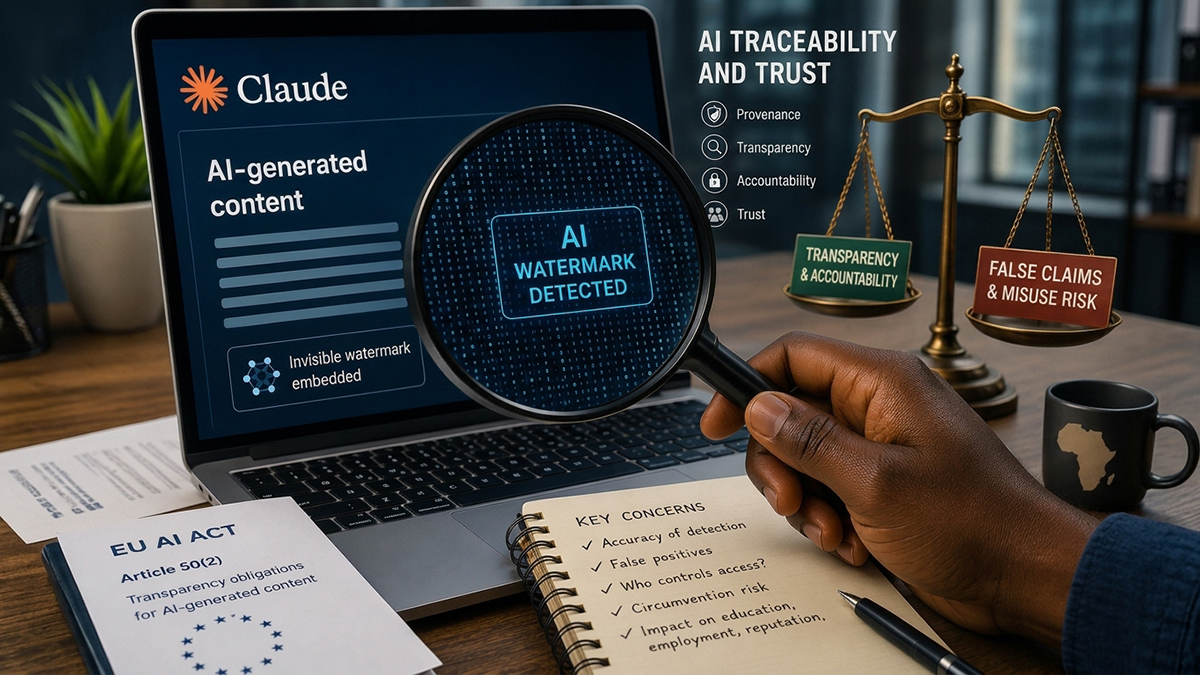
Claude AI, developed by US-based AI safety and research firm Anthropic, has begun embedding invisible watermarks in the content it generates. This move is aimed at increasing traceability of AI-generated content, but has raised concerns among South African AI experts. The watermarks will be embedded in text and images processed by Claude's models, and include metadata in other file types.
However, experts warn that the technology could potentially lead to false authorship claims. Arthur Goldstuck, MD of World Wide Worx, cautions that while watermarking can establish provenance, it should not be treated as definitive proof of authorship or misuse. The greatest risk, he believes, arises when detection results are treated as conclusive verdicts, particularly in fields such as education, publishing, or employment.
Johan Steyn, founder of AIforBusiness.net, echoes this concern, pointing out that the rapid development of AI technology makes it difficult for detection systems to keep pace. He also questions the ease with which users might remove or circumvent watermarks, and suggests that watermark information should only be accessible to those with clearly-defined purposes.
Written by urgent.news from ITWeb's reporting — not their text. Machine-written — may contain errors; check the original before relying on it.