Chinese doctor stuns maths world by cracking decades-old problem using ChatGPT
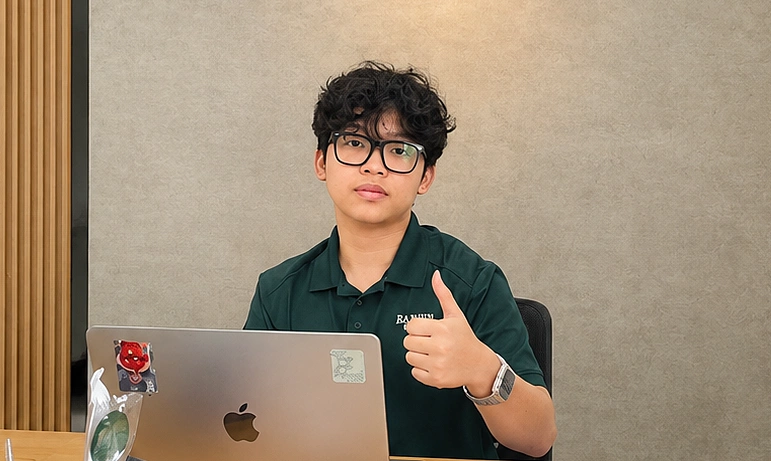
When Beijing-based neurosurgeon Jin Shanmu pulled up a chair at his computer, he was not looking to make mathematical history. He was simply trying to crack a problem related to brain ultrasounds. Instead, the self-taught maths enthusiast, with help from OpenAI’s latest flagship artificial intelligence (AI) model, solved a two-decade-old mathematical puzzle that had frustrated experts around the…
When Beijing-based neurosurgeon Jin Shanmu opened his computer, he had no intention of making a mark in the world of mathematics. He was merely attempting to solve a problem related to brain ultrasounds. However, with the help of OpenAI's latest AI model, ChatGPT, he accomplished something remarkable - he solved a mathematical puzzle that had stumped experts for two decades.
Jin, a postdoctoral researcher and resident at Peking Union Medical College Hospital, managed to prove Crouzeix's conjecture, a problem in numerical linear algebra. He achieved this using a 16-hour autonomous run on GPT-5.6-Sol on the ChatGPT Work platform. The conjecture, proposed by French mathematician Michel Crouzeix, states that the norm of applying any function to a matrix is no larger than twice the function's maximum value on that matrix's numerical range.
The breakthrough was shared with Cornell University mathematician Alex Townsend and University of Washington professor Anne Greenbaum, who had been prompting GPT models to solve the conjecture for over a year. To their surprise, GPT-5.6-Sol pointed them to a paper that had been uploaded online just three days earlier, claiming the problem had been solved.
Jin, an undergraduate geology major who later transitioned to medicine, had limited formal mathematical education. His achievement demonstrates the striking capabilities of frontier AI systems, as these models have been increasingly driving mathematical breakthroughs.
Written by urgent.news from South China Morning Post's reporting — not their text. Machine-written — may contain errors; check the original before relying on it.