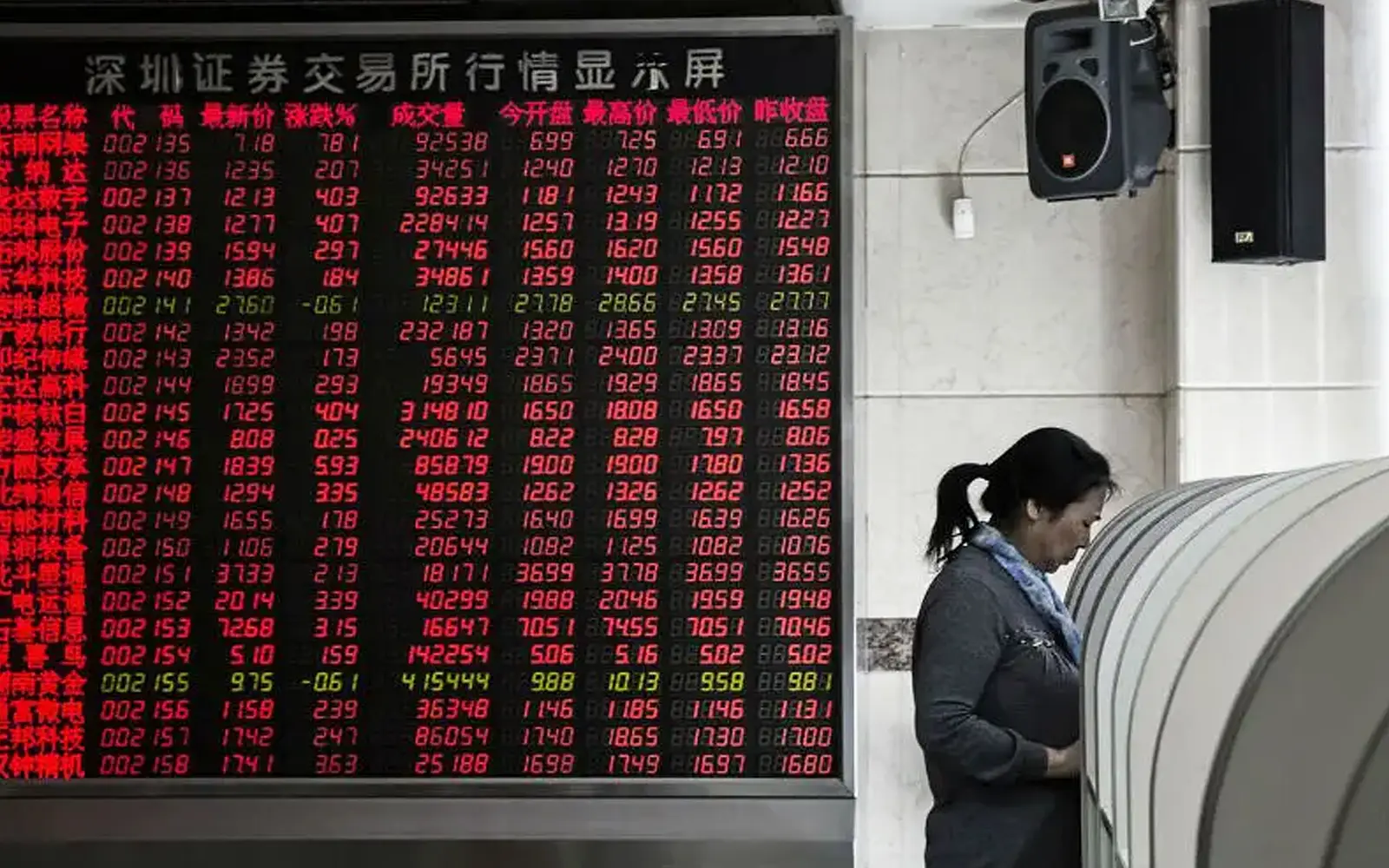
Asian shares mostly fall and US futures are little changed after US inflation data improves
Asian shares experienced a decline on Friday as U.S. inflation data revealed a better-than-expected improvement in July. U.S. futures remained largely unchanged during the same period. Oil prices remained stable following a recent downward trend. Tokyo's Nikkei 225 index rose marginally by 0.3% to 68,533.85, while South Korea's Kospi increased by 1.3% to 6,924.74.
Hong Kong's Hang Seng fell by 1% to 25,137.87, and China's Shanghai Composite index dropped by 0.5% to 3,908.05. Australia's S&P/ASX 200 dropped by 1.1% to 9,090.90, while Taiwan's Taiex decreased by 0.2%, and India's Sensex declined by 0.5%. The S&P 500 gained 0.7% to its highest closing level of 7,798.99 on Thursday, whereas the Dow Jones Industrial Average increased by 0.1% to 53,839.99, and the Nasdaq composite rose by 0.8% to 26,803.03.
Wall Street had taken a breath of relief after a report indicated that U.S. wholesale prices were 4.7% higher last month compared to a year ago. This figure was less severe than June's 5.5% wholesale inflation rate and slightly better than the economists' expectations. If inflation patterns continue this way, the Federal Reserve may choose to postpone rate hikes.
While higher rates can help control inflation, they achieve this by intentionally slowing down the economy and increasing borrowing costs. Stephen Innes of SPI Asset Management noted that "The disinflation ducks are starting to line up, and with oil also backing off, the market has steadily stripped away the case for another near-term Fed hike."
The first possible rate increase would be the first in over three years, potentially displeasing President Donald Trump, who has been advocating for lower interest rates. Brent crude oil prices eased, falling by 2.1% and settling nearly unchanged at $87.06 per barrel. Oil prices have been volatile in July, fluctuating between $72 and $102 per barrel due to hopes of a deal between Trump and Iran, which could allow oil tankers to freely exit the Middle East through the Strait of Hormuz.
A summer holiday lull has also contributed to reduced trading activity, but concerns about oil supplies remain. The U.S. dollar depreciated to 159.32 Japanese yen from 159.50 yen, while the euro strengthened to $1.1543 from $1.1530.
Written by urgent.news from Winnipeg Free Press's reporting — not their text. Machine-written — may contain errors; check the original before relying on it.