Artist Trevor Paglen’s new book offers timely take on technology’s hijacking of visual culture
The publication features a collection of essays about how two technological revolutions have transformed our relationship to images
John Gray's observation, "Technology is an event that has befallen man," continues to hold true as the impacts of artificial intelligence (AI) and its fundamental operations exacerbate multiple threats to humanity's unique genius and omnipotence. Silicon Valley's rightward shift showcases that technology serves the contingent interests of human ends.
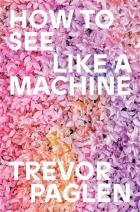
Trevor Paglen's new book, written over the last decade, addresses the transformation of visual culture brought about by two technological revolutions: the rise of computer vision and generative media. Paglen's work, characterized by its investigative and research-driven approach, highlights the urgency of the situation and the need for a radical update of traditional theories and language for understanding visual culture.
The book emphasizes that images are no longer simply representational but have become operational interfaces that serve corporate or state interests, exerting more insidious, ubiquitous, and granular influence in our daily lives. As we navigate this tech-image world, it is crucial to reconsider what images are doing to us and the world rather than what they say about it.
Paglen delves into the intricacies of computer vision, the technologies that translate the visual world into vectors and mathematical abstractions, and how they are automating the "seeing" and reading of images at an unprecedented scale. These invisible, machine-to-machine image worlds, including processes like facial recognition and license plate reading, have become extraordinarily intimate instruments of power.
Moreover, Paglen uncovers the discriminatory visual categorization embedded in foundational data sets, such as ImageNet, which now infect the digital systems shaping our world. Generative media, the automation of image-making and writing, has shattered the "fragile, fuzzy truce" between perception and reality, with far-reaching political and economic consequences.
The book also explores the history of human perception manipulation, including experiments on kittens, CIA involvement, and magicians. In the face of these "cognitive injection attacks," which manipulate our collective sense of reality, the only safe spaces are outside the system. Artists are striving to counter the skewed visual language through creative means.
Written by urgent.news from The Art Newspaper's reporting — not their text. Machine-written — may contain errors; check the original before relying on it.