Ancient Amazon civilization might have been home to millions
Laser surveys have revealed hundreds of earthworks in the Amazon. Researchers estimate the ancient Amazon civilization could have supported 3 million people. The post Ancient Amazon civilization might have been home to millions first appeared on EarthSky .
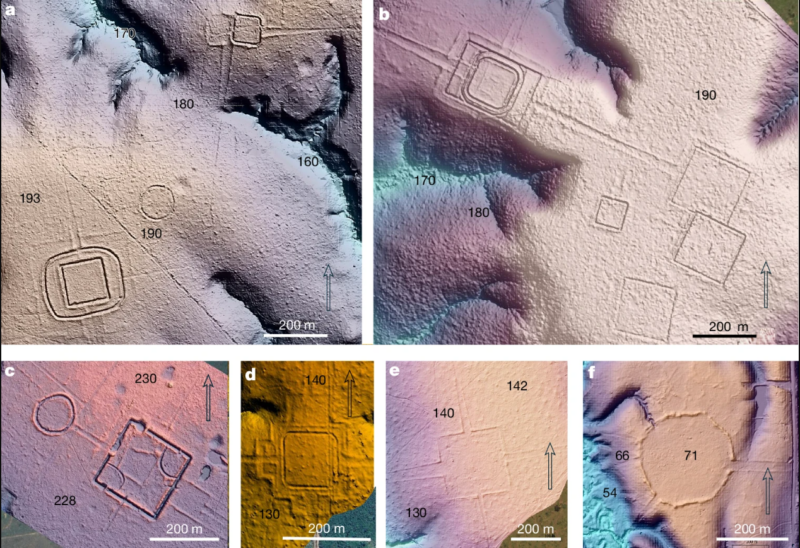
A new study utilizing laser scanning in the Amazon has uncovered numerous ancient earthworks, suggesting that an ancient civilization might have been home to millions of people around 2,000 years ago. Researchers from the University of Helsinki employed Light Detection and Ranging Imaging (Lidar) to peer through the dense jungle and reveal these earthworks, which were created between 600 BCE and 850 CE.
The research, published in the journal Nature, indicates that the southwestern Amazonia region, encompassing parts of present-day Brazil, Bolivia, and Peru, might have supported up to 3 million people during its peak. The area was not a single civilization but a network of various communities referred to as the Aquiry people, named after the indigenous people who used the Acre River as a reference.
The earthworks, which include monumental geometric structures and later settlement sites, were created by digging ditches and mounds. While the specific cause of the civilization's rapid collapse around 850 CE remains a mystery, it may be connected to the abrupt collapse of the Maya civilization in Central America around the same period.
The study's findings challenge previous notions about the Amazon region's past, highlighting the significant human impact the Aquiry people had on the environment. The civilization not only constructed earthworks but also cleared land for crops and managed valuable tree species. They burned bamboo trees for ceremonial centers, cleared land for crops such as maize, squash, sweet potatoes, chili peppers, beans, and peanuts, and bulldozed roads between centers.
Additionally, the Aquiry people favored protein-rich tree species like the Brazil nut tree and peach palm.
With only a small fraction of the southwestern Amazon surveyed, researchers believe that many more archaeological sites may still be hidden beneath the forest canopy.
Written by urgent.news from EarthSky's reporting — not their text. Machine-written — may contain errors; check the original before relying on it.