An attack on Ghana’s peace is an attack on the future of its children — IGP
Inspector-General of Police (IGP) Christian Tetteh Yohunu has urged religious leaders to use their influence to prevent religious tensions and violence, warning that any attack on Ghana’s peace ultimately threatens the future of the country’s children.
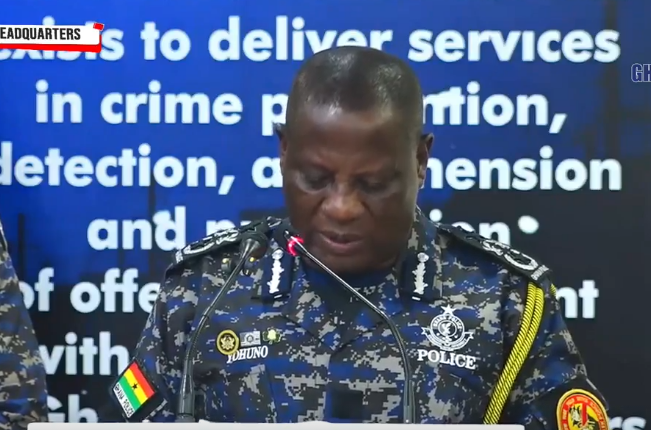
Inspector-General of Police Christian Tetteh Yohunu has implored religious leaders to leverage their influence to curb religious tensions and violence, warning that any assault on Ghana's peace would imperil the nation's children. During a meeting with religious leaders at the National Police Headquarters on Friday, August 14, Yohunu emphasized the pivotal role of religious leaders in preserving peace, especially when tensions can be easily exacerbated by words and actions.
He stressed that individuals should not mete out justice themselves when they perceive an offense has been committed, insisting that such matters should be reported to the proper legal authorities. "No civilized society can endure when people assume the role of judge and jury," he stated. The IGP also underscored the importance of respecting both religious freedom and freedom of speech, making it clear that these freedoms do not permit violent or unlawful actions against others.
"Every person has the right to worship without fear of violence," he affirmed. According to Yohunu, while speech inciting religious discord is prohibited under Article 20 of the International Covenant on Civil and Political Rights (ICCPR), alleged offenses must still be addressed through lawful methods. "Even though speech that incites religious hatred is restricted under Article 20 of the ICCPR, suspects in state custody or in public must not face torture, cruel treatment, or assault," he explained.
Therefore, Yohunu called on Christian and Muslim leaders to employ their platforms to quell tensions and dissuade their followers—particularly the youth—from engaging in violence. "Our revered clergy and imams, our beloved chief imam, they listen to your sermons, read your social media posts, and observe your actions," he remarked.
He cautioned that the impact of religious leaders' messages could either prevent conflict or escalate tensions based on the content they disseminate. "In this delicate period, your words can either act as water upon an emerging fire or as petrol upon dying embers," Yohunu cautioned. He issued three specific requests to religious leaders: to focus their Friday sermons in Islam and Sunday sermons solely on messages of interfaith harmony, self-restraint, and the perils of religious conflict.
He urged them to remind their congregations of the long-term repercussions of violence, particularly for future generations. "Remind your congregations that an assault on Ghana's peace is an assault on the future of their own children," he urged. Furthermore, Yohunu championed visible collaboration between Christian and Islamic leaders as a demonstration of unity and a means to counter attempts to turn religious divisions into sources of strife.
"Let the public witness Christians and Islamic leaders standing together, sharing meals, issuing joint statements, and traversing our communities hand-in-hand," he advocated. The IGP emphasized that such cooperation was particularly crucial among younger generations, who could be swayed by narratives portraying religious differences as grounds for division.
He urged religious leaders to convey to their followers that reporting alleged offenses to the appropriate authorities, rather than seeking personal or collective retaliation, aligns with both civic responsibility and religious principles.
Written by urgent.news from MyJoyOnline Ghana's reporting — not their text. Machine-written — may contain errors; check the original before relying on it.