800 kmph in 5.3 seconds: China train sets third record in six months
China's experimental maglev train achieved 800 kmph in just 5.3 seconds. This remarkable acceleration sets a new world record for short-distance travel. The technology is not intended for passenger transport due to extreme acceleration levels. Instead, it may find future uses in rocketry and military aircraft. Researchers are exploring its potential for industrial transport and specialized…
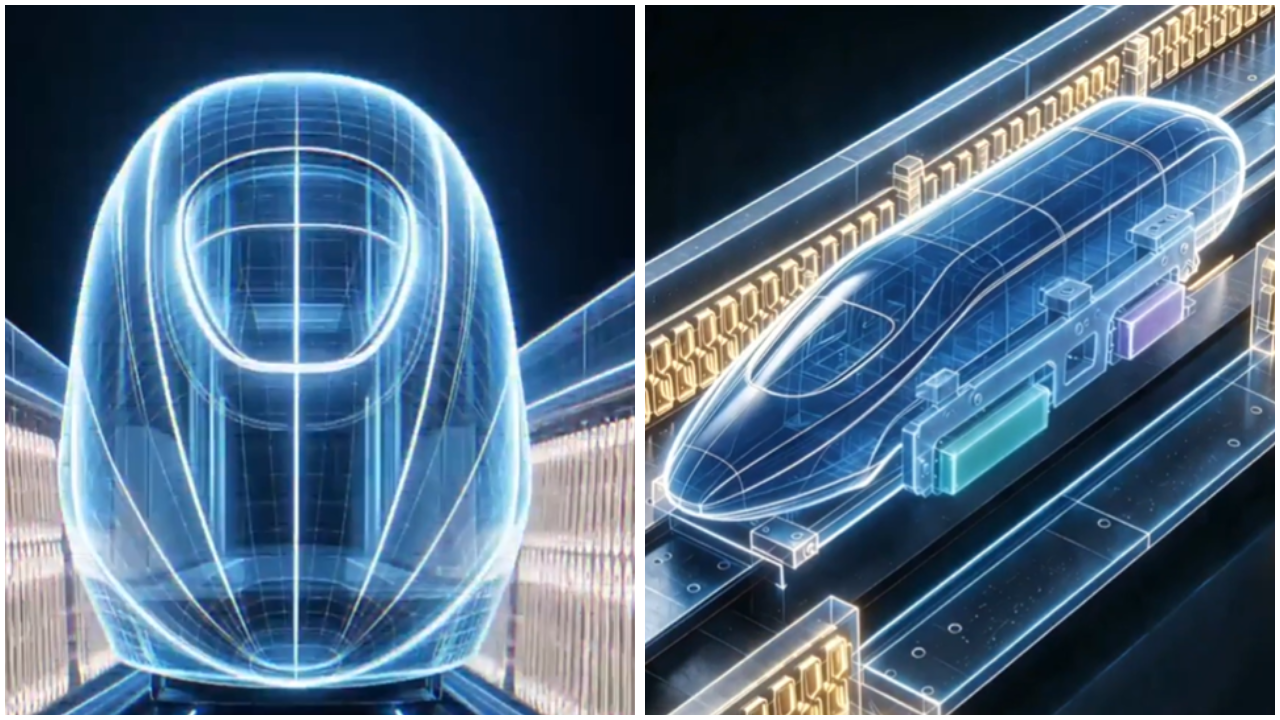
In a groundbreaking development, China has set a new speed record for its experimental maglev train, reaching 800 kmph in just 5.3 seconds on a 1-km test track in Hubei province. This achievement marks the third world record for the technology in the past six months. The experimental train, developed at Donghu Laboratory, weighs 1,110 kg and was driven by electromagnetic forces that levitated and propelled it forward, eliminating friction associated with traditional rail travel.
The experimental system, designed for applications beyond conventional high-speed rail, could potentially be adapted for rocketry, military aircraft, drones, and industrial transport. While the technology is not intended for passenger use, its rapid acceleration could offer significant advantages in these fields. Unlike China's fastest commercial maglev service, which reaches speeds of about 217 mph (349 kmph), the experimental vehicle operates at more than twice that speed.
The trials have presented numerous engineering challenges, particularly at such high speeds. The track alignment must remain within 0.5 millimeters, and the control systems must manage the vehicle's position, levitation, and propulsion simultaneously to ensure stability. The 1,110 kg vehicle requires enormous amounts of energy and force to accelerate to these speeds within seconds.
Researchers are exploring the potential applications of this technology in areas such as rocketry, military aircraft, drones, and industrial transport. A ground-based launch system using this electromagnetic acceleration could potentially reduce the fuel requirements for rockets and aircraft during take-off. Additionally, the technology could find uses in specialized elevators.
Despite these promising developments, the technology remains experimental. While China's commercial maglev systems already demonstrate the feasibility of magnetic levitation for high-speed passenger transport, the leap to an 800-kmph experimental vehicle represents a significantly different engineering challenge. Nevertheless, the ongoing research and development efforts in this field hold great potential for future innovations.
Written by urgent.news from Times of India's reporting — not their text. Machine-written — may contain errors; check the original before relying on it.