You got hold of eclipse glasses just in time - here's what to do with them now
Solar specs are tricky to recycle because of their lenses, so here are three things to do instead.
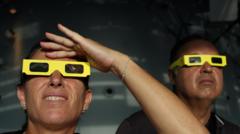
Millions of people across mainland Europe witnessed a breathtaking total solar eclipse on Wednesday for the first time in over 25 years. In the UK, those who secured a pair of eclipse glasses faced a race against time due to shortages. If you managed to secure some, you may be wondering what to do with them now. Dr Renee Tonkin, founder of Science Owl, highlights that eclipse glasses are a prime example of our single-use culture, especially because they're hard to recycle due to their mixed materials.
The cardboard frames can be recycled separately from the lenses, but the lenses themselves are more challenging to recycle. There are three options for dealing with your eclipse glasses. First, you might keep them for the upcoming total solar eclipse in 2027, which will be visible in parts of southern Spain, northern Africa, and the Arabian peninsula.
Next year's eclipse will last for six minutes and 23 seconds, the longest on land since 1991, making it particularly exciting. However, keep the glasses safe to ensure the lens coating remains intact. Alternatively, consider donating your eclipse glasses to schools, libraries, or after-school science clubs that might appreciate them.
Local astronomical societies could also benefit from extra glasses for future events. Lastly, you can repurpose the solar filter material from your eclipse glasses by cutting out a square and attaching it to your phone's camera lens to capture stunning pictures of the Sun's surface and sunspots. Just remember to be cautious with prolonged exposure to the Sun's UV rays, as it can damage your camera's sensors.
Written by urgent.news from BBC News's reporting — not their text. Machine-written — may contain errors; check the original before relying on it.
This story
This is one outlet's version. Read the fullest account.