Wirtschaftswunder: Waffen, Hacker, Zwangsarbeit: Das dunkle Geschäftsmodell hinter Nordkoreas Boom
Bittere Armut trifft auf Smartphone-Rausch: Nordkorea wächst nach langer Krise seit mehr als drei Jahren wieder – finanziert von Putins Ukraine-Krieg, Kryptodiebstählen und Gefängnisarbeit.
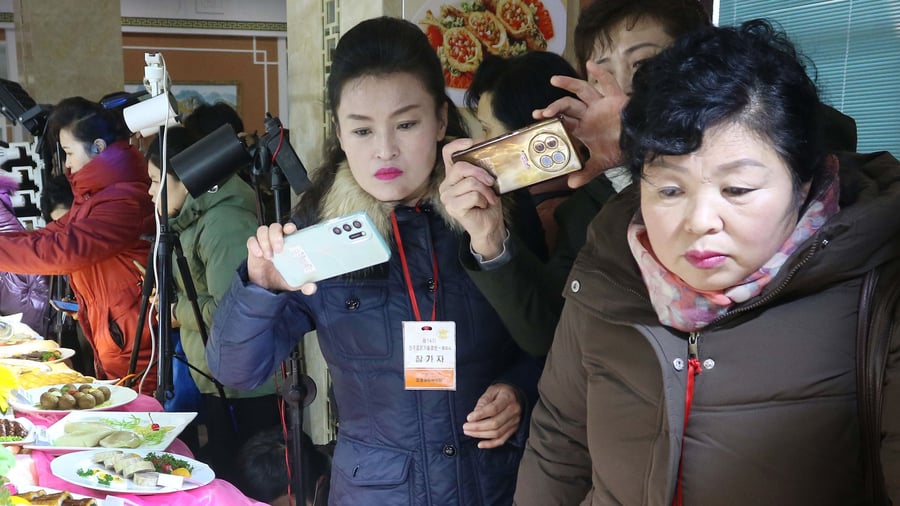
In the isolated autocratic regime of North Korea, the digital modernity seems not only to have arrived but to be flourishing. Despite the dire poverty, fields are still plowed by oxen. Six cashless payment systems and 24 smartphone brands are present in Pyongyang, as reported by Martyn Williams, a technology expert at the US-based Stimson Center.
The technology, often sourced from China, is used to generate revenue for trading companies. North Koreans are required to pay up to $500 for these items, either in cash or government-issued currency certificates. One such transaction was reportedly for $2,000. The Wall Street Journal recently hailed North Korea as the "most surprising economic success story in the world," but the source of the sudden influx of foreign currency remains a mystery.
North Koreans cannot purchase hard currency and luxury goods with their domestic currency, the won. They must use dollars or other hard currencies, which have been flowing into the country through trade, smuggling, and payments from North Koreans working abroad. This currency is exchanged for the won through a fixed exchange rate system known as the "deposited currency."
Wares, munitions, and rockets delivered to Russia, as well as soldiers sent to Russia's war in Ukraine, may also contribute to the regime's foreign currency earnings.
Recent reports from the Ukrainian government indicate that North Korea has recently sent entire rocket units to Russia's western border and could send an additional 50,000 fighters. Bloomberg Economics estimates that North Korea may have received $22 billion from Russia for weapons and troops since 2022. However, Williams notes that Russian payments alone do not explain the economic boom. Most of the money is flowing into the regime, not into the pockets of the people.
Despite the lack of reliable data, South Korea's Bank of Korea estimates that North Korea's economy grew by 3.5% in 2025, marking the third consecutive year of more than 3% growth. This growth is statistically significant, as the economy had previously contracted due to sanctions and the COVID-19 pandemic. Since the pandemic, the Kim Jong-un regime has closed the border nearly completely but seems to have used the time to mobilize resources.
Factories, hospitals, and homes have been built, and in 2024, the regime launched the "regional development 20 times 10" policy, aiming to modernize 20 regions over ten years to reduce the development gap between the provinces and the capital.
Written by urgent.news from Handelsblatt's reporting — not their text. Machine-written — may contain errors; check the original before relying on it.