Why States Are the Key to the Modern Labor Movement
“States have an opportunity to build the infrastructure of worker power that this country will need in the years ahead,” write Sharon Block and Benjamin Sachs.
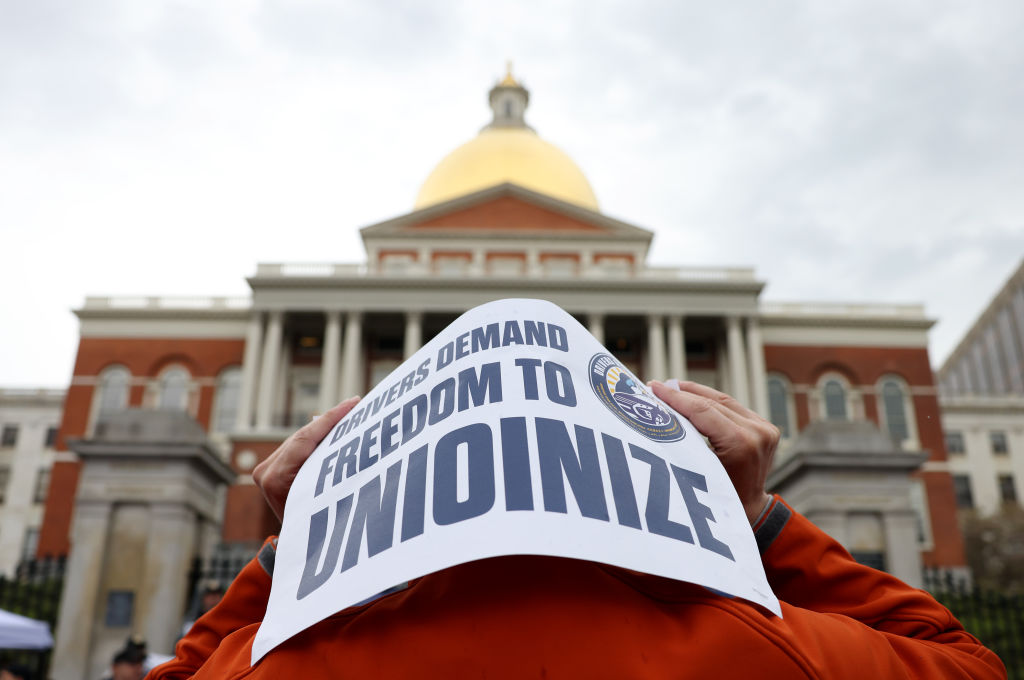
The modern labor movement's potential lies in the power of states, according to recent developments. A testament to this is a recent union victory in Massachusetts, where 70,000 workers formed the App Drivers Union, marking the largest union organizing win since 1941. This success is only set to grow, with California soon to extend similar rights to over 800,000 drivers and the California Gig Workers Union achieving recognition through support from gig workers.
This trend, which could signify a new era of expanding worker power, stems from the concept of "sectoral bargaining," also known as industry-wide standard-setting.
While collective bargaining has traditionally focused on individual worksites, sectoral bargaining sets wages and working conditions across entire industries, a model seen in countries like Europe, South America, and South Africa. The AFL-CIO, recognizing the potential of this approach, has endorsed sectoral bargaining for the first time, signaling a significant shift in how the American labor movement views worker empowerment.
The federal National Labor Relations Act (NLRA) of 1935 has traditionally governed collective bargaining, but decades of court decisions, employer resistance, complex business structures, and worker misclassification have limited its effectiveness. Union density, which once exceeded 30%, has plummeted to historic lows, despite ongoing public interest in unions. The consequences of this decline are evident in wage stagnation, widening inequality, and the erosion of the middle class.
However, sectoral strategies present a solution. By setting wages and working conditions across entire industries rather than at individual worksites, sectoral bargaining can eliminate the "race to the bottom" and strengthen collective bargaining by building organizing power. The AFL-CIO's move to endorse sectoral bargaining, despite the lack of a federal framework, has opened the door for state action.
Currently, states have the authority to establish sectoral bargaining for workers excluded from federal law, such as farm workers, domestic workers, gig workers, and delivery drivers classified as independent contractors. Massachusetts and California have already taken steps in this direction by passing laws enabling sectoral bargaining for rideshare drivers. While no comprehensive framework exists yet, a Model State Sectoral Bargaining Law has been developed to provide states with a roadmap for adopting this approach.
If states embrace this model, they can immediately empower workers excluded by federal law and set standards that employers in covered sectors must adhere to. Moreover, states can build the worker power infrastructure needed to address the challenges of the 21st century. While long-term federal law reform may be necessary, the Model State Sectoral Bargaining Law offers states a starting point to begin addressing the pressing needs of workers across the nation.
Written by urgent.news from Time's reporting — not their text. Machine-written — may contain errors; check the original before relying on it.