What comes next for Hong Kong as a global financial hub?
What will a stronger international financial centre look like for Hong Kong? Doubling down on yuan internationalisation is a key focus, experts say in this second of our five-part series on the city’s first five-year blueprint. Read part one here. With a symbolic press of a button, top officials and securities regulators from Hong Kong and mainland China earlier this month marked a historic…
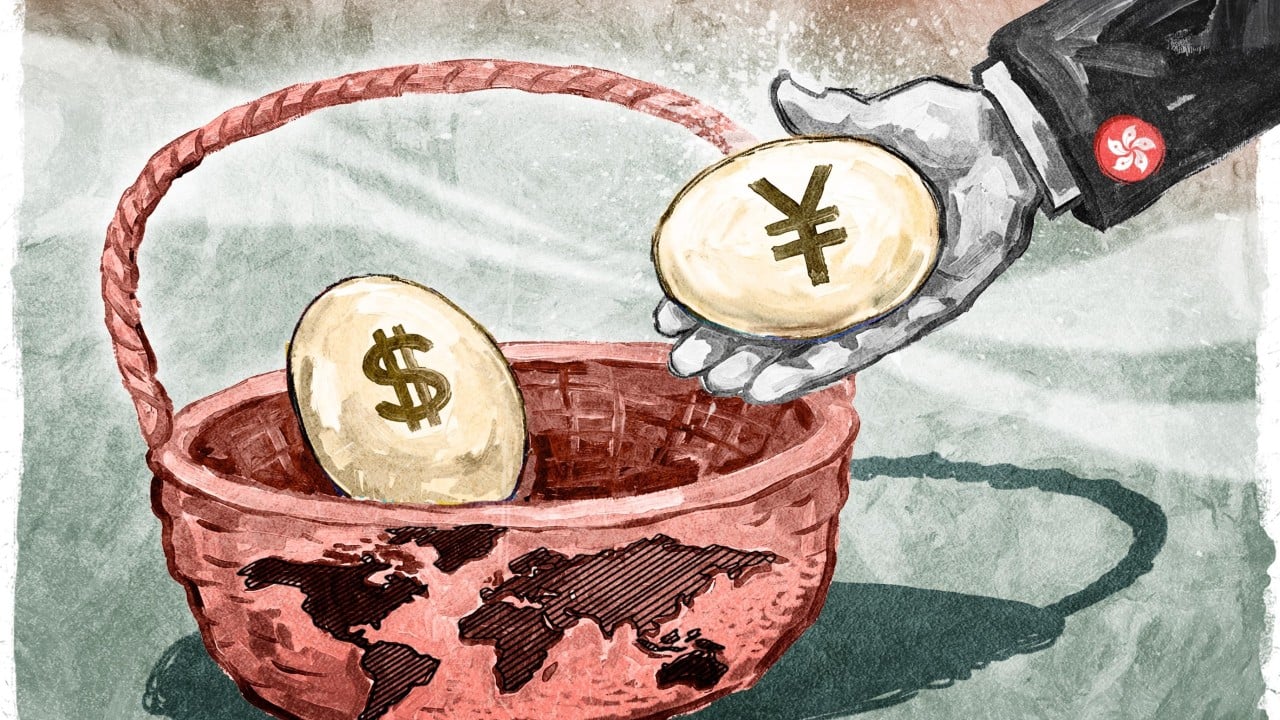
Hong Kong's future as a global financial hub hinges on its ability to bolster internationalisation of the yuan and reinforce its status as a key financial center, according to experts. The city recently launched its first offshore Chinese government yuan-denominated bond futures contract, a significant step in aligning with Beijing's five-year plan.
This achievement positions Hong Kong as a crucial upgrade for the country's largest offshore yuan trade-settlement market. Business leaders and policy experts emphasize the need for expanded yuan products, increased commodity trading infrastructure, a diverse talent pool, and fintech innovation to reinforce Hong Kong's capacity to channel global capital while mitigating geopolitical and currency risks.
Kenny Shui Chi-wai, vice-president of Our Hong Kong Foundation think tank, stresses that Hong Kong's international financial center status is vital to the country's economic interests. The city currently serves as the world's top IPO destination, with many mainland companies opting for Hong Kong listings due to political barriers in the United States.
Over 500 candidates are in the pipeline for IPOs in the coming year. Allan Zeman, chairman of the Lan Kwai Fong Group, highlights the Middle East war and de-dollarisation as factors accelerating the pivot of wealth to Hong Kong. He sees the city as not only a support for China but also a bridgehead, elevating its standing. To further enhance Hong Kong's financial prowess, market participants and policy experts urge the introduction of more yuan-denominated products, such as futures, options, and over-the-counter derivatives.
They also call for the launch of an "IPO Connect" cross-border scheme to facilitate primary market integration and include real estate investment trusts (REITs) in the existing southbound Stock Connect share-trading program. Additionally, regulators are urged to introduce block-trading mechanisms and address discrepancies in trading days between the mainland and Hong Kong.
To unleash market vitality, Hong Kong should develop intellectual property-backed bonds and tech enterprise bonds, as well as issue Islamic bonds to fund domestic megaprojects, while slashing prohibitive anti-money-laundering compliance costs.
Written by urgent.news from South China Morning Post - Hong Kong's reporting — not their text. Machine-written — may contain errors; check the original before relying on it.
This story
This is one outlet's version. Read the fullest account.