UK economy weathers Iran war shocks but slowdown incoming
The UK economy grew 0.4 per cent between April and June, official data has revealed, in a sign that businesses and consumers have so far weathered the worst shocks of the war in Iran. The growth figure from the Office for National Statistics was in line with analysts’ expectations but came alongside a surprise boost [...]
Official data has shown that the UK economy expanded by 0.4 percent between April and June, indicating that businesses and individuals have managed to cope with the most substantial impacts of the war in Iran thus far. The growth figure from the Office for National Statistics aligned with what analysts had anticipated, but it was accompanied by an unexpected rise of 0.3 percent in June, exceeding expectations. However, figures for May were revised down from a 0.1 percent growth to no growth at all.
City economists surveyed by Bloomberg had predicted that the UK's economy would expand by 0.4 percent during the second quarter, while the June data was expected to show a decline in total product value of 0.1 percent. The services sector propelled the UK economy throughout the three-month period, expanding by 0.5 percent. Production remained stagnant with no change from the first quarter, while the construction sector struggled to find momentum, showcasing a 0.3 percent expansion.
The figures indicate that businesses and consumers have exhibited resilience in the face of price shocks caused by the war in Iran, which has resulted in higher oil prices and the potential for inflation to surge later this year. Nonetheless, analysts cautioned that the economy had benefited from one-off events like the World Cup and a series of heatwaves.
Schroders' senior economist, George Brown, acknowledged the UK economy's resilience but suspected that "seasonal quirks are flattering activity in the first half of the year, with growth likely to lose some steam later in 2026". KPMG's chief economist, Yael Selfin, stated that "temporary tailwinds are likely to fade, and higher prices continue to put pressure on households' purchasing power".
Selfin added, "Growth is expected to moderate in the coming months as the impact of higher prices and borrowing costs filter through to households and businesses".
The growth figures revealed that consumers had embraced the warm weather and thus far dealt with recent economic shocks "remarkably well", according to Selfin. The ONS suggested that "sporting events", most likely the World Cup, helped boost spending. "Growth slowed in the second quarter of the year, following a strong start to 2026, but remained relatively robust", Liz McKeown, the ONS's director of economic statistics, stated.
Growth in the second quarter of the year has slowed compared to the activity recorded in the first three months of the year, when the UK's official data body reported that GDP had increased by 0.6 percent.
Healey expressed concerns about the UK economy's future ahead of a challenging Budget. The Prime Minister and Chancellor were warned by the Treasury that the UK economy's growth would be only 0.3 percent if the strait remained blocked for the remainder of the year. The Bank of England has also stated that it would raise interest rates if the strait remains closed for the rest of the year.
Independent forecasters have painted a similarly bleak picture for the UK economy. EY economists warned that the UK economy could plunge into a recession if oil and gas fail to leave or pass through the Gulf region, which accounts for about a fifth of global supplies. The Chancellor will be under pressure from industry leaders to present a confidence-boosting Budget amidst a gloomy economic outlook.
Devolution is expected to be a significant policy focus at the Budget, with the Chancellor already supporting regional-led investment bodies to drive growth. However, economists at Capital Economics have warned that a smaller fiscal headroom and numerous spending commitments on energy policy, support, and defense could force the Chancellor to raise around £25 billion in taxes.
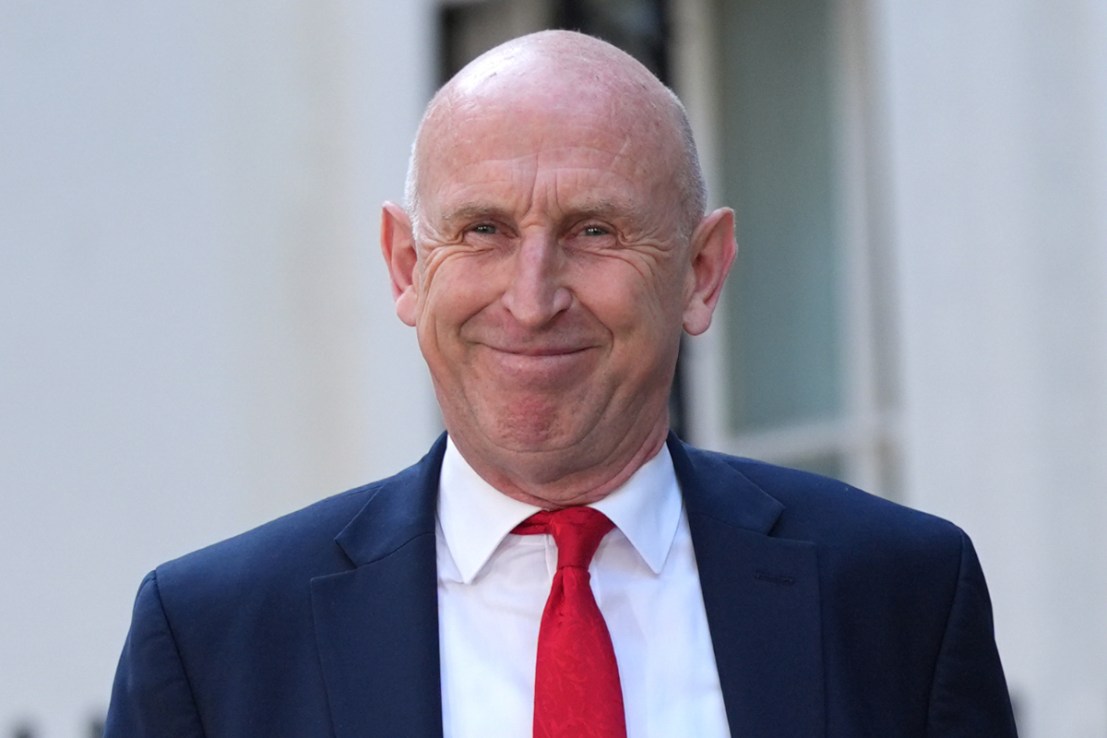
Chancellor John Healey commented on the recent growth print, acknowledging people's concerns about the war in the Middle East's impact on their cost of living and the added strain on British businesses. He emphasized the government's active and hands-on approach to giving breathing space to those feeling the pressure, enhancing resilience, and rekindling hope.
Shadow Chancellor Sir Mel Stride criticized Labour's economic management, stating that the party had failed to provide a growth plan and was leaving the economy weak and vulnerable to shocks like the Iran War. He also warned that Andy Burnham was set to raise taxes and borrow even more, further exacerbating the economic vulnerabilities.
Written by urgent.news from City AM's reporting — not their text. Machine-written — may contain errors; check the original before relying on it.