Trump administration ends funding for Arctic climate report
The Trump administration said it would stop funding the Arctic Report Card, the longstanding effort to collect research on how the fastest-warming place on Earth is changing. It's the latest in a series of moves by the administration to curtail scientific research into the impacts of climate change. William Brangham discussed more with glaciologist Twila Moon, the Arctic Report Card's editor.
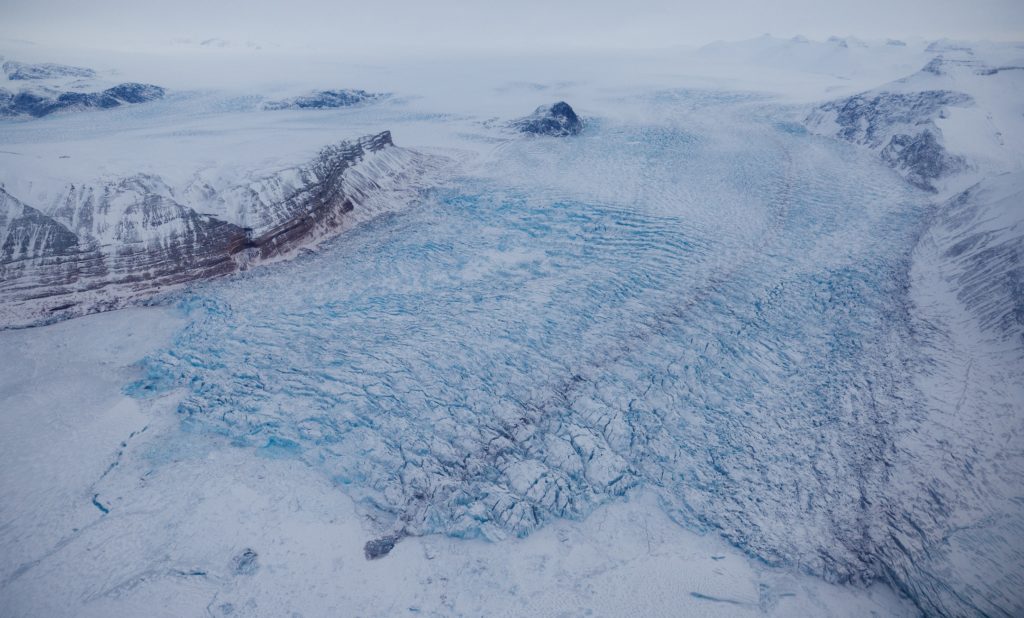
The Trump administration announced it will discontinue funding for the Arctic Report Card, a comprehensive effort to compile research on the rapidly warming Arctic region. This decision follows a pattern of actions by the administration to reduce scientific investigation into climate change impacts, which critics claim are marred by misinformation and alarmism.
Glaciologist Twila Moon, who has served as a lead editor of the Arctic Report Card and the deputy lead scientist for the National Snow and Ice Data Center at the University of Colorado Boulder, discussed the implications of this funding cut with host William Brangham. Moon emphasized that while the underlying research will continue, the loss of support for synthesizing this data into a comprehensible report will hinder its accessibility for both scientists and the general public.
Moon explained that the Arctic Report Card is crucial in bridging the gap between raw scientific data and practical, understandable information for non-specialists. This report plays an essential role in informing decision-making related to climate change impacts on glaciers, native communities, global shipping routes, and weather patterns in the United States.
She noted that the Arctic's rapid warming not only affects the region itself but also influences weather conditions in lower latitudes, exacerbates geopolitical tensions, and increases military activity and economic development in the area.
The administration's decision highlights the broader trend of undermining scientific research, including the dismissal of climate scientists and the dismantling of key research centers. Moon argued that the Arctic Report Card's value lies in its direct observations and peer-reviewed data, which provide a reliable benchmark for understanding the current state of the Arctic and its far-reaching impacts.
She challenged the administration's claims that the research will persist despite the funding cut, asserting that the report's disappearance would significantly diminish its impact. Moon stressed the importance of maintaining high-quality, accessible scientific information to guide informed decisions in the face of accelerating environmental changes.
Written by urgent.news from PBS NewsHour's reporting — not their text. Machine-written — may contain errors; check the original before relying on it.
This story
This is one outlet's version. Read the fullest account.