The US Military Can’t Function Without China
Rare earths are critical to making modern weapons – and China dominates the supply chain.
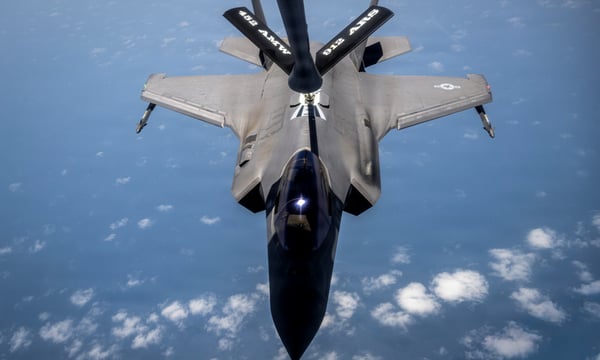
The United States military depends heavily on China for crucial materials needed to manufacture modern weapons and military equipment. Rare earth elements, in particular, are indispensable for components like magnets, sensors, radars, and lasers found in aircraft and submarines. China controls roughly 70% of global rare earth mining and over 90% of processing, giving it dominance in critical materials required for semiconductors, avionics, batteries, and other essential components.
Neodymium magnets, for instance, are prized for producing strong magnetic forces in motors and guidance systems, making them vital for military applications where weight and electricity consumption are concerns. However, China's dominance in rare earth mining and processing has posed challenges. In 2025, China mined an estimated 270,000 metric tons of rare earth elements, accounting for about 69% of the world's extraction.
Samarium, another critical rare earth, is likewise controlled by Chinese companies with a monopoly on processing.
Tariff tensions between the U.S. and China in 2025 led to Beijing restricting samarium exports for military applications, forcing American manufacturers to seek alternatives. This resulted in significant processing costs and supply chain disruptions. Additionally, China controls the production of other critical minerals like tungsten, which is essential for armor-piercing applications and radiation shielding. The country produces over 80% of the world's tungsten.
Export controls imposed by China following 2025's export restrictions have resulted in soaring prices due to scarcity. This has had tangible adverse effects on U.S. military production, such as the delivery of F-35 fighter jets without essential AN/APG-85 radars, rendering them unsuitable for combat. Other delays in manufacturing combat-ready drones have been attributed to the skyrocketing cost of samarium.
The shortage of rare earth components has been particularly problematic given recent conflicts, such as the U.S. conflict with Iran. The extensive use of missiles and interceptors requiring these materials has strained supply chains. In response, the Pentagon has pressured manufacturers to accelerate production, with agreements aimed at tripling Patriot component production and quadrupling THAAD production. However, strained supply chains may struggle to meet these increased demands.
In July 2025, the Pentagon invested $400 million in MP Materials, the only active rare earth mine in the U.S. These supply chain challenges highlight the critical dependency of the U.S. military on Chinese materials and the potential risks posed by geopolitical tensions.
Written by urgent.news from The Diplomat's reporting — not their text. Machine-written — may contain errors; check the original before relying on it.