Tehran Has to Make a Choice
A new regional pact highlights Iran’s isolation.
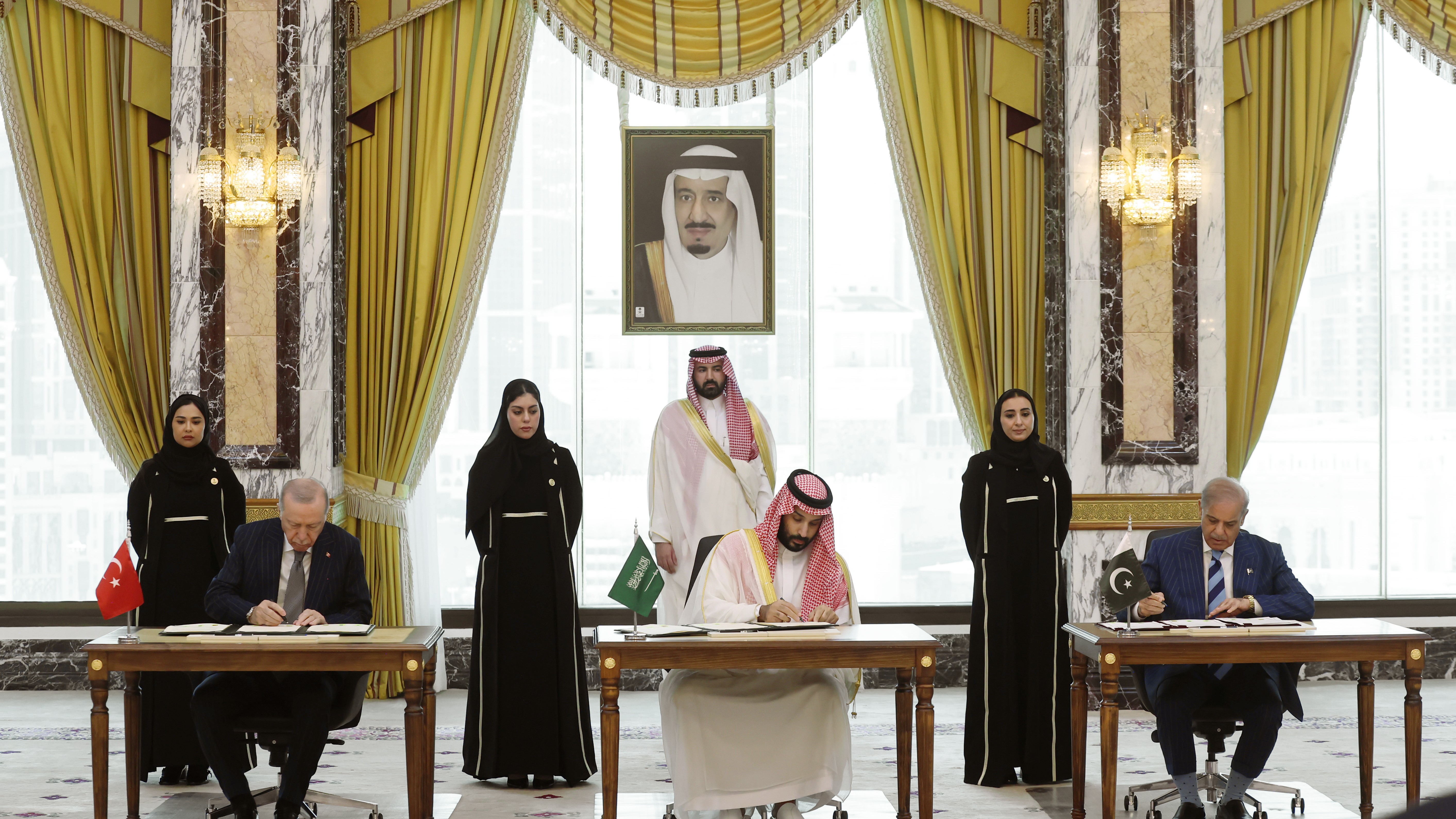
Tehran finds itself at a crossroads, forced to decide its future course in the region. The recent defense pact signed in Mecca, attended by Saudi Arabia, Turkey, and Pakistan, has cast a shadow over Iran's position. The trio's new agreement asserts that an attack on any one of them is considered an attack on all three, signaling a shift in regional alliances away from the Islamic Republic.
Iran's position has long been entrenched in anti-Western sentiments and a history of clashing with its neighbors over territorial disputes, but the Mecca pact threatens to isolate the nation further. While Iran has historically maintained cordial relations with Turkey and Pakistan, the new pact could strain these ties. The pact's establishment of a secretariat in Saudi Arabia and regular meetings among foreign ministers adds to the sense of an evolving regional alliance.
Nevertheless, Iran's leaders are not without options. They could continue their destabilizing activities, further alienating the region, or embrace economic development, diplomatic reconciliation, and a two-state solution to the Israel-Palestine conflict. Ultimately, Tehran's decision will shape its standing and the dynamics of the region for years to come.
Written by urgent.news from The Atlantic's reporting — not their text. Machine-written — may contain errors; check the original before relying on it.