New Zealand dollar slugged by inflation surprise, Aussie hangs on
SYDNEY: The New Zealand dollar slid on Thursday after a surprisingly low reading on inflation expectations stirred doubts about the need for aggressive rate hikes, while its Australian counterpart drew comfort from the risk of tightening at home. The kiwi dollar lost 0.5% to a two-week low of $0.5829, having snapped support at $0.5850. The next bear targets are $0.5762 and $0.5627. The Aussie…
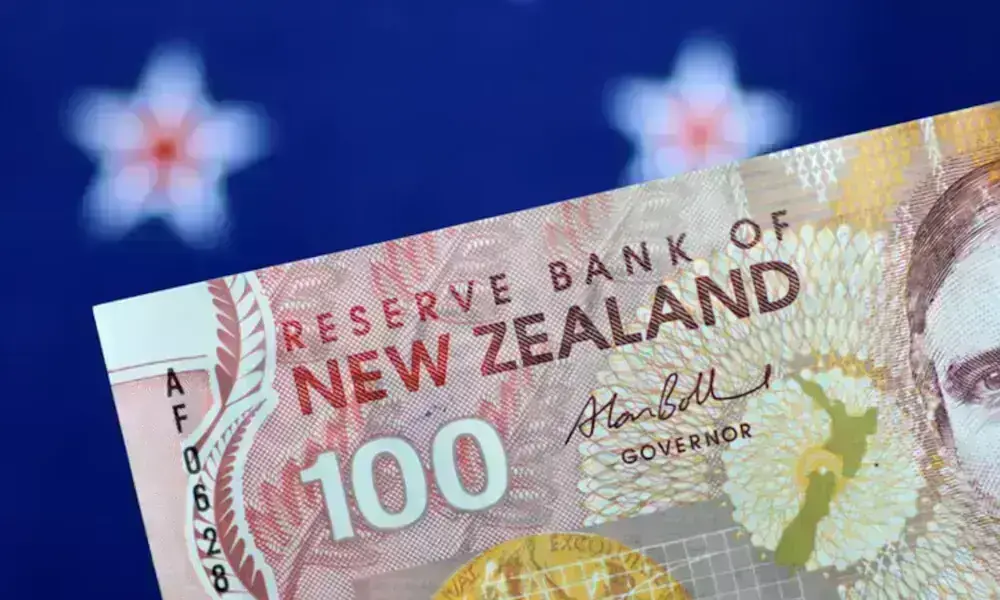
Sydney - The New Zealand dollar experienced a decline on Thursday following an unexpectedly low inflation expectation survey, raising questions about the necessity of aggressive interest rate increases. Meanwhile, the Australian dollar found respite from the prospect of domestic rate hikes. The kiwi currency dropped 0.5% to a two-week low of $0.5829, after briefly touching $0.5850.
Potential future targets for the kiwi include $0.5762 and $0.5627. The Australian dollar also weakened to $0.7048, after previously peaking at $0.7091. Support is currently seen around $0.7022, while resistance levels are indicated at $0.7088 and $0.7200. The drop in the New Zealand dollar followed the Reserve Bank of New Zealand's release of its inflation expectations survey, which indicated a sharp decline in the one-year outlook to 2.6% from 3.4%, bringing it back to levels prior to the Iran war fuel price surge.
The two-year outlook also softened to 2.34% from 2.35%, signaling that expectations remain stable and the risk of oil price shocks affecting broader inflation in the country is reduced. According to Satish Ranchhod, a senior economist at Westpac, this news is a positive sign for the Reserve Bank of New Zealand. However, core inflation levels remain high, and business surveys indicate ongoing challenges with operational costs.
Economists are projecting two more quarter-point hikes this year, most likely during the September and December meetings. Investors are still betting heavily on a September increase in the 2.5% cash rate, partly due to the central bank's repeated emphasis on the need to make the monetary policy less stimulative. Despite this, key 2-year swap rates fell by 4 basis points to a three-week low of 3.5857% following the data, reflecting the possibility that rate hikes might not be as necessary as initially anticipated.
In New Zealand, Reserve Bank Assistant Governor Christopher Kent highlighted in a media appearance that there were significant upside risks regarding inflation and interest rates. The central bank had already raised its cash rate three times this year and had held it at 4.35% earlier in the week. Market expectations are for a 70% probability of a final hike to 4.60% by the beginning of next year.
Sally Auld, the chief economist at NAB, stated that they anticipate the RBA to continue its strategy of minimizing any cyclical unemployment while leaving minimal room to accommodate upside surprises. Consequently, the board is expected to stay on hold before gradually moving towards less restrictive policy measures from mid-next year.
Written by urgent.news from Business Recorder's reporting — not their text. Machine-written — may contain errors; check the original before relying on it.
This story
This is one outlet's version. Read the fullest account.