New private 'Perceptor' probes will keep an eye on satellites high above Earth
Astranis' newly announced Perceptor spacecraft will monitor satellite activity in geostationary orbit, a distant and increasingly contested domain.
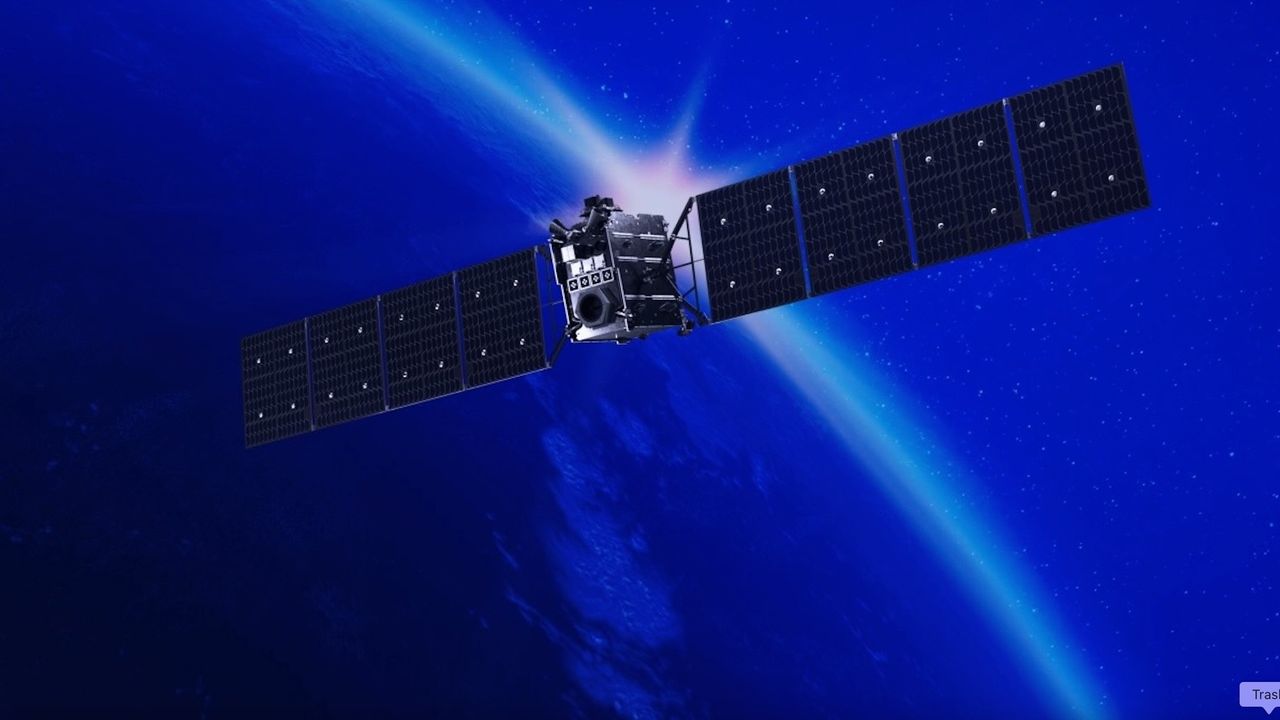
Astranis, a San Francisco-based company, announced today that it is developing a new line of spacecraft called Perceptor. The Perceptor probes will monitor satellite activity in geostationary orbit (GEO), a region 22,236 miles (35,786 kilometers) above Earth. GEO is a popular location for communications, weather, and reconnaissance satellites, as well as a potential area for off-Earth spying.
Astranis currently operates five satellites in GEO, supporting the U.S. military, providing connectivity to remote areas, and delivering critical capabilities like GPS. The company plans to leverage its expertise with the MicroGEO satellite platform, which is smaller than typical GEO craft, to create the Perceptor probes.
John Gedmark, Astranis' CEO and co-founder, expressed concern that there are currently "blind spots" in GEO that could be exploited against U.S. infrastructure. He stated that Perceptor will address these concerns by providing the necessary security and monitoring capabilities in this increasingly important orbital domain.
Perceptor will feature a range of sensors, including multi-angle flybys to assess spacecraft capabilities, troubleshoot anomalies on friendly satellites, and provide additional surveillance in an area where awareness has been historically limited. Each Perceptor probe will also be highly maneuverable, utilizing electric propulsion to traverse the full GEO arc and reposition dozens of times over its mission lifetime.
While no specific timeline for the first Perceptor missions was provided, the need for such a capability is already apparent. For example, in 2020, U.S. Space Force officials reported that two Russian spacecraft came within 100 miles (160 kilometers) of an American spy satellite, a behavior described as "unusual and disturbing." In 2023, experts revealed that China's TJS-3 GEO spacecraft had closely monitored two U.S. spy satellites, USA 233 and USA 298.
Written by urgent.news from Space.com's reporting — not their text. Machine-written — may contain errors; check the original before relying on it.