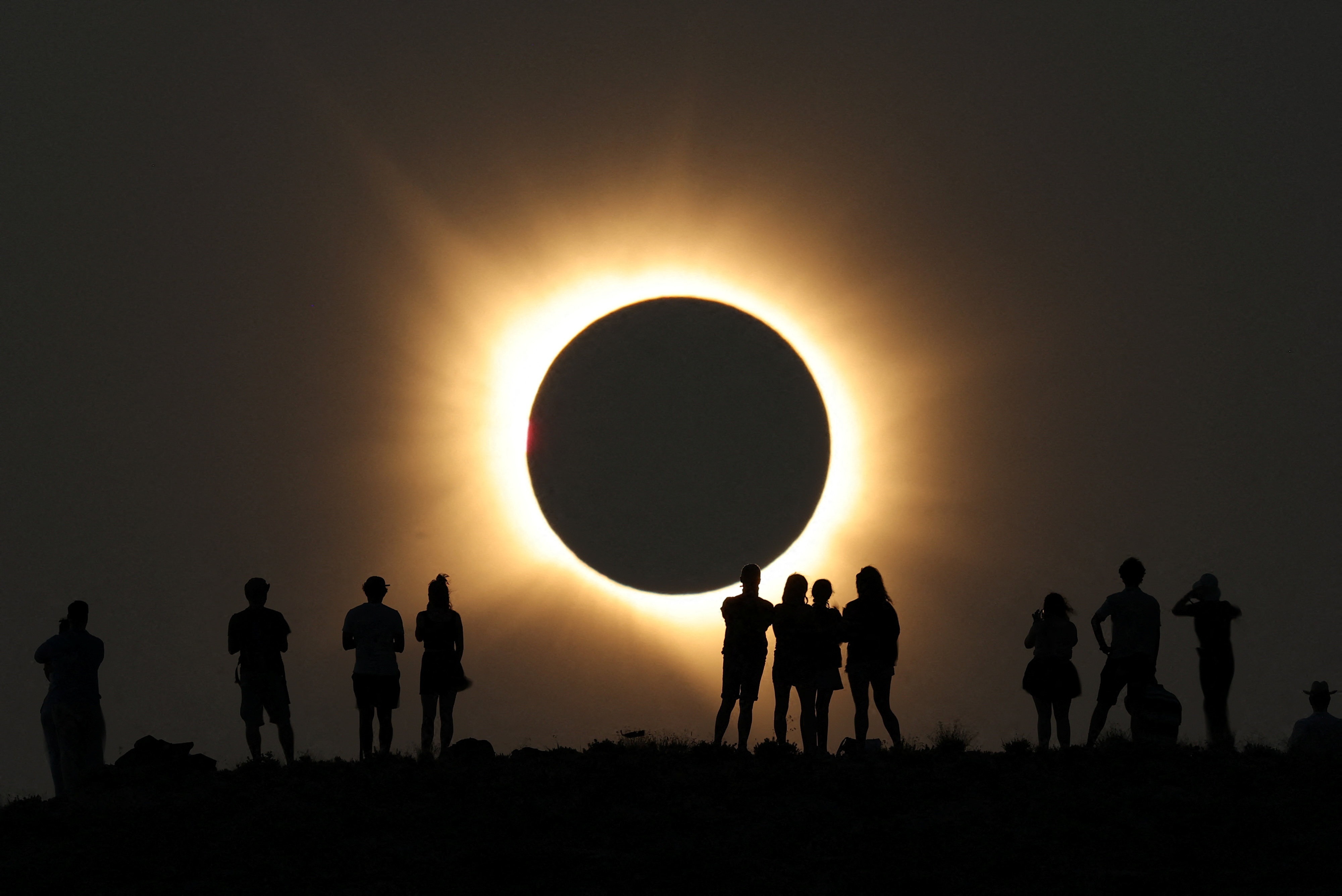
Moon meets Sun: Rare solar eclipse captivates millions across Europe
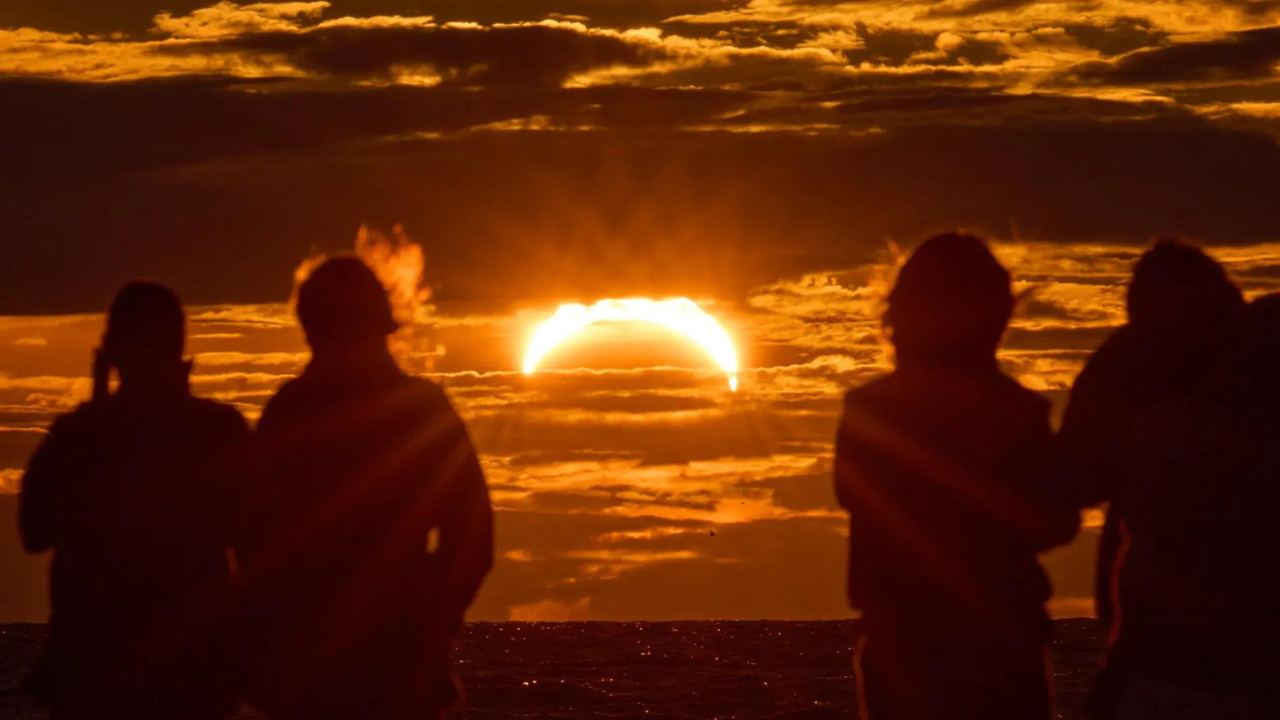
A rare solar eclipse captured the attention of millions across Europe and the UK, marking the most significant event of its kind in nearly three decades. The partial eclipse, visible across the UK, saw the Moon obscuring more than 90 percent of the Sun shortly after 7:00 pm local time. However, in certain regions of Greenland, Iceland, and Spain, viewers experienced a complete solar eclipse, with the Moon entirely covering the Sun, plunging these areas into temporary darkness.
The eclipse's path of totality commenced at Russia's northern tip in Siberia and traveled over the Arctic Ocean, reaching Iceland in the early evening. It then continued southward toward the UK, with a partial eclipse beginning in northern Scotland around 6:00 pm and along England's southern coast just before 6:20 pm. Clear skies predominantly covered central and southern England and Wales, allowing spectators unobstructed views of the Moon passing across the Sun for approximately an hour.
Cloudier conditions prevailed in northern England, Scotland, and Northern Ireland, yet crowds still gathered at landmarks throughout the country.
Solar eclipse glasses were incredibly sought after, selling out at opticians, hardware stores, and even bakeries ahead of the event. Those unable to obtain them created makeshift viewing devices using colanders, cereal boxes, and sheets of paper to safely observe the partial eclipse. In Spain, a rare total solar eclipse swept across the northern part of the country on Wednesday evening, casting temporary darkness over some regions.
Authorities in Spain prepared for a significant influx of visitors, deploying a large police presence and setting up designated viewing areas in rural locations with optimal viewing spots for the celestial phenomenon. Spain anticipated up to six million visitors to flock to the rural areas along the eclipse's path in northern Spain and the Balearic Islands.
A total solar eclipse occurs approximately every 18 months, but any given location typically experiences one only once every 400 years. This celestial event happens when the Moon passes between the Sun and Earth, blocking some or all of the Sun's light and casting a shadow on our planet. The alignment is possible due to a rare coincidence: the Sun is about 150 million kilometers (93 million miles) away from Earth, roughly 400 times farther than the Moon.
Yet, the Moon's diameter is also about 400 times smaller than the Sun's, making them appear nearly identical in size when viewed from Earth. If the Moon were slightly smaller or its orbit were farther from Earth, total solar eclipses would not occur.
Written by urgent.news from Times of India's reporting — not their text. Machine-written — may contain errors; check the original before relying on it.