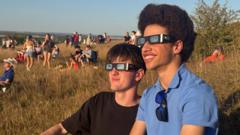
Millions crowd Spanish cities to see country's first total solar eclipse in over a century
MEDINACELI, Spain — Millions of people crowded cloudless cities and towns in Spain on Wednesday in search of the best views of a total solar eclipse, when the alignment of the sun, moon and Earth briefly plunged parts of the planet into darkness. The crowds brought lawn chairs and umbrellas as they eagerly awaited the celestial spectacle, which began early in the evening. As the sky darkened,…
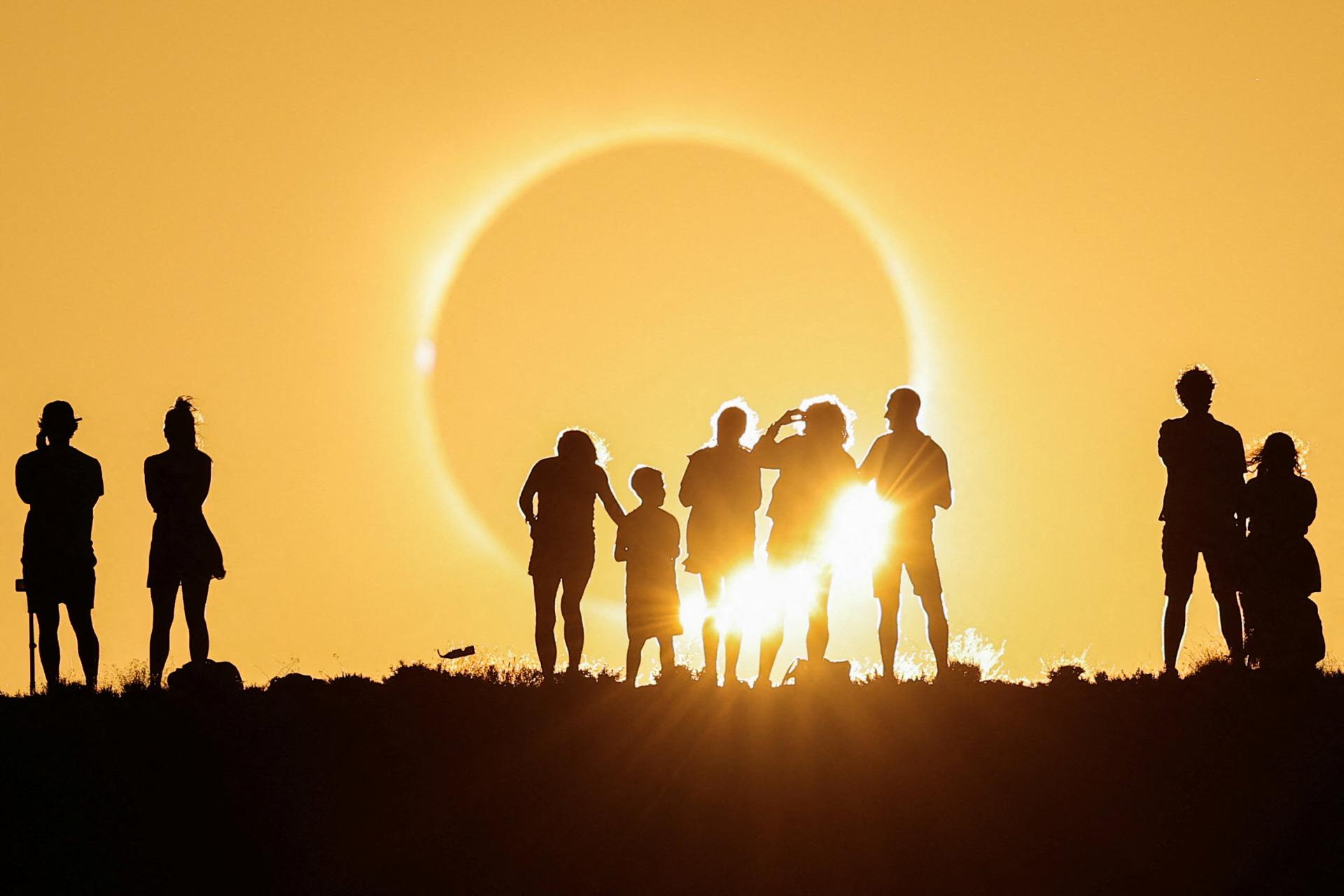
MEDINACELI, Spain - Thousands of observers flocked to cloudless Spanish cities and towns on Wednesday to witness the first total solar eclipse to grace the country in over a century. The celestial phenomenon saw the sun, moon and Earth align, briefly plunging parts of the planet into darkness.
Crowds arrived early, bringing lawn chairs and umbrellas, as they eagerly awaited the event, which began in the evening. As the sky gradually darkened, then rapidly, the audience erupted in applause and cheers.
For Rosa Celiberti, a language teacher in Medinaceli, a Roman-era hilltop town in northeast Spain, the experience was beyond description. "It’s simply impossible to imagine," she said, her eyes glistening with tears. "No matter how many photographs or videos you've seen, nothing can compare to the actual feeling."
The total solar eclipse was visible across a broad swath of northern and central Spain and Portugal, offering some of mainland Europe's most favorable viewing conditions. The phenomenon also passed over fragments of Greenland and Iceland. At its peak, the moon completely covered the sun's light, creating a breathtaking spectacle that left spectators in awe.
Written by urgent.news from The Korea Times's reporting — not their text. Machine-written — may contain errors; check the original before relying on it.