Keine Angst vor dem Robotaxi: Waymo-Autos seien viel sicherer unterwegs als menschliche Fahrer, sagt ein Experte
Die Schwesterfirma von Google kommt in die Schweiz. Laut einem Risikoforscher verursachen ihre selbstfahrenden Taxis 90 Prozent weniger Unfälle als der Mensch. Doch er sieht andere Probleme.
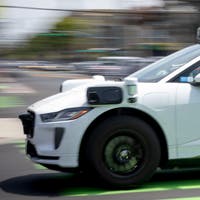
Waymo, Google's self-driving car subsidiary, is expanding to Switzerland, with a research expert claiming their autonomous vehicles are 90% safer than human drivers. However, this expert also points to other issues. A white Waymo taxi became stranded in floodwaters in Atlanta, unable to maneuver out of the situation. Passengers were not harmed but it led to Waymo halting its service in six of the eleven American cities it operates in to deploy a software update.
This is not the only incident; CNN documented over a hundred incidents where Waymo's self-driving cars ignored stop signs or lane closures. These incidents question whether the dream of driverless travel can overcome real-world challenges. This question is not limited to the US and China, where self-driving taxis are already prevalent, but now also extends to Switzerland.
According to research from the "NZZ am Sonntag", Waymo has established a branch in Zurich, aiming to provide taxi services with autonomous vehicles. As early as June, the company had registered subsidiaries in Germany and other European countries. The question of how safe Waymo's autonomous vehicles truly are is answered by risk researcher Luigi Di Lillo.
Di Lillo, who studied the incident data at Swiss Re's top management level, analyzed data from Waymo's 25 million miles of driverless travel. The result: Waymo's autonomous vehicles are significantly safer than human drivers within their defined operating areas in several major American cities. The frequency of property damage was reduced by 88%, and the reduction in severe personal injuries was even higher at 92%.
Most property damage involving Waymo's vehicles was not due to software errors but rather due to negligent passengers who touched other cars while opening the door. Di Lillo therefore considers the performance of Waymo's vehicles in terms of safety to be impressive. This is confirmed by other published works. Di Lillo's study used a novel methodological approach, relying on insurance data instead of police reports or company data, which are both problematic.
Insurance companies receive almost every scratch report, providing precise data and reliable evidence for determining liability. However, Di Lillo's analysis only applies to Waymo's technology and cannot be easily transferred to competitors. This raises the question of how safe other Waymo competitors operating in Switzerland will be.
Uber plans to introduce a robotaxi service in Zurich in the same year, in partnership with the Chinese tech giant WeRide. Baidu is already testing its technology in the St. Gallen Rhine Valley. While Waymo's robotaxi technology is considered the world leader, incidents like a storm overwhelming the system in Atlanta, causing it to become unresponsive, show that even Waymo is not as flawless as its statistics might suggest.
Di Lillo argues that such incidents are extremely rare. In the case of the flood in Atlanta, the system couldn't correctly assess the danger caused by the floodwaters. An update addressed the issue. Waymo's self-driving cars would continuously learn from such incidents. However, Di Lillo emphasizes that even these rare incidents demonstrate that Waymo's vehicles will continue to be safer than humans in their designated operating areas.
Written by urgent.news from NZZ Wirtschaft's reporting — not their text. Machine-written — may contain errors; check the original before relying on it.