Instagram has a new wordmark
Instagram just unveiled a new wordmark, the social media app’s first major logo redesign in a decade. “The wordmark at the top of the app hasn’t changed in 10 years, so it was time for a refresh,” head of Instagram Adam Mosseri announced in an Instagram post . “Cleaner and more modern, with references to the original and the simplicity and craft that’s always made it Instagram.” 2026 [Image:…
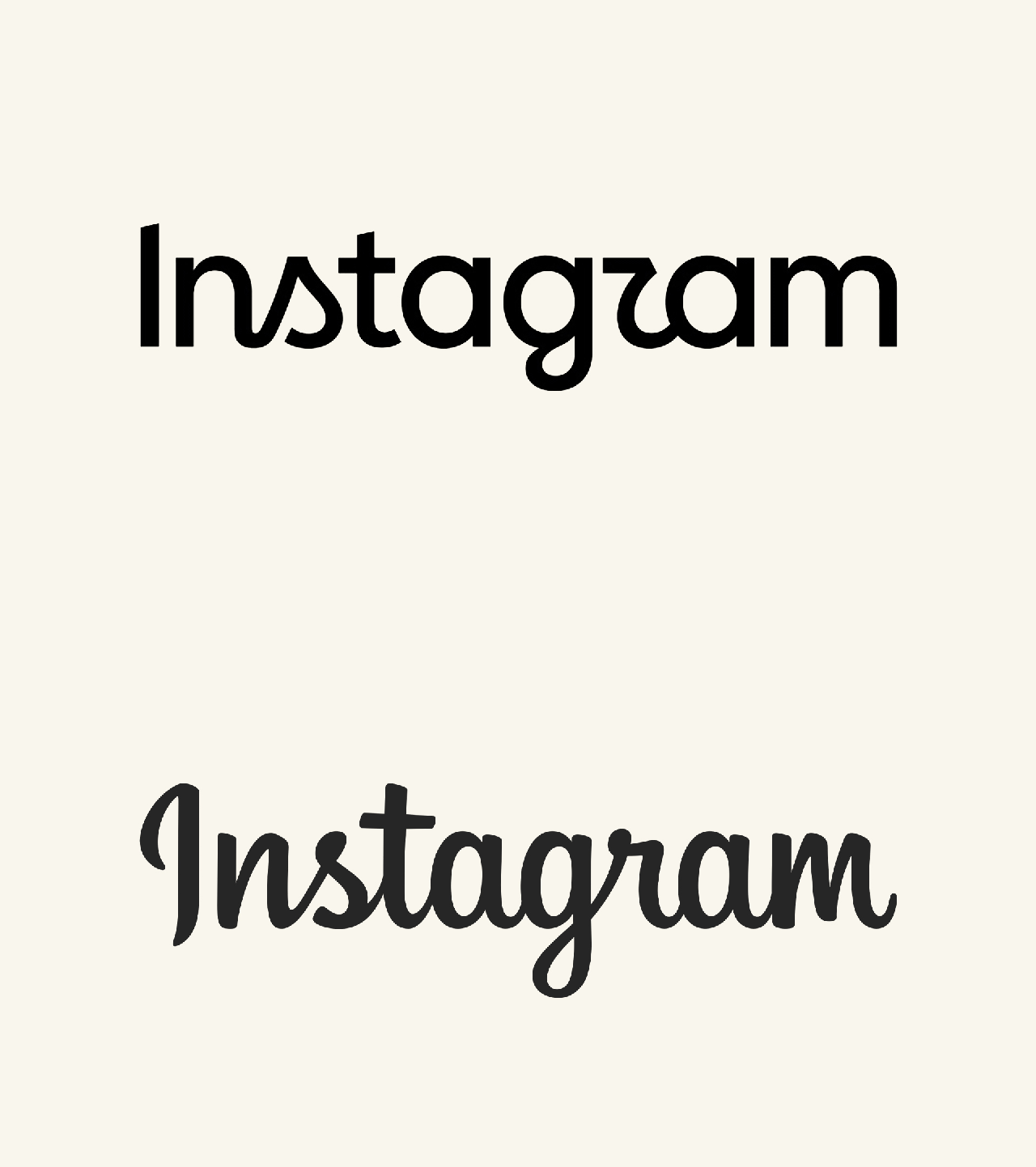
Instagram has unveiled a new wordmark for its social media app, marking the first major logo redesign in a decade. Adam Mosseri, the head of Instagram, announced the change in an Instagram post, stating that the time had come for a refresh of the wordmark at the top of the app. The new design is described as cleaner and more modern, with references to the original while maintaining simplicity and the craftsmanship that has defined Instagram.
The new wordmark departs from the iconic cursive font, but it retains subtle hints of script, such as connected "n" and "s" as well as an "r" and a "g" with playful swooshes. This update brings Instagram's visual identity closer to that of its sibling Meta apps, such as Facebook and Threads, which now utilize sans-serif lettering in their wordmarks.
Threads introduced its updated visual identity in May, as it sought to evolve from being merely an offshoot of Instagram to a platform of its own.
The change has elicited mixed reactions from users on social media. While some welcome the modernization, others find the new design confusing and even funky. One user on X criticized the logo, stating that it clumsily attempts to blend classic script with standard sans-serif lettering, resulting in a disjointed appearance. Some commenters noted that the new wordmark resembles "Instagzam."
Despite the mixed opinions, others view the change as a positive evolution, with one user expressing excitement about the modernized look. However, there are also mournful sentiments, with one user lamenting the end of an era as the iconic cursive font is phased out.
Written by urgent.news from Fast Company's reporting — not their text. Machine-written — may contain errors; check the original before relying on it.