I shot the Perseid meteor shower after the eclipse with my Pixel and a pro Nikon camera — here’s which one I’d recommend for the spectacular celestial show tonight
Phone, camera, or just with your eyes, the Perseid meteor shower is a spectacular celestial show to take in this week, and the conditions are perfect
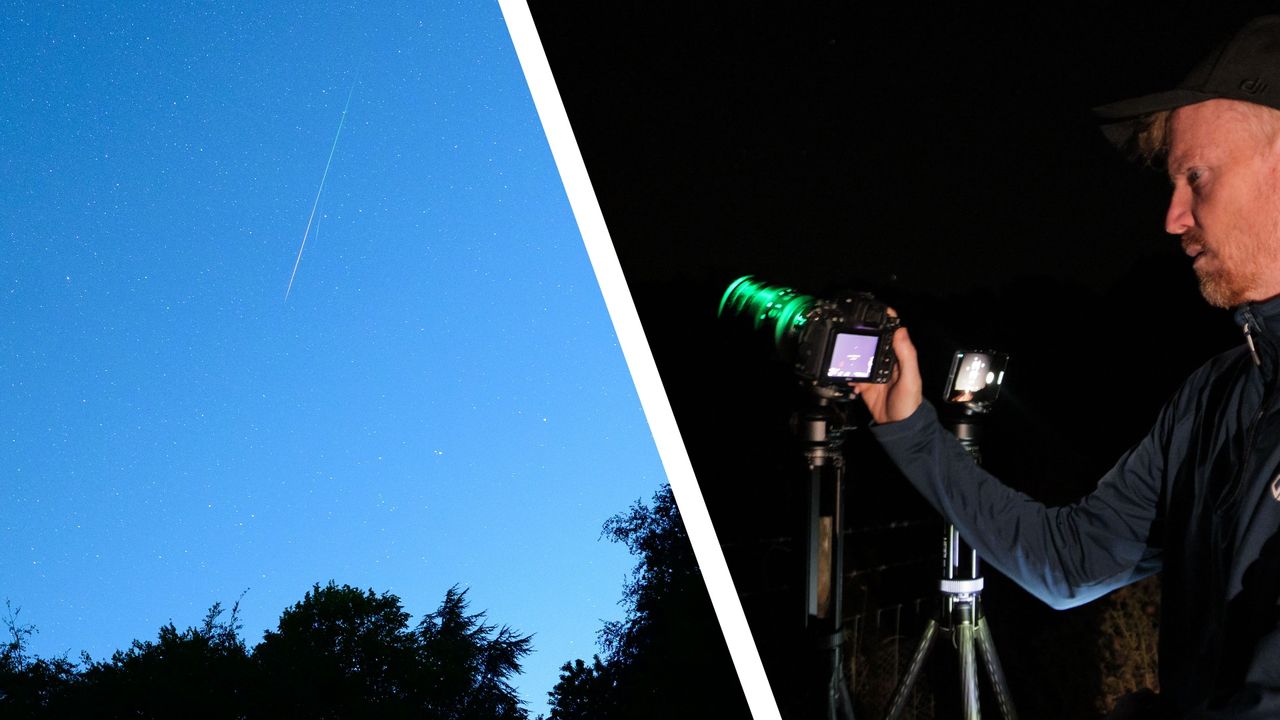
This year's Perseid meteor shower peaked on August 12, though it will be visible in the Northern Hemisphere tonight. To catch the celestial show, head to a dark sky area and look up between 11 pm and 5 am. The Perseids coincided with a total eclipse across parts of Europe, adding to the spectacular display.
I used both my Google Pixel 8 Pro phone and a Nikon Z6 II mirrorless camera to photograph the meteor shower. For the phone, I enabled the Night Sight mode and captured images with a +4 minute timer, producing better quality results compared to the standard Night Sight mode. The Nikon camera was set to its widest 24mm focal length and f/3.5 aperture, with manual exposure settings of 20 seconds and ISO 3200.
Both devices were used with a tripod for stability, and the Nikon camera produced photos with visible meteors, while the Pixel camera's astrophotography mode often edited out meteors despite their presence in the frame. The Nikon camera offered a more enjoyable experience, allowing me to rely on its faithful image capture.
Written by urgent.news from TechRadar's reporting — not their text. Machine-written — may contain errors; check the original before relying on it.