How diamonds made Kolmanskop rich before turning it into a ghost town
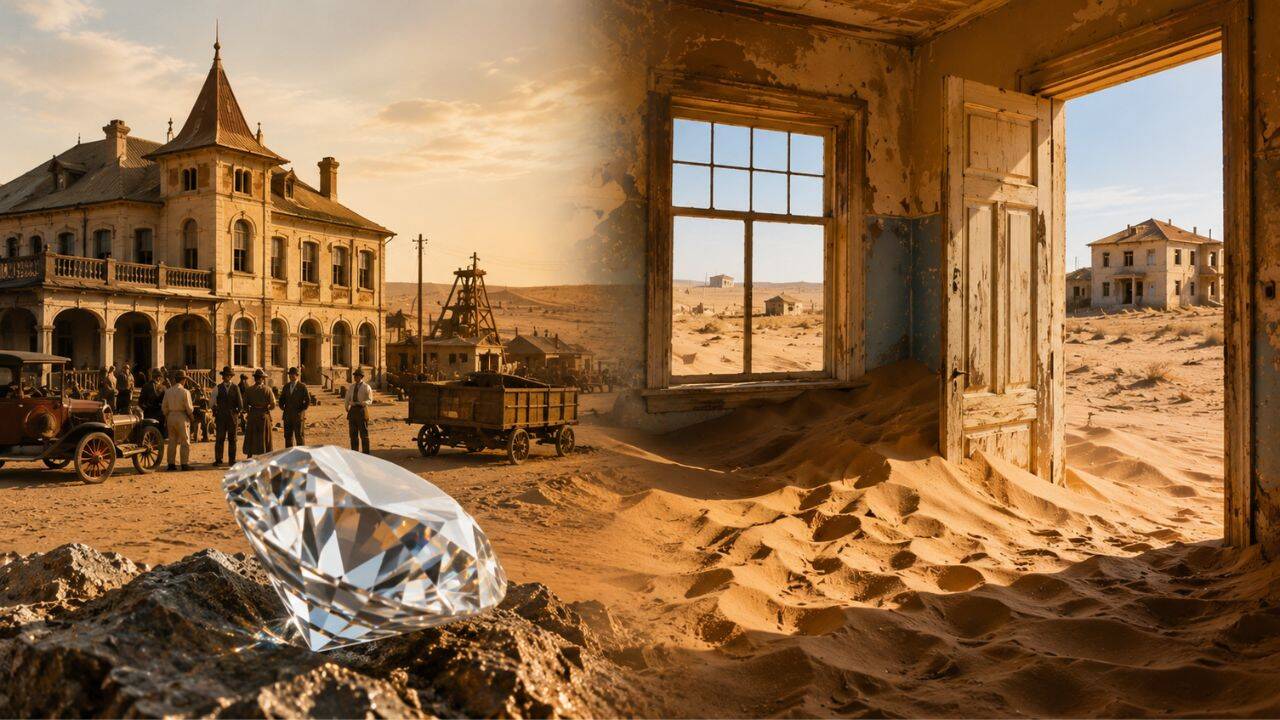
In 1908, a railway worker named Zacherias Lewala stumbled upon unusually sparkling stones while clearing sand tracks in the Namibian desert. His German supervisor, August Stauch, identified these as diamonds, initiating a rush that would forever alter the landscape. Within months, prospectors and mining firms flooded into the unforgiving desert, transforming it into the epicentre of the diamond boom. The colonial authorities implemented strict regulations to control this newly lucrative territory.
Kolmanskop soon became a hub of the diamond industry, evolving into a miniature European town with electricity, a hospital, bakery, butcher, post office, and even an ice-making plant. This luxurious settlement thrived due to the influx of rich mineral deposits, providing its residents with a level of comfort seemingly improbable in such a barren environment. The town flourished for several decades, supported by luxuries and modern amenities imported from afar.
However, the prosperity was not to last indefinitely. As mining progressed, the easily accessible deposits dwindled, and in 1928, significantly richer diamond reserves were discovered on the coastal region. This prompted the miners to abandon Kolmanskop, leaving the town to slowly wither away. By 1956, the last residents had departed, leaving the abandoned buildings to be consumed by the encroaching desert sands.
Today, Kolmanskop stands as a poignant reminder of the diamond rush and the colonial past of Namibia. The town now serves as a tourist attraction, offering visitors a glimpse into the harsh reality of life in one of southern Africa's most inhospitable landscapes. The ruins of the once-thriving settlement have become a striking testament to the fleeting nature of wealth and the inexorable march of time.
Written by urgent.news from Times of India's reporting — not their text. Machine-written — may contain errors; check the original before relying on it.