Europe is entering a new hardware age: ‘Made in EU’ starts long before the factory floor
The EU Industrial Accelerator Act (IAA), proposed by the European Commission in March, aims to ensure Europe manufactures more of the technologies and industrial products it consumes. Europe has histo...
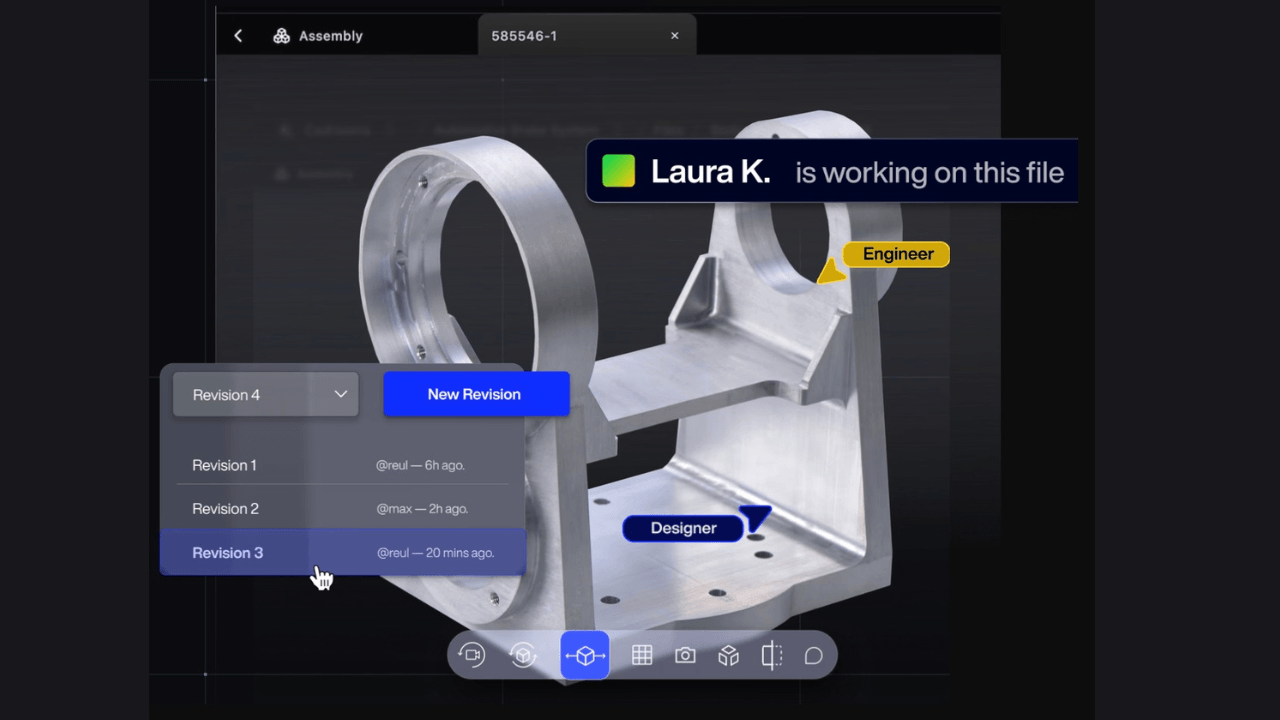
The European Union has launched a new initiative called the "Made in EU" hardware age, which aims to strengthen European industrial sovereignty by ensuring more technologies and industrial products are produced within the EU. While the EU has historically excelled at funding research and development (R&D) and early-stage deep technology, it has struggled to create domestic markets for the resulting technologies.
The EU Industrial Accelerator Act (IAA), proposed by the European Commission in March, seeks to address this demand-side issue through measures such as public procurement. However, the question remains as to how far upstream these "Made in EU" requirements should extend.
Christina Rebel, CEO of CAD ROOMS, an engineering collaboration platform built specifically for distributed hardware engineering teams, believes that the IAA is more significant than most people realize. "If 'made in EU' becomes a condition of public procurement, the conversation can't stop at the product rolling off the line. It has to start much earlier - at the tools your team uses to design it, version it, and collaborate on it," she argues.
Currently, many engineering teams operate their entire product development process through US-hosted platforms, meaning that CAD files, revisions, and intellectual property reside outside EU jurisdiction. This issue is not resolved by simply placing a "Made in EU" label on the finished product.
Rebel has extensive experience in cloud engineering collaboration, digital manufacturing, CAD data management, and distributed product development. She grew up internationally, including in China, and saw the internationalization of production firsthand. Following her studies in politics and economics, she helped other startups through the ideation and business-model development stages.
At the same time, the maker movement was emerging, inspiring her to create Wikifactory, a cloud collaboration and product-data platform for hardware engineering and manufacturing. However, the team realized that combining open-source and private collaboration in hardware and engineering was challenging.
Rebel then separated the private product data management and collaboration side into a distinct environment, founding CAD ROOMS. The platform offers end-to-end encryption for product data in transit and at rest, and has achieved ISO certification. Engineering software is still largely stuck in the 1990s, Rebel contends, as engineers are accustomed to collaborating through rigid, siloed systems.
These systems often require engineers to use multiple CAD tools, such as PTC Creo, SOLIDWORKS, and CATIA, which can be expensive and time-consuming to implement.
To address these challenges, CAD ROOMS aims to simplify collaboration and bring down barriers to entry. The platform allows engineers to measure, review, and collaborate professionally around designs in a secure environment, without requiring them to install CAD software. This enables Mechanical engineers to work alongside Electronic engineers, who may be using more modern tools like Altium, which is already cloud-based.
By solving these interoperability issues, CAD ROOMS can help newer companies remove friction and improve overall efficiency. With its diverse customer base, CAD ROOMS is well-positioned to capitalize on Europe's thriving industrial clusters and the emerging capabilities of modern simulation tools.
Written by urgent.news from Tech.eu's reporting — not their text. Machine-written — may contain errors; check the original before relying on it.