Ebola in Congo: Ebola detected in further province in Congo
In the Congo, the dangerous Ebola infection has already been detected in six provinces. Experts fear that if the outbreak is not stopped, it could also spread abroad.
In the Democratic Republic of Congo, six provinces of the central African country are now affected by Ebola. Meanwhile, cases have also been confirmed in the city of Buta in the province of Bas Uélé, which can be traced back to infected people from the neighboring province of Haut Uélé, said the director of the African health authority Africa CDC, Jean Kaseya, in his weekly situation report.
According to the Congolese Ministry of Health, 4,566 cases have been confirmed since May, and 2,128 people have died from the highly contagious infectious disease.
However, these are only the numbers since the official announcement of the Ebola outbreak, Kaseya emphasized. "All studies we have indicate that the outbreak started around February, and we have no idea what happened between February and May." All data on case numbers only covers the period from May to now. "We do not claim that these data are correct," Kaseya said.
However, given the rapid increase in case numbers or deaths, which are already several times higher than after 12 weeks in the largest Ebola outbreak in West Africa, Kaseya warned: "If we do not stop this outbreak, it will last longer than a year and be the largest in the world." Then, the risk of the outbreak spreading to other states would also increase.
In the first phase of the outbreak, there were also cases in Uganda, which could be traced back to travelers from the Congo.
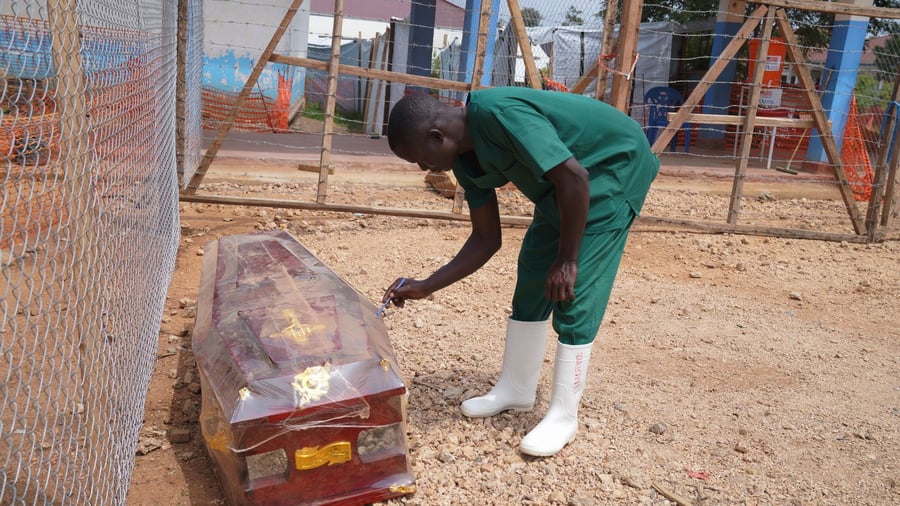
Almost two-thirds of Ebola patients do not die in hospitals. Additionally, normally, deaths occur in hospitals and isolation wards where Ebola patients are treated and then die there. Currently, however, more than 63 percent of deaths come from the general population in villages and cities and are often not buried by trained helpers.
"We do not know how the body is handled, and therefore, the outbreak is taking place at the community level and spreading at the community level," Kaseya said, looking at the highly contagious bodies of deceased Ebola patients.
Ebola fever is a life-threatening disease. The virus is transmitted through physical contact and contact with body fluids and causes a highly contagious fever with diarrhea and bleeding. The current outbreak is particularly difficult to contain, also because there is no specific vaccine or specific therapy for the Ebola pathogen of the Bundibugyo type.
Since the beginning of July, clinical testing of two antiviral therapy procedures has been ongoing. Given the severity of the outbreak, it will also be clarified whether the pathogen may have mutated.
Translated by urgent.news. Machine-written — may contain errors; check the original before relying on it.