Dr Tlaleng Mofokeng's final UN report highlights reproductive genocide as a public health crisis
In an age of misinformation and targeted political attacks, Dr Tlaleng Mofokeng's final report serves as a crucial reminder of the ongoing struggle for health equity and human rights. Her call for justice reverberates beyond the confines of the UN, compelling us all to reflect on our responsibilities in the face of global crises.
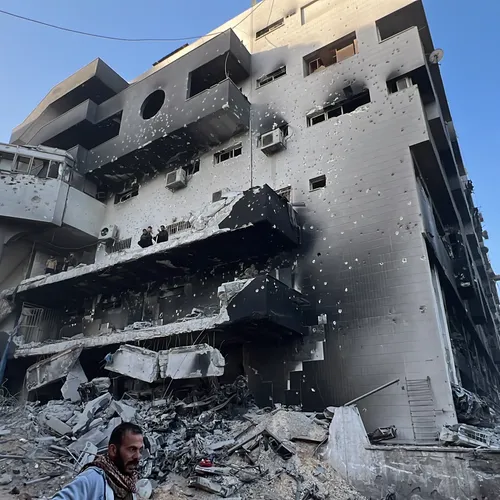
Dr Tlaleng Mofokeng concluded her six-year tenure as the UN Special Rapporteur on the Right to Health on July 31. Despite her departure, a local newspaper sought to tarnish her legacy by reporting on a recent complaint. Her final report, titled A Compendium on Medicide: A Sub-text to Reproductive Genocide – A Public Health Crisis, exposes the genocidal attacks on Palestinian and Sudanese reproductive rights and healthcare.
Dr Mofokeng maintains that Israel intentionally destroys Palestinians' ability to have children and access healthcare by attacking hospitals, doctors, and patients. For Sudan, the report calls for an immediate ceasefire, protection for medical personnel, and punishment of those responsible. The South African Journal of Rights (SAJR) chose to focus on a bogus complaint rather than her crucial work.
The complaint, filed by UN Watch, alleged Dr Mofokeng violated her mandate by running as the EFF's job mayor candidate in 2026. The allegation is that she wrongly stated her mandate lasted until August 2026 and questioned her impartiality. However, UN Watch has been exposed as a front for the Israeli government. The SAZF, another ally of UN Watch, launched a complaint to the Health Professions Council of South Africa (HPCSA) alleging Dr Mofokeng of misconduct over social media comments.
The SAZF's press release, uncritically reported by the Sunday World, is seen as a political attack with no jurisdiction, as she was not practicing medicine and enjoyed UN immunity. Dr Mofokeng is challenging the ruling in the High Court. Her report, defended with an anti-racist and anti-colonial approach, connects the right to health with systems of oppression.
It highlights how structural racism, coloniality, and gender-based discrimination cause health inequities. The report defends international law, particularly in the context of attacks on healthcare facilities, which are deemed war crimes or crimes against humanity.
Written by urgent.news from IOL's reporting — not their text. Machine-written — may contain errors; check the original before relying on it.