Colombian rescue teams intensify search for survivors as critical hours wane
Rescue teams in Colombia race to find survivors trapped under rubble, two days after a deadly earthquake killed around 250 people in the west and coffee region.
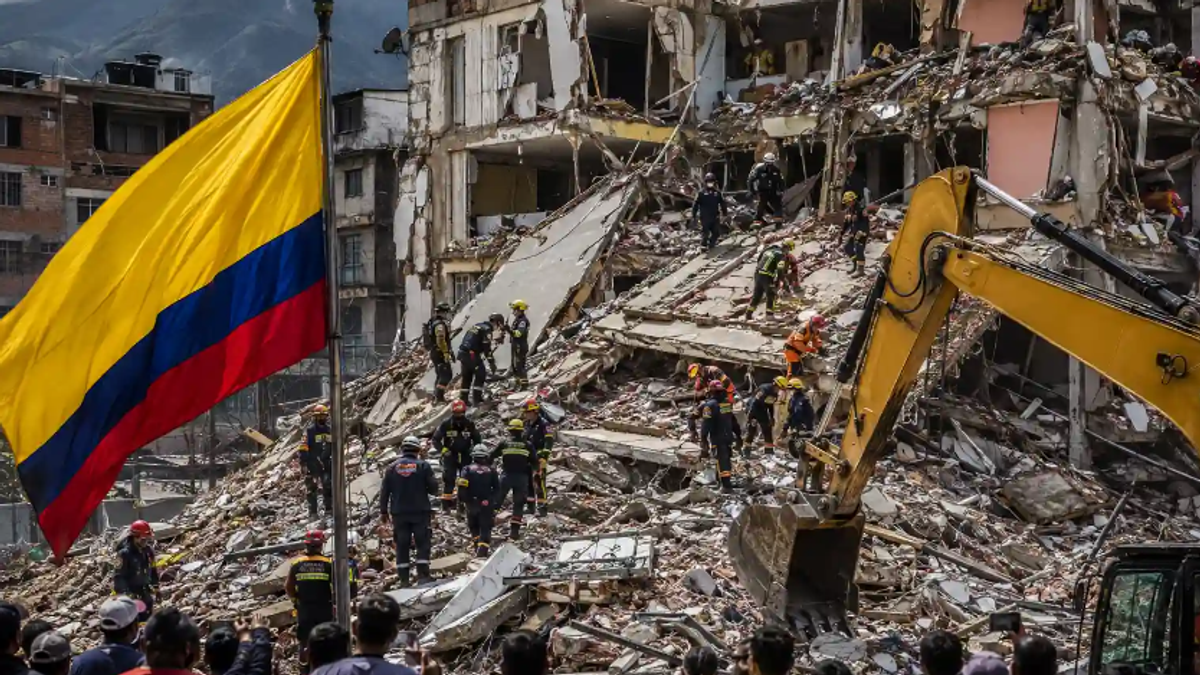
Rescue teams in Colombia are working tirelessly to locate survivors among the ruins of buildings destroyed by a powerful earthquake. Two days after the disaster, which claimed the lives of approximately 250 individuals in the western region and the esteemed coffee-growing areas, officials emphasize the critical importance of the initial 72-hour window for rescue efforts.
Alejandro Eder, the mayor of Cali, warned that time is running short for finding survivors, stating that less than a day remains before the critical 72-hour period concludes. He assured that rescue operations would persist beyond this timeframe, but the priority is to save as many lives as possible within the remaining hours. The earthquake, which registered a magnitude of 7.4 on the Richter scale, struck Colombia shortly after 7 a.m. local time on Monday.
In addition to the fatalities, the earthquake inflicted extensive damage, with over 3,770 people injured and more than 9,550 homes destroyed. The affected population consists of approximately 30,300 families. In Cali, the city's third-largest metropolis, more than 56 structures collapsed, resulting in at least 95 deaths and around 1,000 injuries.
The coffee region, home to about 55 kilometers from the earthquake's epicenter, saw 79 deaths, while the mayor reported that around 300 people are still missing. This seismic event holds particular significance for Colombia's coffee industry, as the country is the world's third-largest coffee producer, and the livelihoods of hundreds of thousands of families rely on the sector.
President Abelardo de Espria assumed office just days prior to the earthquake, having been elected on a platform emphasizing fiscal responsibility and enhanced security measures. Despite these challenges, the Colombian Foreign Minister, Omar Bola, refuted claims that the government had turned down international aid offers. He assured that the ministry is coordinating the delivery of aid and shipments originating from Peru, Mexico, and El Salvador.
Written by urgent.news from Ajel English's reporting — not their text. Machine-written — may contain errors; check the original before relying on it.