Bundesregierung: Niedrigwasser wird zum Konjunkturrisiko
Viele Frachtschiffe können wegen der leeren Flüsse nicht voll beladen werden. Das belastet den Transport und die Produktion. Die deutsche Wirtschaftsleistung könnte in der Folge schrumpfen.
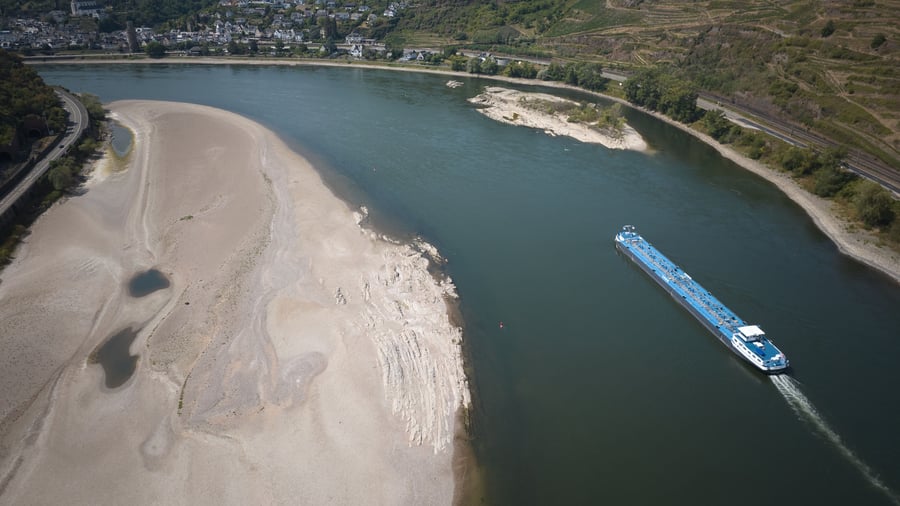
The German government warns that low water levels pose a risk to the country's economic recovery. Early indicators such as the Ifo business climate index and purchasing managers' index showed a positive outlook for the third quarter, according to the Ministry of Economy's monthly report released on Thursday. However, the current low water levels on major German inland waterways have increased the risk of temporary material shortages, particularly in the oil, chemical, construction, and steel industries, the report stated.
While many companies have adapted their transport logistics, stockpiled more inventories, and used alternative transportation routes to make their supply chains more resilient, reduced loading capacity has led to a noticeable increase in transportation costs in some cases. The duration of the low water levels is expected to cause temporary restrictions in production activities for affected companies.
Higher transportation and freight costs may also lead to price pressures on a regional and product-specific basis. The situation is particularly dire on the Rhine, one of Europe's most important inland waterways, where levels are extremely low. At the crucial Kaub lock near Koblenz, the water level measured only twelve centimeters on Thursday.
Only a quarter or a fifth of the potential cargo space can be used by many freight ships. The German economy may shrink, warned experts from the consultancy firm Oxford Economics, potentially reducing growth by up to 0.2 percentage points in the third quarter. This could be enough to cause Europe's largest economy to shrink in the summer, marking the first contraction since three consecutive quarters of growth.
"The situation for German trade is becoming increasingly problematic," said Dirk Jandura, President of the German Association of Wholesale, Foreign Trade, and Services (BGA), on Wednesday, according to Reuters. The Rhine is a crucial link to seaports, especially Rotterdam. Reduced transportation capacity, higher freight costs, and longer transit times increase the risk of delayed deliveries of intermediate products and raw materials to Germany or export goods not reaching their destinations on time.
Alternative transport options such as trucks and trains are also limited due to capacity constraints and a persistent driver shortage. However, exporters have just begun to act: German exports set a record in June, reaching 139.3 billion euros for the fifth consecutive month.
Written by urgent.news from Handelsblatt's reporting — not their text. Machine-written — may contain errors; check the original before relying on it.