Bitcoin slips near $63,500 as traders look past CPI to Fed’s next tests
An in-line inflation print removed a tail risk but gave BTC little reason to rally, leaving Jackson Hole, jobs data and the next CPI release as the market’s next catalysts.
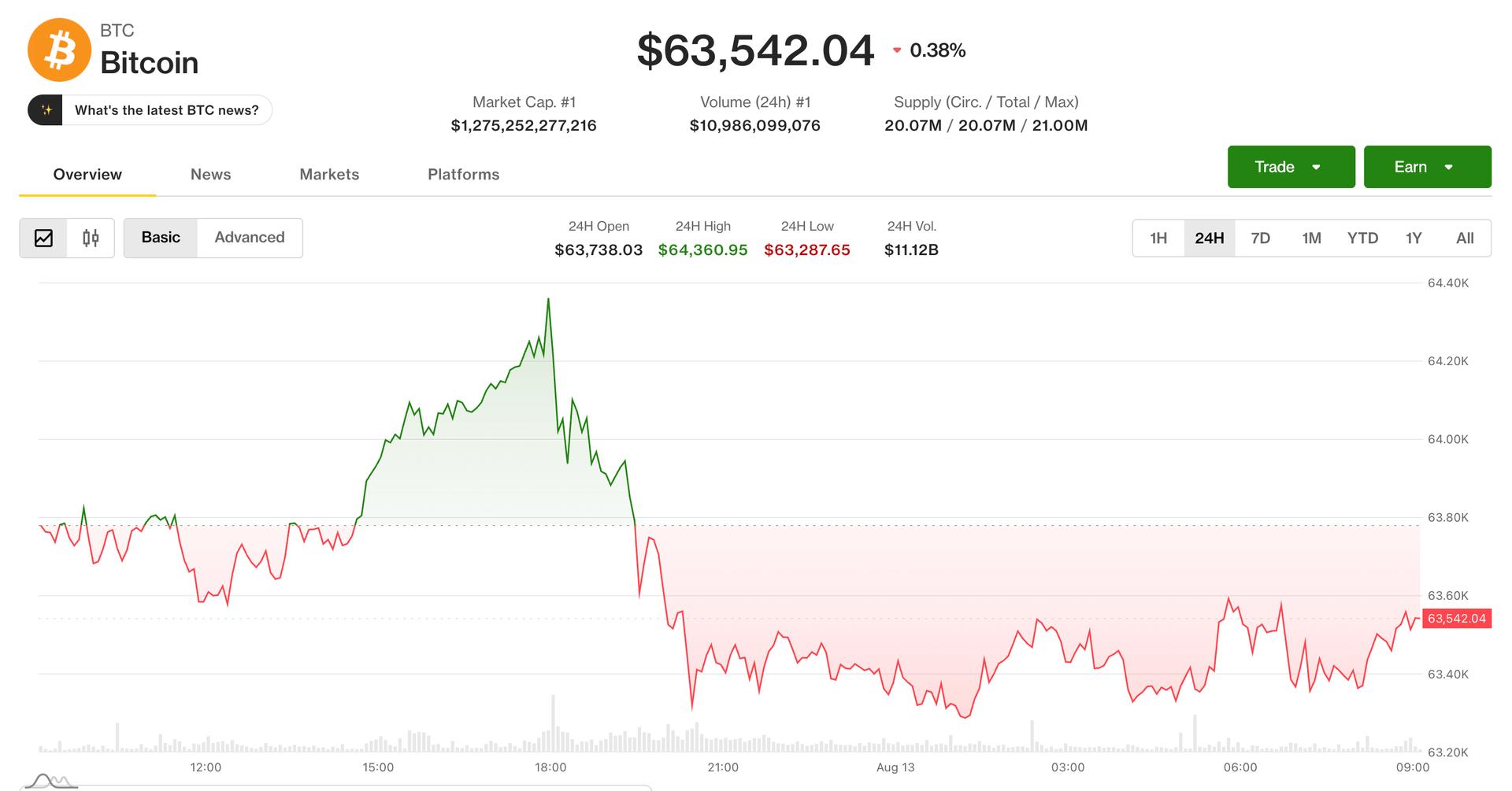
Bitcoin's price slid to within $63,500 on Thursday, experiencing a decline of more than half a percent in the day and nearly 2% over the past week. The U.S. inflation report, released in line with expectations, helped ease market concerns but failed to spark significant movement. Hyperliquid's HYPE stood out, rising over 3% to $56, although it remained unchanged over the week.
Tron increased slightly to just under 34 cents, and it gained 2% over the past seven days. All other assets declined. Dogecoin plunged nearly 3% to 7 cents, XRP fell over 1% to $1, and it has lost nearly 5% over the week. BNB decreased by over 1% to $610, Solana dropped slightly under 1% to $76, and Ether edged marginally to $1,880.
The July data aligned closely with what economists had anticipated. The headline inflation rose by 0.1% month-over-month and 3.4% year-over-year, while the core measure, excluding food and energy, increased by 0.2% and softened to 2.5%. This information reduced the likelihood of a Federal Reserve rate increase in September, with futures markets lowering the probability from 46% to around 38%.
Gold rose 1.3% after the release, Ether gained just over 1%, Bitcoin saw a decline of around half a percent, and S&P 500 futures increased by 0.2%. Gabe Selby, CF Benchmarks' head of research, stated that Bitcoin is most affected when inflation data alters expectations about interest rates, with an average 3.25% increase during the three instances in the past nine releases when inflation fell short of expectations.
A lower-than-expected report on July 14 led to a 4.24% rally. Selby suggested that an in-line report can eliminate tail risk; however, a genuine surprise is required to create a catalyst. He believes the Fed may wait, given that shelter costs rose by only 0.1%, energy decreased by 1.5%, and gasoline fell by 2.9%. Some goods categories have surpassed last year's tariff-driven price increases.
The upcoming challenges include the Jackson Hole gathering of central bankers later in the month, the September 4 jobs report, and the September 11 inflation report. Equities responded positively to the news. MSCI's Asia Pacific index rose almost 1%, with Samsung Electronics and SK Hynix leading the gains, while Korea's Kospi surged almost 4% and entered a technical bull market, up 22% in ten days.
The sentiment was not consistent, as Cisco declined over 4% in after-hours trading following disappointing earnings and Cerebras Systems lost 17% due to declining hardware sales. Brent crude reversed six days of gains, easing after a period that had driven it to $90 a barrel. This occurred as an Islamic Revolutionary Guard Corps adviser, General Mohammad Reza Naqdi, revealed that Iran was preparing to carry out operations within the U.S. under a new military doctrine.
Zcash's Tachyon upgrade aims to scale shielded payments, enhance quantum readiness, and test the effectiveness of its funding, security, and governance.
Written by urgent.news from CoinDesk's reporting — not their text. Machine-written — may contain errors; check the original before relying on it.