Aquaculture is depleting the oceans: A farmed salmon can consume more than six times its weight in wild fish
The rapid growth of the industry has increased demand for fishmeal and fish oil, creating environmental and social costs that are often felt far from the consumers who buy the final products
Madrid’s Mercado de la Paz saw an empty fish counter last September when shoppers arrived. The ad-hoc campaign by Spain’s aquaculture industry association, Apromar, aimed to evoke a country without farmed fish. Though the campaign warned that seafood could become a luxury, it also proclaimed that aquaculture guarantees fish for everyone, stressing the need for more production to prevent ocean collapse.
Aquaculture, worth €270 billion ($311 billion), is the fastest-growing food sector globally. Currently, half of all seafood comes from aquaculture, with Spain leading the EU in production volume.
However, the industry's claims are misleading. Daniel Pauly, director of the Sea Around Us project at the University of British Columbia, asserts that popular farmed seafood products like salmon, shrimp, trout, sea bass and sea bream are primarily fed with wild fish species. Consequently, these farmed products contribute to accelerating ocean depletion.
Two-thirds of global aquaculture raises species fed with fishmeal and fish oil derived from wild-caught fish. For instance, a farmed salmon may consume over six times its weight in wild fish before reaching the market.
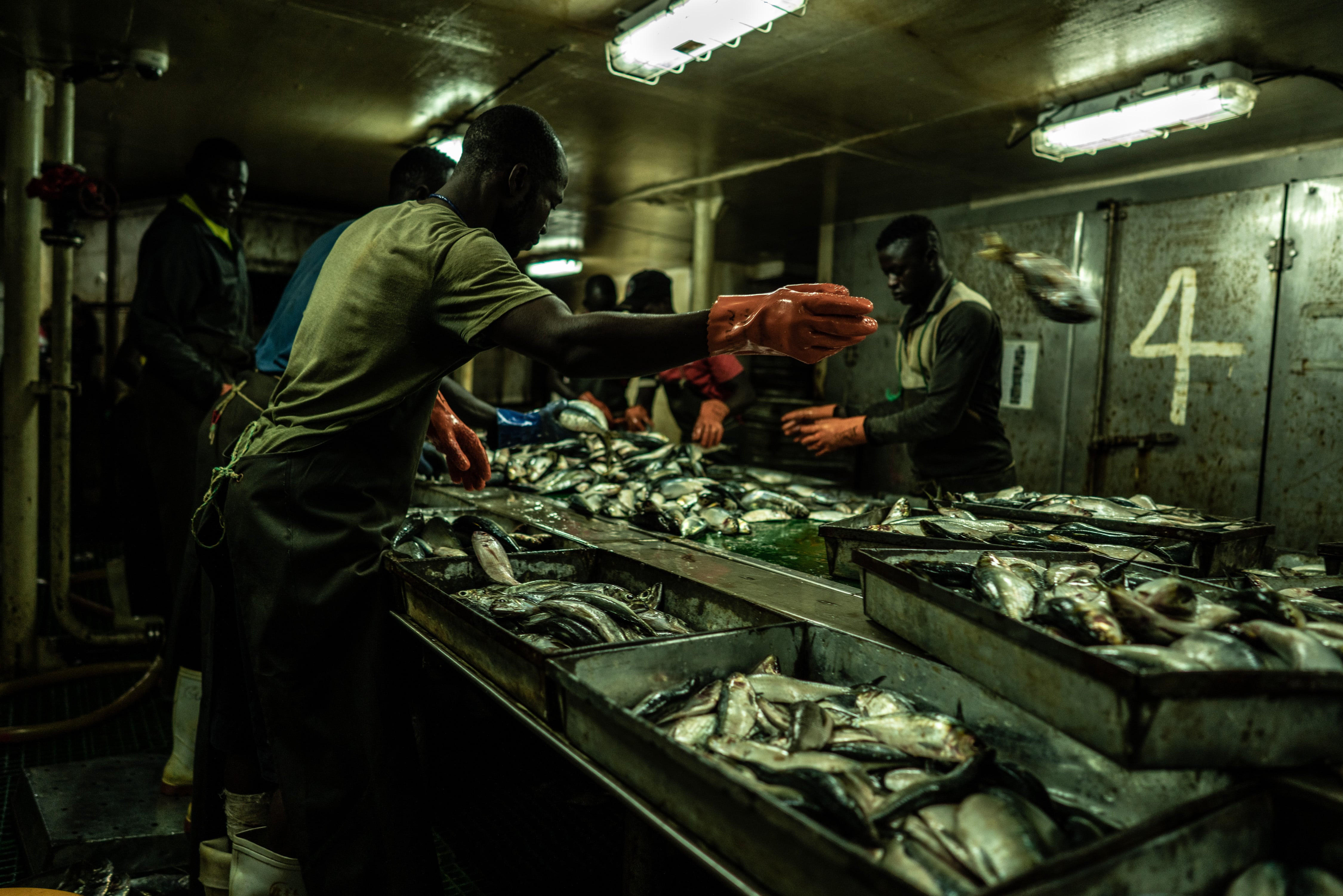
An investigation by The Outlaw Ocean Project revealed various impacts of the industry. It linked the industry to job losses in small-scale fisheries, exposure to chemicals, preventable workplace deaths, and violent protests often triggered by the nauseating smell of fishmeal factories. The investigation also highlighted how the industry worsens food insecurity in poorer countries where the raw material is caught and processed, rather than where seafood products are consumed.
For example, in Gambia and Mauritania, the industry intensifies food insecurity as local communities' traditional food sources are diverted to export fishmeal.
Moreover, the investigation documented instances of forced labor on fishing vessels, farms, and factories in remote areas such as Russia’s Far East and China’s Xinjiang region. In other countries, including India and Peru, the industry was associated with at least 80 episodes of social conflict, including strikes and protests over water pollution and factory odors.
For instance, shrimp sold by major Spanish retailers like El Corte Inglés, E.Leclerc, and Carrefour and raised in Ecuador is fed with fishmeal from plants linked to worker deaths, illegal fishing, and protests.
The investigation mapped the entire global fishmeal industry, including over 1,400 plants in 64 countries, tracing supply chains from fishing vessels to feed mills, fish farms, and seafood retailers. The study also found that the fishmeal industry contributes to geopolitical tensions. For example, in 2021, Turkish trawlers fishing illegally in the Aegean Sea allegedly rammed a Greek research vessel after scientists began filming their activities.
In 2018, riots erupted in Saint-Louis, Senegal, after a fisherman was killed by Mauritanian coast guards during a cross-border incident involving a vessel linked to the fishmeal industry. Additionally, Morocco's military control over Western Sahara persists, despite judgments against its legitimacy by the European Union's Court of Justice.
Moroccan vessels routinely fish in Western Saharan waters and process catches into fishmeal before exporting it to aquaculture farms worldwide.
Written by urgent.news from El Pais English's reporting — not their text. Machine-written — may contain errors; check the original before relying on it.