Zhu Rongji, trailblazing ex-premier who transformed China's economy
ZHU Rongji, China’s former premier who died on Wednesday aged 97, championed free-market policies and delivered far-reaching economic reforms during his five years at the helm.
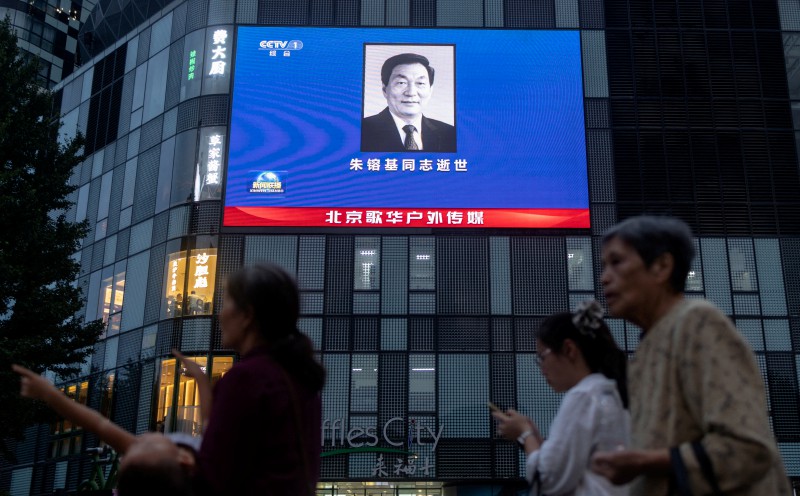
Zhu Rongji, a trailblazing former premier of China who transformed the nation's economy, passed away at the age of 97. Born in 1928 in Changsha, Zhu hailed from a family with a lineage rumored to trace back to Zhu Yuanzhang, the founding emperor of the Ming dynasty. After studying electrical engineering at Beijing's prestigious Tsinghua University and joining the Communist Party in 1949, Zhu embarked on a journey that would leave an indelible mark on China's economic landscape.
Throughout the tumultuous early decades of the People's Republic, Zhu faced purges twice, initially during the Hundred Flowers Campaign in the 1950s and again during the Cultural Revolution. However, he was rehabilitated after Mao's death and gained prominence under Deng Xiaoping's leadership. In 1988, Zhu was appointed mayor of Shanghai, where he championed market reforms, famously advocating for state-owned enterprises to "swim by themselves in the markets."
As vice premier under Jiang Zemin from 1991, Zhu earned the nickname "China's Mikhail Gorbachev" for his reformist approach. It was during his tenure as premier from 1998 that Zhu implemented radical reforms, including the privatization of unprofitable state-owned enterprises and urban housing. These policies, while driving massive economic growth, also exacerbated economic inequality by slashing 30 million jobs over five years.
Zhu's leadership was credited with helping China weather the 1997 Asian financial crisis and securing China's accession to the World Trade Organisation in 2001. He was also known for his hard-nosed stance against corruption, executing a former vice governor of Jiangxi province for taking bribes – a rare punishment for such a high-ranking official in five decades.
During his tenure, Zhu formalized the premier's press conference, addressing questions directly with a sardonic sense of humor. In retirement, he authored books on economic reform and gained recognition as a philanthropist. However, Zhu's brand of market reformism fell out of favor with the rise of Xi Jinping, who has since condemned runaway capitalism and sought to steer China towards a more balanced development path.
Despite the shift in leadership, Zhu remains remembered for his honest officialship and practical accomplishments, though his methods may not align with the current administration's approach.
Written by urgent.news from New Straits Times's reporting — not their text. Machine-written — may contain errors; check the original before relying on it.