Why does SK Hynix want to sell its chip facility in southwest China?
South Korean chipmaker SK Hynix’s potential deal to offload a packaging plant in southwest China is part of a strategic pivot towards higher-margin artificial intelligence (AI) memory products, according to analysts. But a sale might not be straightforward, as the memory chip giant would need to navigate valuation hurdles and a volatile chip cycle, they cautioned. SK Hynix said on Monday it was…
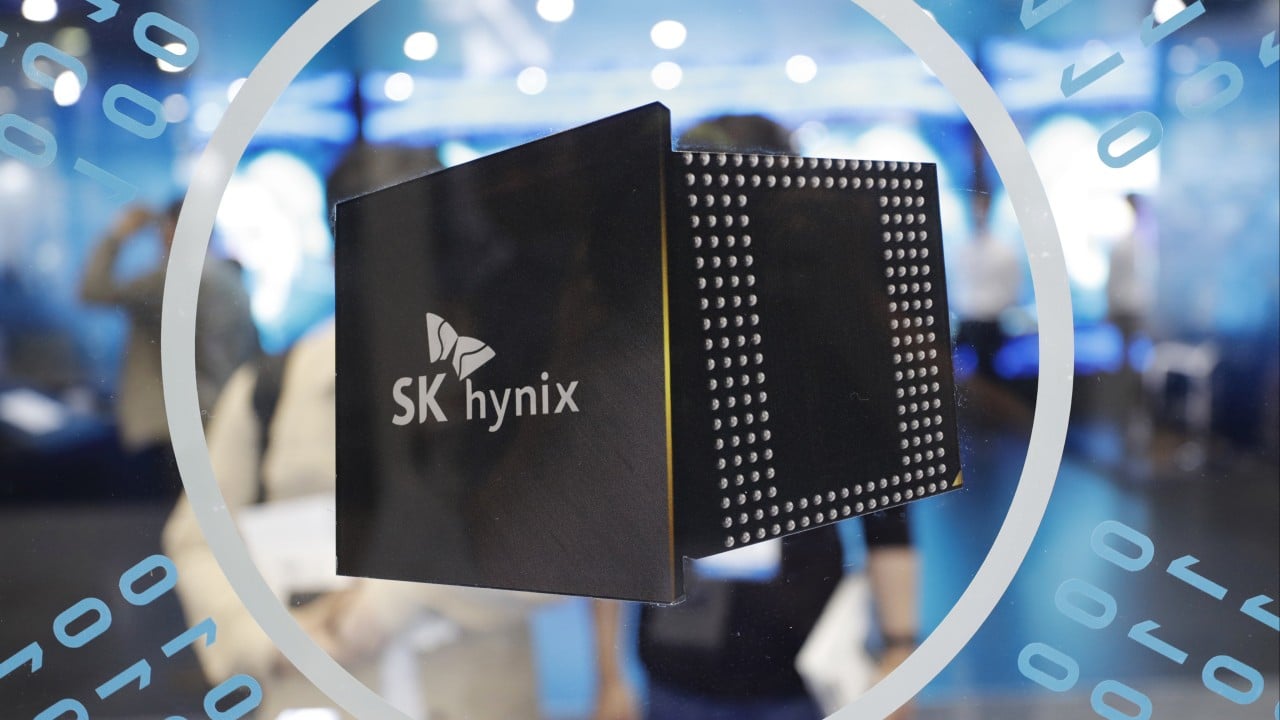
South Korean chipmaker SK Hynix is considering selling its packaging plant located in southwest China as part of a strategic shift towards higher-margin artificial intelligence (AI) memory products, according to analysts. However, the potential sale may not be simple, as the memory chip giant would have to navigate valuation challenges and a fluctuating chip cycle, experts warned.
On Monday, the company indicated it was exploring various options to boost the competitiveness of its packaging business following reports it was contemplating a stake sale for its facility in Chongqing city. Bloomberg noted that a sale could potentially be valued at around US$3 billion. SK Hynix affirmed that no final decisions have been made.
The Chongqing facility operates as a back-end hub specializing in downstream packaging and testing for SK Hynix's NAND flash memory products. The company also manages two front-end wafer fabrication plants in China – one in Wuxi for dynamic random access memory (DRAM) and another in Dalian for NAND products. Analysts view the potential sale as a strategy to repurpose capital from lower-margin legacy products.
Industry observers, such as Diana Wang from ICWise, argue that high-bandwidth memory (HBM) is witnessing more predictable profit growth compared to standard NAND flash. SK Hynix's decision is seen as a strategic move to move away from low-value back-end assembly towards high-margin front-end manufacturing. If the company successfully sells the plant near its highest valuation, the proceeds could aid in funding a substantial expansion in South Korea, estimated at 54 trillion won (US$38 billion).
The possibility of a deal has sparked questions about potential Chinese bidders. Wang suggested Yangtze Memory Technologies Co (YMTC) as a likely candidate due to its growing presence in NAND flash memory. Zhang also highlighted major outsourced semiconductor assembly and testing (OSAT) specialists like JCET Group, Tongfu Microelectronics, Huatian Technology, and Payton Technology, noting that acquiring the mature NAND facility would offer them immediate operational benefits.
However, execution risks persist. Wang cautioned that while the NAND industry is currently thriving due to skyrocketing AI data center demand, buyers must carefully assess the long-term performance of the acquired asset once the memory market inevitably declines. On the regulatory front, selling packaging and testing equipment may be less complicated than transferring advanced wafer fabrication facilities, despite existing US-China tech tensions.
SK Hynix also intends to restart construction on a second NAND plant in Dalian, currently halted for years, aiming to increase output in the city by approximately 50 percent.
Written by urgent.news from South China Morning Post's reporting — not their text. Machine-written — may contain errors; check the original before relying on it.